Recorded November 23, 2026
Space & AstronomyReported finding
Triple star 28 light-years away: 'This system should not exist'
Astronomers found a triple system 28 light-years away with two white dwarfs and a red dwarf — a configuration with no known twin within 100 light-years.
By Marcus Bennett4 min read832 words
In brief
- Welopō'ai is a triple system 28 light-years away: one red dwarf plus two white dwarfs, with no comparable system within at least 100 light-years.
- The red dwarf holds 42% of the Sun's mass and the newly identified white dwarf holds 62%, measured to better than 1% uncertainty at a separation of 4.6 astronomical units.
- SPIRou measured a radial-velocity signal of 16 kilometers per second, and the Gemini North telescope confirmed the object as a white dwarf.
- The close white dwarf orbits the red dwarf at 129.3 astronomical units (19.3 billion kilometers) with a period of roughly 1,000 years.
- The discovery was published on November 19 in Astronomy & Astrophysics.
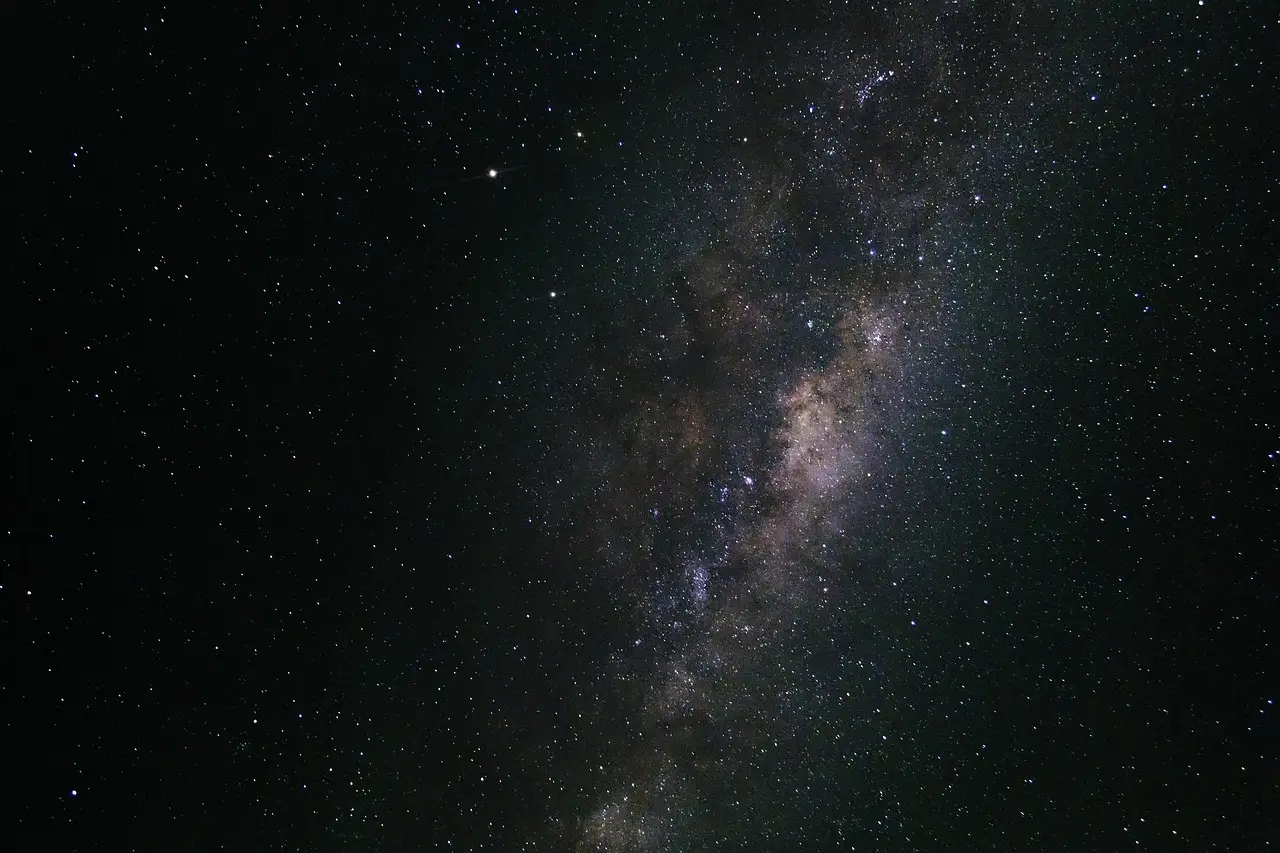
Astronomers have found a triple star system 28 light-years from the Sun containing two white dwarfs and a dim red dwarf — a combination with no known counterpart within at least 100 light-years.
The discovery team, led by Étienne Artigau of the Trottier Institute for Research on Exoplanets at the Université de Montréal, was searching for planets. "We were actually looking for planets," Artigau said in a statement. "Instead, we found something much more surprising."
The bluntest verdict came from Patrick Dufour of Université de Montréal: "This system should not exist. We have no clean explanation for how it got here."
What is inside the Welopō'ai system?
Astronomers named the system Welopō'ai, a blend of two Hawaiian words meaning "a path of family traits." It began, in all likelihood, as three ordinary stars: two sun-like stars plus the red dwarf companion that survives today.
A white dwarf is the dense remnant left when a star of about solar mass runs out of hydrogen fuel in its core. The interior contracts and heats, triggering fusion in a surrounding shell of hydrogen.
The star swells into a red giant tens to hundreds of millions of kilometers wide, then sheds its outer layers. What remains is a compact core about the size of Earth, typically holding half to two-thirds of a solar mass.
Today the red dwarf keeps two dead stars for company:
- The close white dwarf orbits the red dwarf at 129.3 astronomical units — 19.3 billion kilometers, or 12 billion miles — and takes roughly 1,000 years to complete one circuit.
- The second, more distant white dwarf orbits that pair as a unit.
- The red dwarf holds 42% of the Sun's mass; the newly identified white dwarf holds 62%.
Because the new white dwarf sits just 4.6 astronomical units (688 million kilometers) from the red dwarf — closer than Jupiter orbits the Sun — the team measured both masses to better than 1% uncertainty. The white dwarf's progenitor must have been a star about 40% more massive than the Sun.
How did a planet hunt turn up a dead star?
Artigau's team used the SPectropolarimètre InfraROUge, or SPIRou, on the Canada–France–Hawaii Telescope atop Mauna Kea to hunt for planets around the red dwarf. The instrument measures the star's wobble around a shared center of mass with any companion, reading that motion as a Doppler shift in the star's light — a quantity astronomers call radial velocity.
A Jupiter-like planet produces a signal of hundreds of meters per second; an Earth-mass planet, tens of meters per second.
SPIRou instead registered about 10 miles, or 16 kilometers, per second. No planet generates a pull that strong. Using the eight-meter Gemini North telescope, also on Mauna Kea, the team identified the object as a white dwarf.
"The unusual combination of high mass and very low brightness left only one plausible explanation: it was the remnant of a dead star," said Charles-Antoine Parent, an undergraduate at Université Laval and a co-author of the study.
Why should Welopō'ai not exist?
White dwarfs are common, and pairs of them are not unheard of: WD 0727+482, a binary white dwarf 37 light-years away, is one example. A third, ordinary star in the mix is what makes Welopō'ai notable.
The trouble lies in what dying stars do to their neighbors. As a sun-like star expands into a red giant, the outflow of mass and the change in its gravity should have disrupted the red dwarf's orbit, possibly driving the two into collision. Instead, the red dwarf sits in a stable orbit, as if nothing had happened.
Mass offers a second puzzle. White dwarf masses are not random; they trace back to the mass of the star that produced them, which makes Welopō'ai a clean test of models of stellar evolution. The team also notes that a heavier white dwarf lets astronomers probe the extreme physics of its condensed matter, held up by electron degeneracy pressure — the resistance of negatively charged electrons to merging with protons and collapsing further. Still more gravity would crush that support and turn the remnant into a neutron star.
What happens next?
"That is the question driving our next observations," Dufour said. Because the system sits so close, the team can take high-precision measurements of the gravitational interplay among its three members to reconstruct how the two dead stars came to be and why the red dwarf survived intact.
The interpretation remains preliminary, and the team says the evolutionary history is unresolved. The discovery was published on November 19 in Astronomy & Astrophysics.
Artigau framed the wider lesson: "Discoveries like this remind us that our own cosmic neighborhood still contains remarkable surprises. Even when we're searching for planets, our universe often has something completely unexpected waiting for us."
Welopō'ai looks stable today, but no one yet knows how it reached this arrangement.
via space.com (Source)
More from Marcus Bennett
Show full bio
News editor covering regulation, policy and their impact on general science news at SciBeat.
585 articles
Nearby plates
- Triple-Star System 28 Light-Years Away 'Should Not Exist'
- Welopōʻai triple-star system 28 light-years from Earth
- ‘Should Not Exist’: Triple Star System Found Just 28 Light-Years Away
- Triple star system Welopōʻai found just 28 light-years away
- "This System Should Not Exist": Odd Triple Star Found 27.6 Light-Years Away