Recorded November 22, 2026
Space & AstronomyReported finding
Triple-Star System 28 Light-Years Away 'Should Not Exist'
A triple-star system 28 light-years away pairs a red dwarf with two white dwarfs in a stable orbit that standard stellar-evolution models cannot explain.
By Marcus Bennett3 min read615 words
In brief
- The triple-star system Welopō‘ai lies 28 light-years from Earth, with no comparable system within 100 light-years.
- Two of its three stars are white dwarfs; the study appears in Astronomy & Astrophysics.
- The hidden object revealed velocity swings near 10 miles per second and a mass over half the sun's.
- The inner white dwarf's progenitor star was about 40 percent more massive than the sun.
- The discovery came from exoplanet searches on the Canada-France-Hawaii and Gemini North telescopes on Mauna Kea.
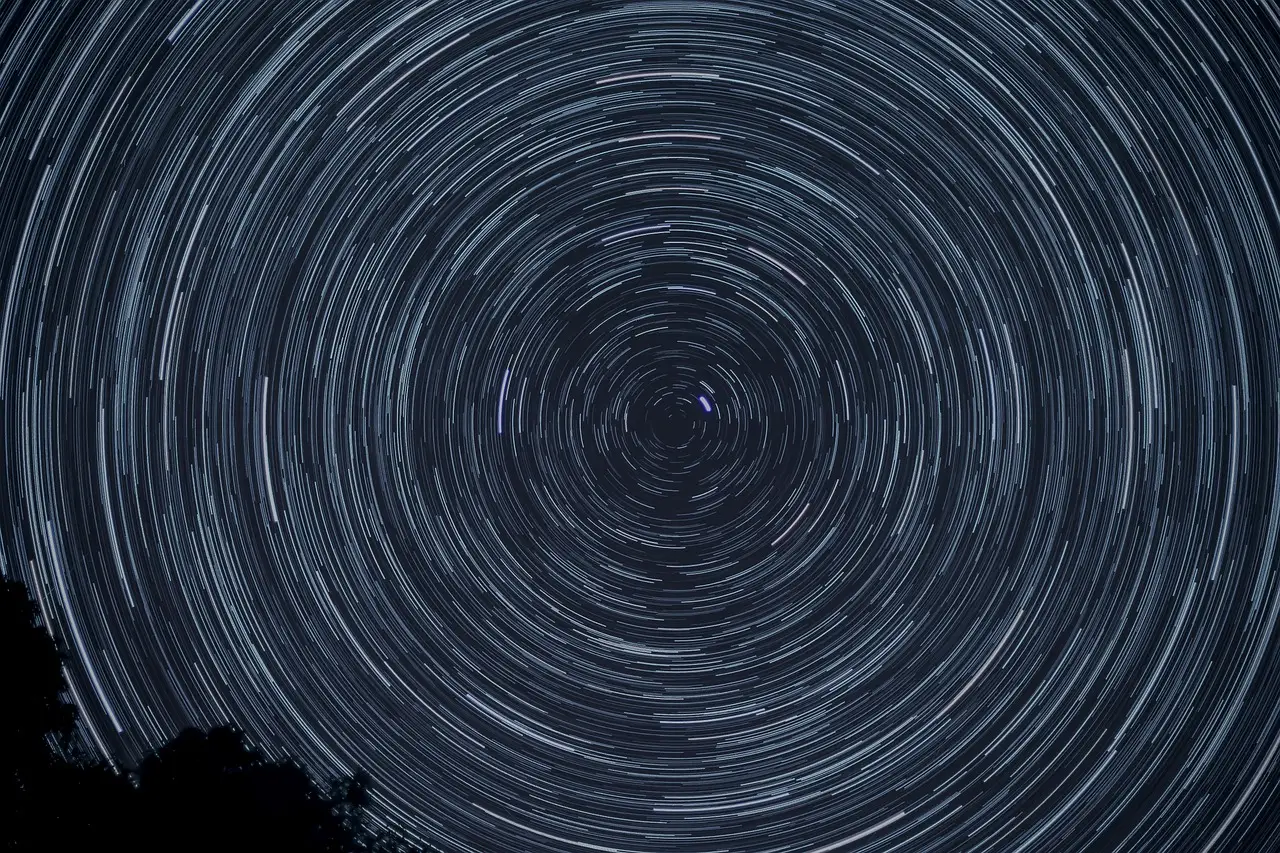
Astronomers have found a triple-star system just 28 light-years from Earth that, by their own account, defies current models of stellar evolution. Two of its three stars are white dwarfs — the dense, burned-out remnants of dead stars — and the trio's orbital arrangement leaves researchers without a working explanation for how it formed.
The discovery is detailed in a study published in the journal Astronomy & Astrophysics. The system now carries the name Welopō‘ai, a Hawaiian phrase roughly translating to "path of family traits," a nod to the stars' shared relationships. According to the research team, no comparable system exists within 100 light-years of Earth.
"The system should not exist," said Patrick Dufour, a University of Montreal astrophysicist and study co-author, in a statement. "We have no clean explanation for how it got here."
How did astronomers find it?
The team was not hunting for dead stars at all. They were scanning for exoplanets — planets orbiting distant stars — using highly sensitive instruments mounted on the Canada-France-Hawaii Telescope near the dormant volcano of Mauna Kea in Hawaii. The method relies on detecting subtle discrepancies in the motion of distant stars, wobbles that often betray the gravitational pull of unseen orbiting planets.
One red dwarf refused to cooperate. Instead of delicate shifts, the data showed velocity swings approaching 10 miles per second — far too large for a single planet to produce. After years of additional observations, the team determined that the hidden object carried a mass greater than half that of the sun.
That combination of clues pointed away from planets entirely.
"The object's unusual combination of high mass and dim light left only one plausible explanation: it was the remains of a dead star," explained Charles-Antoine Parent, a University of Montreal astronomer and study co-author.
A neutron star and even a hidden black hole made the list of suspects. Follow-up observations with the Gemini North telescope, also on Mauna Kea, settled the question: the object was a close-orbiting white dwarf.
That identification created a new puzzle. Astronomers already knew of another white dwarf circling the same red dwarf at a much greater distance. Add them together and the system holds three stars — one red dwarf, two white dwarfs, one of them tucked in close.
Why doesn't the system add up?
The physics problem sits with the inner white dwarf. Before it died, that star was roughly 40 percent more massive than our sun. Stars of that heft swell dramatically near the end of their lives, expanding to hundreds of times their original size.
In every previously documented system with these dynamics, that expansion forced the two stars into an even tighter orbit — or destroyed them outright through a merger. Welopō‘ai shows neither outcome. The red dwarf survived, and it now sits in a strikingly stable, wide orbit around the closest white dwarf.
For practitioners, the system amounts to a live anomaly: a nearby laboratory where the standard narrative of binary stellar evolution breaks down. The team plans to keep observing Welopō‘ai to extract whatever it can about the triple-star system — and, if the data allow, to reconstruct how it formed in the first place.
Whether new observations will force a revision of existing models remains an open question; the current findings describe one system, and preliminary interpretations of unusual objects often shift as data accumulate.
"Discoveries like this remind us that our own cosmic neighborhood still contains remarkable surprises," said study co-author and astronomer Étienne Artigau.
One sentence in plain words: a star system close enough to study in detail is doing something our best theories say it cannot.
via popsci.com (Source)
More from Marcus Bennett
Show full bio
News editor covering regulation, policy and their impact on general science news at SciBeat.
584 articles
Nearby plates
- Triple-Star System With Two Dead Stars Found 28 Light-Years Away
- Welopōʻai triple-star system 28 light-years from Earth
- ‘Should Not Exist’: Triple Star System Found Just 28 Light-Years Away
- Triple star system Welopōʻai found just 28 light-years away
- "This System Should Not Exist": Odd Triple Star Found 27.6 Light-Years Away