Recorded November 23, 2026
Space & AstronomyReported finding
Triple-Star System With Two Dead Stars Found 28 Light-Years Away
A planet hunt near a quiet red dwarf turned up two stellar corpses bound to it by gravity. Astronomers say the 28-light-year system Welopōʻai should not exist.
By Priya Raman3 min read610 words
In brief
- Welopōʻai lies 28 light-years from Earth and contains two white dwarfs plus one red dwarf.
- The red dwarf's velocity varied by nearly 10 miles per second, over 1,000 times the expected planetary signal.
- The unseen companion weighed more than half the Sun's mass yet emitted very little light.
- The findings appeared in the journal Astronomy & Astrophysics.
- No similar system has been identified within 100 light-years of Earth.
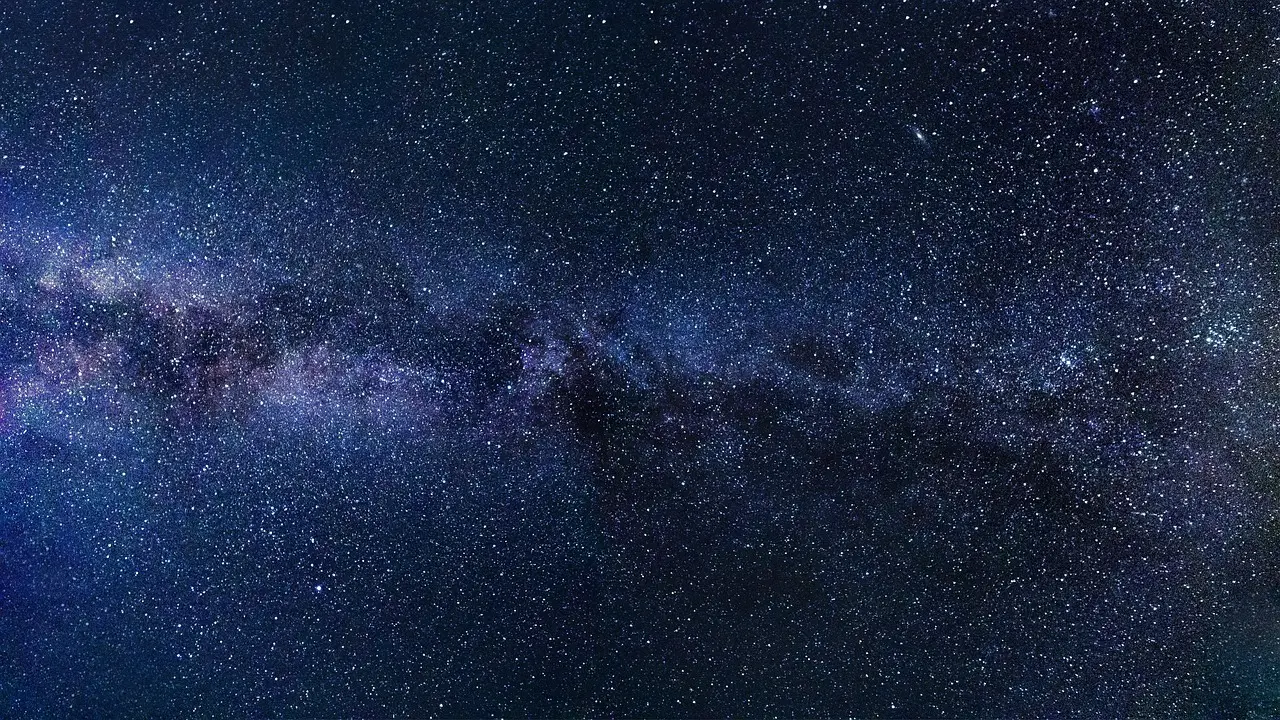
Twenty-eight light-years from Earth, astronomers have found a triple-star system that, by their own account, should not exist. The system, named Welopōʻai, contains two dead stars and one small living star, and its survival is something current theory struggles to explain. "This system should not exist," said Patrick Dufour, an astrophysicist at the Université de Montréal and co-author of the study. "We have no clean explanation for how it got here. That is the question driving our next observations."
The discovery, published in the journal Astronomy & Astrophysics, began as a routine planet search. Researchers at the Université de Montréal's Trottier Institute for Research on Exoplanets were observing a nearby red dwarf — a small, relatively cool star that burns its fuel far more slowly than our Sun — using SPIRou, an instrument on the Canada-France-Hawaii Telescope atop Maunakea in Hawaii. SPIRou hunts for exoplanets by detecting tiny changes in a star's motion caused by the gravitational pull of an orbiting companion.
A planet produces a subtle wobble. This star did not.
What did the instruments actually see?
The red dwarf's velocity was changing by nearly 10 miles per second — more than 1,000 times the signal the team had expected. Whatever tugged at the star weighed more than half as much as our Sun, yet it gave off remarkably little light. "We were actually looking for planets," said Étienne Artigau, the study's lead author. "Instead, we found something much more surprising."
The mismatch between high mass and faint light pointed to one conclusion. "The unusual combination of high mass and very low brightness left only one plausible explanation: It was the remnant of a dead star," explained Charles-Antoine Parent, an undergraduate student at Université Laval and study co-author.
The leading candidate was a white dwarf — the dense stellar corpse left behind when a star like our Sun exhausts its nuclear fuel. Neutron stars and even black holes remained possible until the team turned to the Gemini North telescope in Hawaii. Its high-resolution ʻAlopeke imaging instrument finally resolved the faint companion. It was indeed a white dwarf. A second white dwarf was already known to orbit farther out, completing the picture: one living red dwarf and two stellar remnants, all gravitationally bound.
Why is this system so strange?
Triple-star systems are not rare. Astronomers have catalogued many, often with a close pair orbited by a third star at greater distance. What sets Welopōʻai apart is its evolutionary history. Two of its members have already passed through the violent final stages of stellar life, swelling into giants and shedding much of their mass, while the third — the red dwarf — survived nearby. All three remain connected by gravity despite those dramatic transformations. Nothing similar has been identified within 100 light-years of Earth.
At 28 light-years, the system sits practically next door by astronomical standards; the Milky Way stretches roughly 100,000 light-years across. That proximity makes Welopōʻai a valuable laboratory for studying stellar evolution, because astronomers can examine its members' properties and motions in considerable detail — an advantage rarely available for more distant systems.
The findings remain preliminary in one important respect: the team cannot yet reconstruct how the system formed and endured. The researchers now hope to work out how the three stars influence one another gravitationally, how the red dwarf survived its companions' deaths, and why the system looks the way it does today. Welopōʻai's unusual history may ultimately force researchers to reconsider how certain multiple-star systems evolve.
"Discoveries like this remind us that our own cosmic neighborhood still contains remarkable surprises," Artigau said.
via zmescience.com (Source)
More from Priya Raman
Show full bio
Senior reporter covering people, launches and day-to-day practice in general science news at SciBeat.
549 articles
Nearby plates
- Triple star system Welopōʻai found just 28 light-years away
- ‘Should Not Exist’: Triple Star System Found Just 28 Light-Years Away
- Welopōʻai triple-star system 28 light-years from Earth
- "This System Should Not Exist": Odd Triple Star Found 27.6 Light-Years Away
- Triple-Star System 28 Light-Years Away 'Should Not Exist'