Recorded November 23, 2026
Space & AstronomyReported finding
Milky Way's Norma Arm May Partly Be a Bar Shock Front
Stars appear to be forming along a shock front near the galactic center, suggesting part of the Norma spiral arm may belong to the Milky Way's central bar instead, per Nature Astronomy.
By Marcus Bennett3 min read552 words
In brief
- The study, published in Nature Astronomy, was led by Hillary Davis at the University of Sydney.
- Masers previously assigned to the Norma spiral arm line up with a bar-driven shock front predicted by galaxy models.
- The central bar extends about 14,000 light-years from the galactic center along its long axis and rotates slowly.
- In most observable barred galaxies, shock fronts suppress star formation; the Milky Way may be an exception.
- More observations are needed before the Norma arm is formally redrawn.
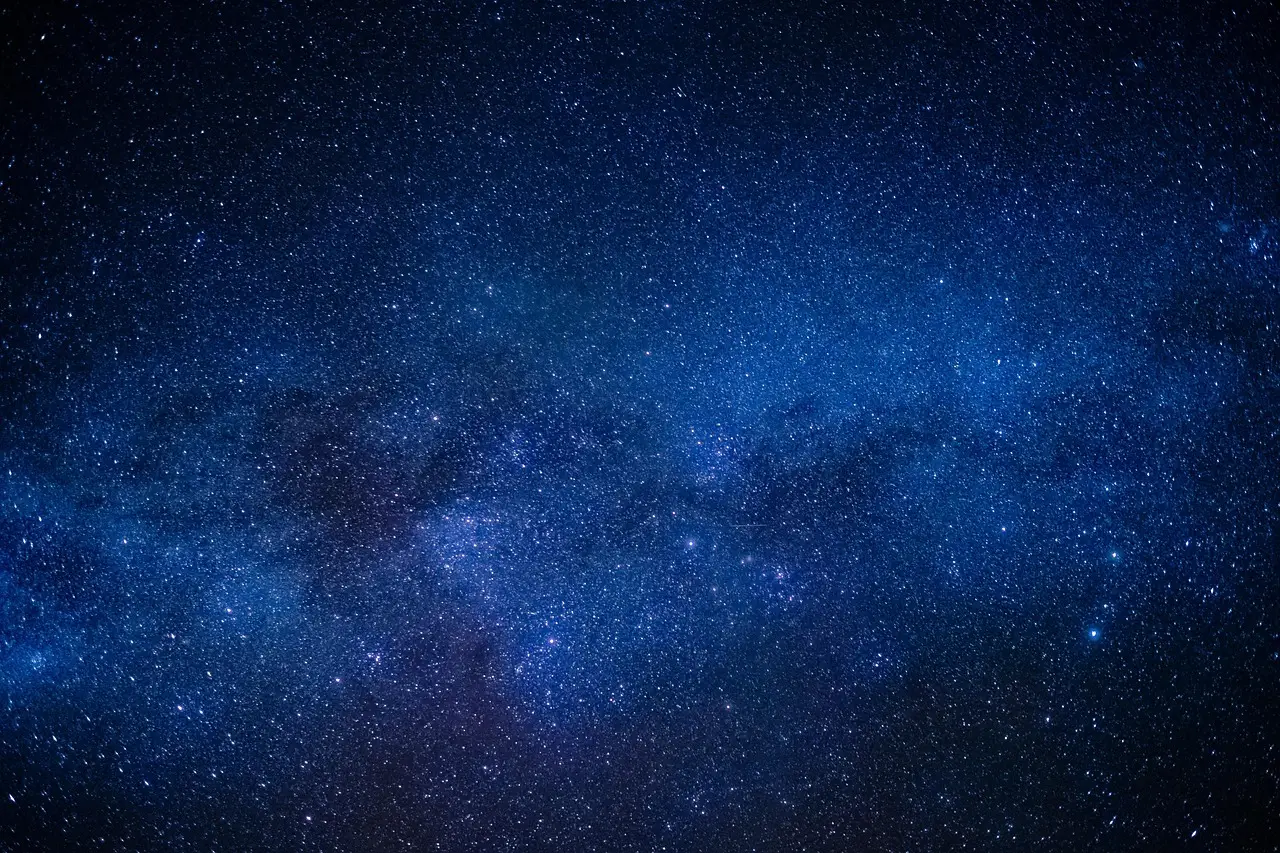
A study published in Nature Astronomy reports evidence that stars are forming along a shock front near the center of the Milky Way — a spot where theory says star formation should struggle. The finding raises the possibility that part of what astronomers have mapped as the Norma spiral arm is actually a feature of the galaxy's central bar.
Hillary Davis at the University of Sydney led the research. The team compared computer models of barred galaxies with observations of masers — naturally occurring sources of concentrated microwave radiation, some of which mark regions where massive young stars are forming. Because these bright microwave beacons shine through dust that hides other signals, they serve as useful clues to otherwise invisible activity.
What did the models reveal?
The work focuses on the Milky Way's central bar, a long concentration of stars that rotates and shapes the movement of gas around it. As gas passes through the bar's gravitational field, it can pile up into a shock front — a wave of compressed gas.
In most barred galaxies astronomers can observe directly, these shock waves tend to suppress star formation, even where gas is plentiful. The Milky Way appears to behave differently. The researchers found signs that star formation may be occurring along such a shock, which makes our galaxy unusual compared with many of its neighbors.
The key match came from the maser data. Masers previously assigned to the Norma spiral arm lined up closely with the shock front the models predicted. That alignment suggests at least part of the Norma arm is a star-forming region tied to the bar rather than a traditional spiral arm. In plain terms: a piece of the map may be labeled under the wrong structure.
How big is the bar?
The study also yielded new estimates of the bar's size and motion. The results suggest it extends about 14,000 light-years from the galactic center along its long axis, and that it rotates relatively slowly.
Those numbers matter for anyone building models of the galaxy's inner regions. The bar's dimensions and rotation speed feed directly into calculations of how gas flows toward the center, and where the raw material for new stars accumulates.
Why is mapping the Milky Way so hard?
The short answer: we are inside it. Dust blocks parts of the view, and distant structures overlap when seen from Earth. Astronomers must assemble a three-dimensional picture from incomplete, edge-on measurements, unlike the clear face-on views they enjoy for external galaxies.
That built-in uncertainty is why the new interpretation carries weight. If some apparent spiral-arm features actually belong to the bar, scientists may need to revise how they describe the galaxy's central structure and where its stars are born.
What are the caveats?
The researchers are explicit that this is not a final redrawing of the Milky Way. The evidence supports a new explanation for star formation in a region once considered unfavorable for it, but more observations are needed to determine how much of the Norma arm actually follows the proposed shock front.
For now, the study changes the working hypothesis rather than the textbook map: some microwave beacons long credited to a spiral arm may instead trace the compressed edge of the bar.
via knowridge.com (Source)
More from Marcus Bennett
Show full bio
News editor covering regulation, policy and their impact on general science news at SciBeat.
584 articles
Nearby plates
- Milky Way's Norma Arm May Not Be a Spiral Arm at All
- Star-by-star Milky Way simulation runs 20 times faster with AI
- Milky Way may have begun as thousands of small galaxies, model shows
- Astronomers Find First Stellar Stream Beyond the Milky Way
- NASA’s 16-image gallery maps black holes, star births and collisions