Recorded November 22, 2026
Space & AstronomyReported finding
Milky Way's Norma Arm May Not Be a Spiral Arm at All
New Nature Astronomy research suggests the Milky Way's Norma arm may be star formation along the galactic bar's shock front — an unusual trait among nearby barred galaxies.
By Nathan Brooks4 min read733 words
In brief
- The study, published in Nature Astronomy in 2026, suggests part of the Norma arm is star formation along the galactic bar's shock front.
- The Milky Way's central bar spans about 4.3 kiloparsecs, roughly 14,000 light-years, from the galactic center.
- Lead author Dr. Hillary Davis completed her Ph.D. at the University of Sydney's School of Physics.
- The team matched maser observations — microwave equivalents of lasers — with galaxy simulations run over billions of years.
- Star formation along bar shock fronts is uncommon in nearby barred galaxies.
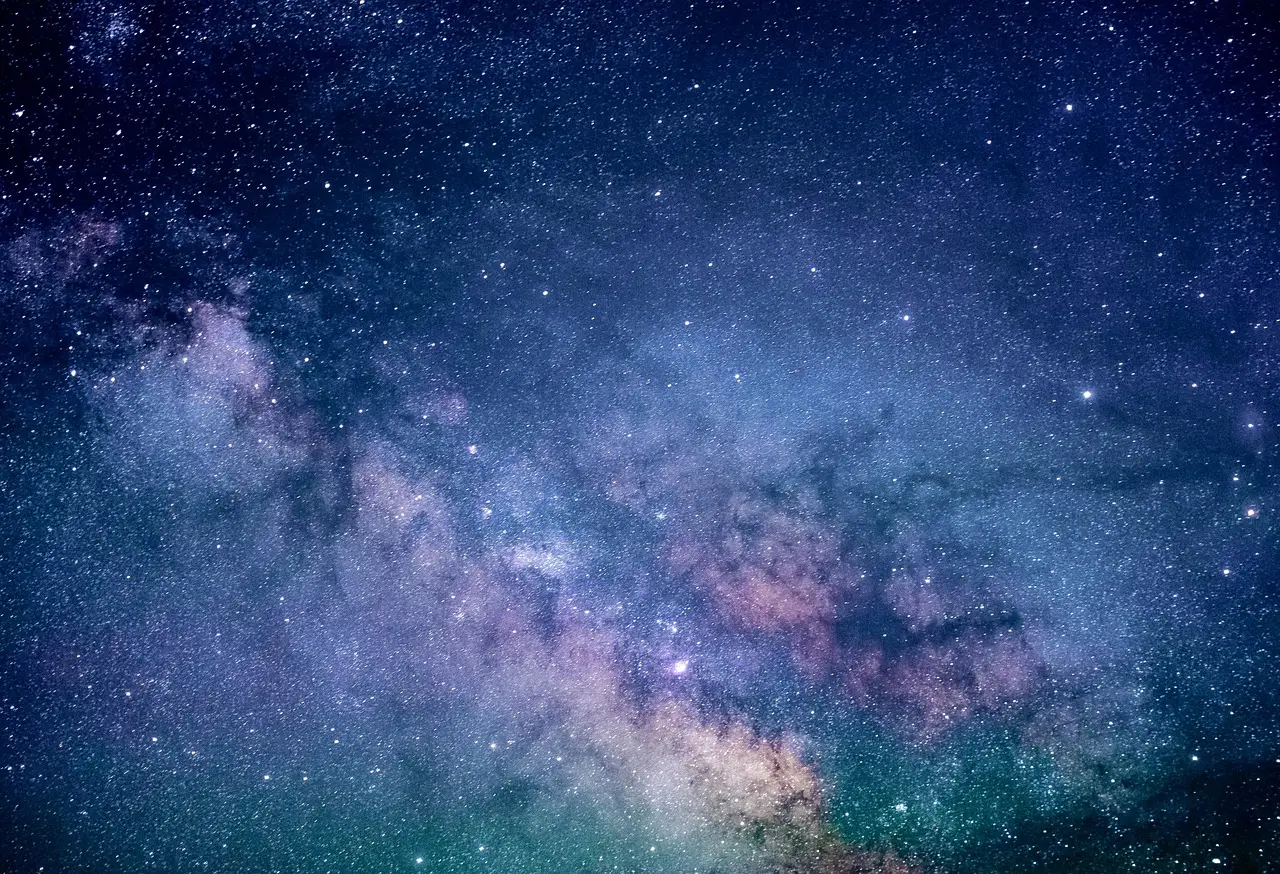
A University of Sydney Ph.D. student has found evidence that part of the Milky Way's Norma arm may not be a spiral arm at all — but a zone of star formation along the leading edge of the galaxy's central bar. The discovery, published in Nature Astronomy in 2026, also suggests our galaxy makes stars in an unusual place compared with its neighbors.
Lead author Dr. Hillary Davis, who just completed her doctorate at the university's School of Physics and Sydney Institute for Astronomy, found that a vast rotating structure of stars near the galactic center drives enormous shock fronts through clouds of gas. Those fronts compress the gas and, in this case, create conditions for new stars to form.
"At its heart, star formation is a process we understand from everyday physics. Forces set matter in motion," Davis said. "In this case, gas is compressed, and that compression can create the conditions for new stars to be born on a massive scale."
What did the researchers actually measure?
The team compared sophisticated computer simulations of galaxies evolving over billions of years with astronomical observations of masers. Masers are naturally occurring sources of concentrated microwave emissions — the microwave equivalent of a laser — associated with regions where massive stars are forming.
The match was striking. "We found that masers previously associated with the Norma arm closely align with the shock front predicted by our simulations," Davis said.
That alignment suggests the so-called Norma arm — named for its position in the constellation Norma as seen from Earth — may instead be a region of star formation along the bar's leading edge. "This raises questions about the galaxy's spiral structure and the bar region of the Milky Way, which needs further investigation," she said.
Why is star formation here so surprising?
The Milky Way is a barred spiral galaxy. At its center sits an elongated concentration of stars, the galactic bar, which rotates and exerts gravitational forces on surrounding gas. Those forces create powerful shock fronts where the gas gets compressed, much as air compresses in a shock wave.
In nearby barred galaxies that astronomers can observe directly, star formation is often suppressed along these shock fronts, even when substantial amounts of gas is present. "In most similar galaxies, star formation very commonly occurs along spiral arms," Davis said. "What's extraordinary is seeing this happen in a different region of our galaxy, where shocks are usually so strong that star formation is often suppressed."
The Milky Way may be different, though not unique. A small number of observed galaxies do show significant star formation along their bar shock fronts. "We believe that the Milky Way's bar has star formation occurring along its shock front, which is uncommon for most bars in nearby galaxies," Davis said.
How big is the bar?
The findings also constrain the size, orientation and rotation speed of the central bar — properties astronomers have debated for decades. The researchers estimate the bar extends roughly 4.3 kiloparsecs, about 14,000 light-years, from the galactic center along its long axis. That figure supports a relatively long, slowly rotating structure.
Seeing the bar directly is hard. "The galactic bar cannot be easily observed because of a combination of our position in the galaxy and dust obscuring our view," Davis said. "As a result, the bar's properties have been highly debated."
"Our findings place further constraints on the size, angle and rotation speed of this central bar," she added.
How solid are the conclusions?
The results rest on matching simulations against what Davis calls "a more limited set of observations," so the picture could shift as data improves. Still, she frames the work as a step forward: "By comparing a new generation of large-scale computerized galaxy simulations, evolving over billions of years, against a more limited set of observations, we now have a stronger understanding of the bar and star formation processes in the Milky Way."
The findings help explain structures at the galaxy's center and how gas moves relative to them. And they may prompt a partial redrawing of our own galaxy's map — at minimum, a closer look at whether the Norma arm deserves its name.
The paper, "The nature of the Norma arm as a bar-driven star-forming shock front," appears in Nature Astronomy (DOI: 10.1038/s41550-026-03010-5).
via phys.org/rss-feed/ (Source)
More from Nathan Brooks
Show full bio
Market editor covering companies, deals and strategy in general science news at SciBeat.
563 articles
Nearby plates
- Milky Way's Norma Arm May Partly Be a Bar Shock Front
- Star-by-star Milky Way simulation runs 20 times faster with AI
- Hubble Finds Stellar Winds Weaken Sharply in 29 Metal-Poor Stars
- Crowded Galaxies Lose Up to 80 Percent of Their Star-Forming Gas
- Webb Telescope Ties Galaxy Winds to Shutdown of Star Formation