Recorded November 22, 2026
Space & AstronomyReported finding
Star-by-star Milky Way simulation runs 20 times faster with AI
Researchers built PHEASANT, a star-by-star Milky Way simulation that used AI to model supernova gas and ran about 20 times faster, running on three supercomputers.
By James Calloway4 min read871 words
In brief
- The AI model made the simulation roughly 20 times faster than exhaustive supernova-gas calculation.
- Direct calculation needs time steps of about 100 years; the AI model predicts gas distribution after 100,000 years.
- Software was adapted to three supercomputer systems using AMD, Intel and NVIDIA CPUs and GPUs.
- The work was presented at SC 2026, held Nov. 15–20 in Chicago.
- The model produces a star formation rate close to observational estimates for the real Milky Way.
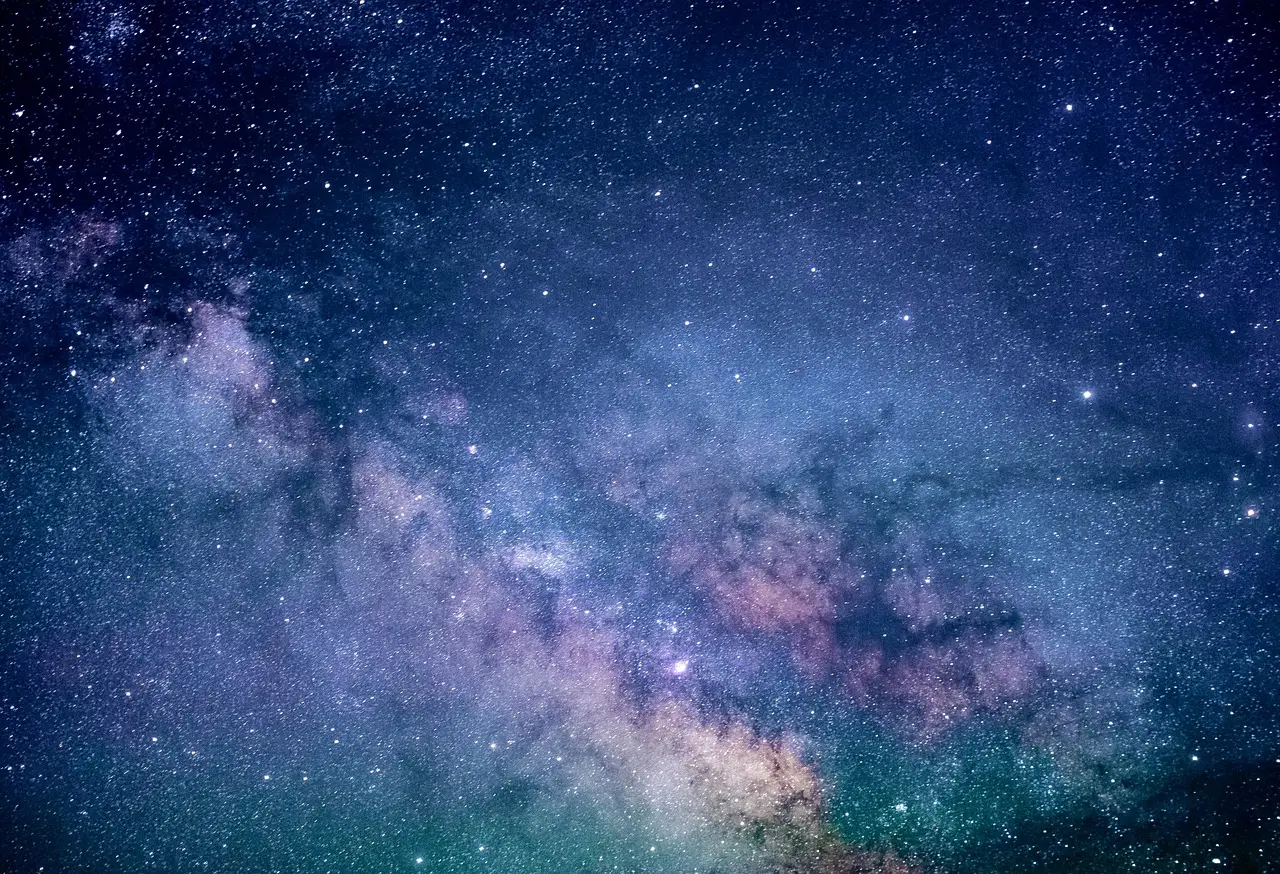
A new Milky Way simulation resolved our galaxy star by star and ran about 20 times faster than exhaustive calculation, by using an AI model to predict how gas spreads after a supernova explodes.
The team, including researchers from the University of Tokyo, presented the work at the International Conference for High Performance Computing, Networking, Storage and Analysis (SC 2026), held Nov. 15–20 in Chicago. They call the simulation PHEASANT. In the team's own description, it reaches a level of detail never achieved before: individual stars, across a galaxy containing hundreds of billions of them.
What does this change for astronomers?
It gives them something they could not previously run: a Milky Way model in which a single exploding star can be watched feeding back into the whole galaxy.
Individual stars matter because their effects reach far beyond their neighborhoods. Massive stars form in groups, often within the spiral arms, where cold gas supplies the raw material. They heat the gas around them, and some eventually explode as supernovae. Several nearby explosions can create enormous bubbles of hot gas, triggering further star formation while driving material away from the galaxy's disk.
A simulation without that detail can miss the links between individual stellar events, producing a very different picture of how gas is distributed.
"With this simulation, we can investigate how individual supernovae affect the number of stars that form, the size of these giant gas bubbles and the material that flows out of the galaxy," said Professor Michiko Fujii of the University of Tokyo's Department of Astronomy. The same tool lets the team study how groups of stars form and how they may eventually develop into star clusters.
"Something we want to understand is how events on the scale of individual stars connect to the larger structure of the Milky Way," Fujii said.
One check has already passed. The researchers say the model produces a star formation rate similar to the one estimated from observations of the real Milky Way. That is the only validation the release describes in detail — it offers no comparison of the simulated spiral arms, halo gas or chemical abundances against the real sky.
How does the AI shortcut work?
Galaxies contain hundreds of billions of stars, plus gas and other materials, all interacting under gravity and other forces. Every simulation therefore simplifies something, often time resolution or spatial complexity, because representing everything closely demands more computing power. In a galaxy the size of the Milky Way, small regions change rapidly and demand many more calculation steps than the rest of the galaxy.
Postdoctoral researcher Keiya Hirashima, of RIKEN, built the AI model that predicts how gas around a supernova changes over time. When a star goes supernova, it heats and pushes surrounding gas outward; simulating that process in detail normally requires very small time steps.
"One of my parts was to develop an AI model that predicts how the gas surrounding a supernova explosion changes over time," said Hirashima. "If we calculate this process directly, we need time steps of around 100 years. My model predicts gas distribution after 100,000 years."
That shortcut lets the main galaxy simulation take much longer steps and skip many smaller calculations, which is where the roughly 20-fold speedup comes from.
Why three supercomputers?
Adapting the software was itself a chunk of work. Each system uses different AMD, Intel or NVIDIA CPUs and GPUs, and good performance across all of them required specific optimizations.
"Making this work efficiently on different supercomputers was a challenge because each system uses different AMD, Intel or NVIDIA CPUs and GPUs," Hirashima said. "Achieving good performance across all three systems required some specific optimizations."
Running on three systems matters because the team did not expect one machine to carry the job. As Fujii put it: "We expect better simulations as computational power increases, but this still requires work on improving resolutions, and for a Milky Way-sized galaxy, it's not straightforward."
What does this not answer yet?
Plenty.
The galaxy's full origin story remains out of reach. "We have not yet simulated the full process through which a galaxy like ours forms, though," Hirashima said. "Understanding that history will be an important next step."
Material circulation is also unsettled. "An important open question is how material moves around the Milky Way, from the disk into the surrounding halo and back again," said Hirashima. Elements, including those that make up people, form inside stars and get released into interstellar gas through processes such as supernova explosions, then mix through the galaxy before becoming part of new stars. The simulation lets researchers follow that circulation directly instead of inferring it.
Hirashima also wants to examine how the spiral arms relate to molecular clouds, the places where stars are born.
One more caution. The work appears as a conference paper — K. Hirashima et al., "Architecture-Agnostic Exascale Star-by-Star Simulation of Our Galaxy," with a DOI in the IEEE proceedings series for SC 2026. The release describes no independent reproduction of the results, and no plan for releasing the simulation to other researchers. A matching star formation rate is a start, not a verdict on the model's fidelity.
via phys.org/rss-feed/ (Source)
More from James Calloway
Show full bio
Staff writer covering regulation, policy and their impact on general science news at SciBeat.
570 articles
Nearby plates
- Milky Way may have begun as thousands of small galaxies, model shows
- Milky Way's Norma Arm May Partly Be a Bar Shock Front
- Milky Way's Norma Arm May Not Be a Spiral Arm at All
- Milky Way Among Best Places for Life, Supercomputer Simulation Finds
- Black Hole Jets May Decide Whether Galaxies Keep Making Stars