Recorded November 22, 2026
Space & AstronomyReported finding
Two Spacecraft Enter Mercury Orbit, First Visitors in a Decade
The $2 billion BepiColombo mission entered Mercury orbit Saturday after an eight-year, 6-billion-mile trek — the first spacecraft to visit the planet since 2015.
By Elena Vasquez3 min read535 words
In brief
- BepiColombo entered Mercury orbit Saturday after an eight-year journey — the first visit since NASA's Messenger crashed in 2015.
- The $2 billion (1.7 billion euro) mission carries one ESA orbiter and one JAXA craft that will separate next month.
- The route covered over 6 billion miles (10 billion km) using gravity assists from Earth, Venus and Mercury itself.
- Mercury's surface can exceed 800°F (427°C); ESA aims for at least one Earth year of operations.
- Only three spacecraft have ever visited Mercury; only Uranus and Neptune have had fewer visitors.
A pair of linked robotic spacecraft slipped into orbit around Mercury on Saturday, ending an eight-year cruise through the inner solar system and becoming the first mission to reach the planet in more than a decade. The $2 billion (1.7 billion euro) mission, called BepiColombo, is only the third spacecraft ever to visit the sun's closest planet.
The European Space Agency announced the arrival via social media. A series of thruster firings slowed the craft enough for Mercury's weak gravity to capture it. Then came the wait. Flight controllers in Germany — 94 million miles (152 million kilometers) away — needed several anxious hours to confirm orbit, poring over data streaming back from the spacecraft. Additional information was not immediately available.
BepiColombo is a joint venture: one European orbiter from ESA and a smaller craft from the Japan Aerospace Exploration Agency, currently flying as a single stack. They will separate next month to map and study Mercury from different altitudes.
Why did it take eight years to get there?
Mercury's pull is feeble, and falling toward the sun actually accelerates a spacecraft, so the mission needed a slow, roundabout braking route. Launched in 2018, BepiColombo flew once past Earth, twice past Venus and six times past Mercury for gravity assists. Those loop-de-loops put more than 6 billion miles (10 billion kilometers) on the odometer. The conjoined spacecraft shed their mother ship in September for the final leg. Gravity did the steering.
What will the two orbiters study?
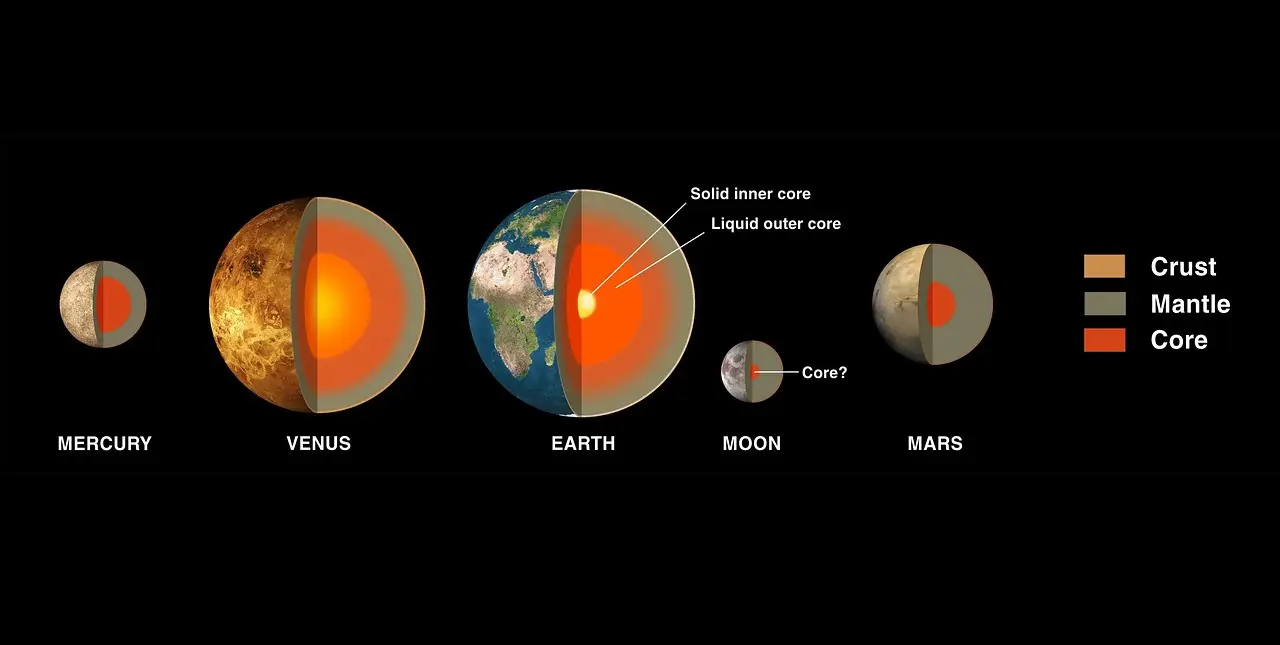
Once flying separately, the two craft will examine Mercury's dense interior and its external magnetic field, plus everything in between:
- Impact craters
- Volcanic plains
- Mountain ridges and peaks jutting as high as 3 miles (4 1/2 kilometers)
Lead project scientist Geraint Jones said he and his colleagues can't wait for the new data to start streaming down in the spring. The mission will provide the ability to compare "unprecedented measurements taken by two spacecraft at the planet at the same time," he noted.
How hot is too hot?
Surface temperatures on Mercury can exceed 800 degrees Fahrenheit (427 degrees Celsius), putting heavy strain on electronics and engineering systems. Agency officials want the mission to run for at least one Earth year — the equivalent of four Mercury years. Keeping hardware alive is the core engineering problem.
"The spacecraft and its instruments need to be kept as cool as possible, which is a huge technical challenge in itself," Jones said in an email.
Why Mercury stays mysterious
Despite sitting closer to Earth than the outer planets, Mercury remains one of the solar system's least-explored worlds. It is barely bigger than our moon. Only Uranus and Neptune have hosted fewer visitors — a lone Voyager 2 flyby back in the 1980s.
The visit count is short. NASA's Mariner 10 flew past Mercury three times in the mid-1970s; that team included the late Italian mathematician Giuseppe "Bepi" Colombo, the mission's namesake. NASA's Messenger entered orbit in 2011 and, after running out of fuel, crashed into the planet in 2015.
Now BepiColombo takes the baton, with two spacecraft where earlier missions sent one. The science starts in earnest this spring.
via phys.org/rss-feed/ (Source)
More from Elena Vasquez
Show full bio
Correspondent covering money, funding and market shifts around general science news at SciBeat.
592 articles