Plate Nº 36 · recorded October 13, 2026
Space & AstronomyReported finding
Eight Years in Space, and the Hard Part Starts Now
BepiColombo jettisoned its Mercury Transfer Module on 3 September 2026 after eight years in transit — the first step in ESA's most complex arrival sequence yet.
By James Calloway4 min read702 words
In brief
- BepiColombo's Mercury Transfer Module separated from the spacecraft stack on 3 September 2026, after eight years of travel.
- MTM separation occurred at 14:00 CEST; the earliest possible signal acquisition came at 15:53 CEST.
- The event was broadcast live from ESA's ESOC control centre in Darmstadt, Germany; the replay runs 2 hours 31 minutes.
- The mission is a joint ESA/JAXA project launched in 2018.
- ESA describes what follows as one of the most complex planetary arrival sequences it has ever attempted.
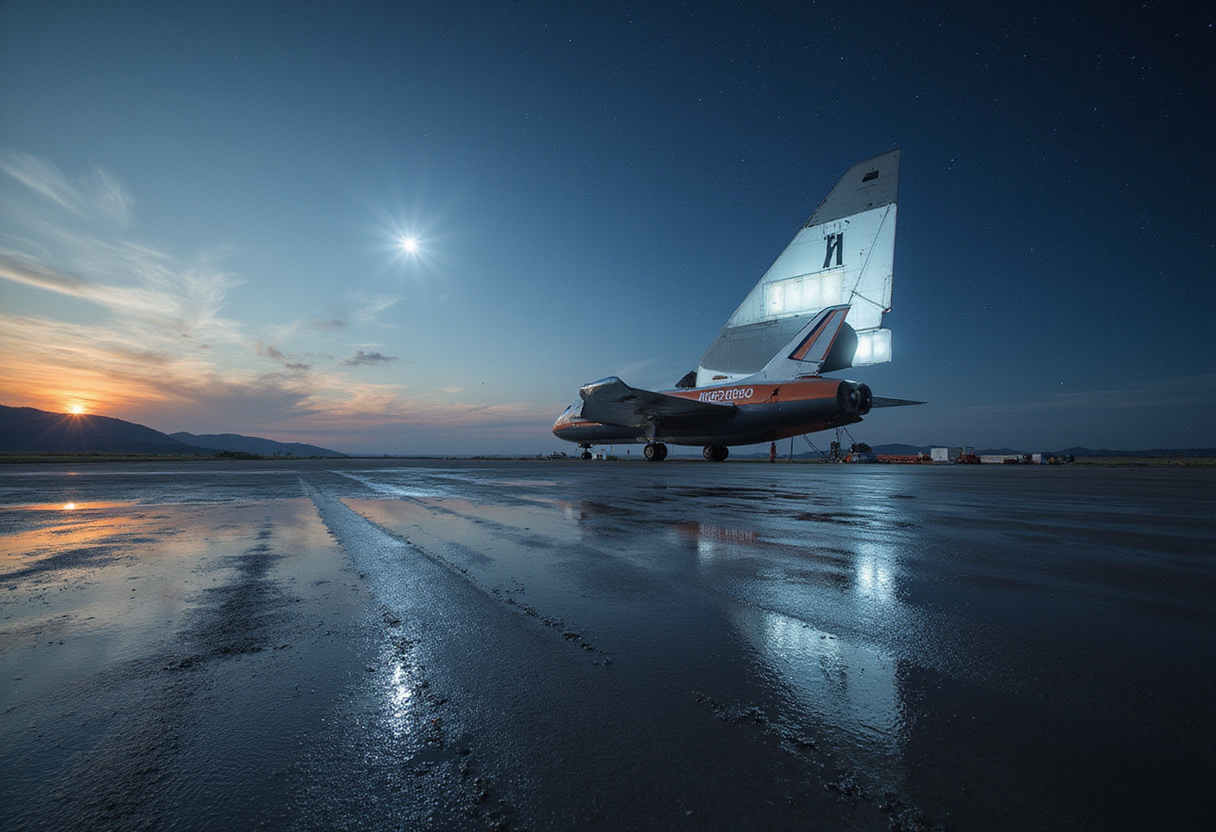
Eight years after launch, ESA and JAXA's BepiColombo spacecraft took the first critical step toward arriving at Mercury on 3 September 2026, separating from the module that carried it across the inner Solar System. ESA calls it "one of the most complex planetary arrival sequences ever attempted" by the agency. That claim deserves a closer look. But the milestone itself is real, and the agency broadcast the whole thing live.
You can now watch the full replay, a 2 hour 31 minute programme streamed from ESA's European Space Operations Centre (ESOC) in Darmstadt, Germany. It includes live views from the Main Control Room, expert commentary, and — the moment everyone waited for — the first signal from the spacecraft after separation.
What actually separated, and why?
BepiColombo has flown as a stack of modules since launch in 2018. One of them, the Mercury Transfer Module (MTM), is essentially a space tug: it provided the propulsion and solar power that nudged the spacecraft through gravity assists and toward the innermost planet. That tug has now done its job. At 14:00 CEST on 3 September, the MTM separated from the rest of the stack.
From here, the remaining spacecraft must finish the journey to Mercury orbit on its own. That is the "complex planetary arrival sequence" ESA refers to. Simple to say. Harder to do.
What does this change for the mission?
Practically, it changes everything about the next phase. The stack that traveled together for eight years no longer exists. Whatever happens from this point onward depends on the remaining modules performing an arrival sequence without the hardware that got them there.
The day's schedule, in ESA's own timeline (CEST):
- 13:45 – Livestream begins
- 14:00 – MTM separation
- 14:30 – Livestream pause
- 15:30 – Livestream resumes
- 15:53 – Earliest possible acquisition of signal and spacecraft status check
- 16:00–16:45 – End of livestream
Note the wording on that signal. "Earliest possible acquisition" is engineers hedging. A signal could arrive later. Silence at 15:53 would not have meant failure, only a longer wait. That gap between 14:00 and 15:53 is also worth pausing on — nearly two hours passed before anyone on the ground could confirm the spacecraft's health. Spacecraft don't phone home instantly, and ESA planned accordingly.
The caveats
A separation is a beginning, not an arrival. BepiColombo is not yet in orbit around Mercury; this event marks the start of the approach sequence, not the finish line. The science goals — studying Mercury's interior, surface and magnetic environment — still lie ahead, and missions to the innermost planet have failed before. Japan's Akatsuki missed Venus in 2010, though it recovered years later. Mercury is arguably harder: the planet's proximity to the Sun makes both braking and navigation notoriously difficult.
ESA's livestream offered "behind-the-scenes insights" and expert analysis. Useful, but also a reminder that a live broadcast is a controlled narrative. What we did not see in the schedule: contingency briefings, backup plans, or what happens if the arrival sequence hits trouble. Space agencies rarely show those on camera.
Why eight years for the nearest planet?
Mercury looks like a short hop. It isn't. A spacecraft falling toward the Sun accelerates enormously, and no conventional rocket can simply put on the brakes at Mercury. BepiColombo needed years of gravity assists — flying past Earth, Venus and Mercury itself — to shed enough speed, which is why the mission has crawled through the inner Solar System since 2018 rather than flying straight there.
The MTM was the workaround. Now it's gone, and the spacecraft carries the rest of the job alone.
What happens next
The full replay remains available for anyone wanting to watch the separation and the 15:53 signal check unfold in real time. Beyond that, ESA has not detailed the subsequent steps of the arrival sequence in this broadcast. The agency promises one of its most complex planetary arrivals ever. Every promise in spaceflight comes with a caveat attached: plans hold until the spacecraft says otherwise.
For now, the separation succeeded. That's the fact. The rest of the story is still being written, several million kilometres from Darmstadt.
via ESA Space Science News (Source)
More from James Calloway
Show full bio
Staff writer covering regulation, policy and their impact on general science news at SciBeat.
224 articles
Nearby plates
- BepiColombo's Mercury arrival begins with 3 September separation
- NASA Details Its Role in Japan's Mission to Mars's Moons
- NASA's Roman Telescope launches on mission 1,000 times faster than Hubble
- First Phobos sample mission launches 19 October, JAXA confirms
- SpaceX Launches Crew-13: Fast Track to Space Station Begins