Recorded November 22, 2026
Space & AstronomyReported finding
Two NASA Mars Spacecraft Halt Science Operations After Glitches
NASA's Perseverance rover and the 24-year-old Mars Odyssey orbiter have paused science operations after a radio fault and a failed reaction wheel, with a return to work hoped for late November.
By Priya Raman4 min read719 words
In brief
- Perseverance broke the off-Earth driving record (28.06 miles / 45.16 km) on Oct. 11, then suffered a radio fault 19 days later.
- The rover's backup UHF radio transmits at about half its expected power; science work paused to prioritize diagnostics.
- Odyssey lost a reaction wheel on Nov. 4; it has enough hydrazine fuel for only a month or two of thruster-only steering.
- Odyssey has operated at Mars longer than any other spacecraft since arriving in October 2001.
- NASA hopes both spacecraft resume science operations by the end of November.
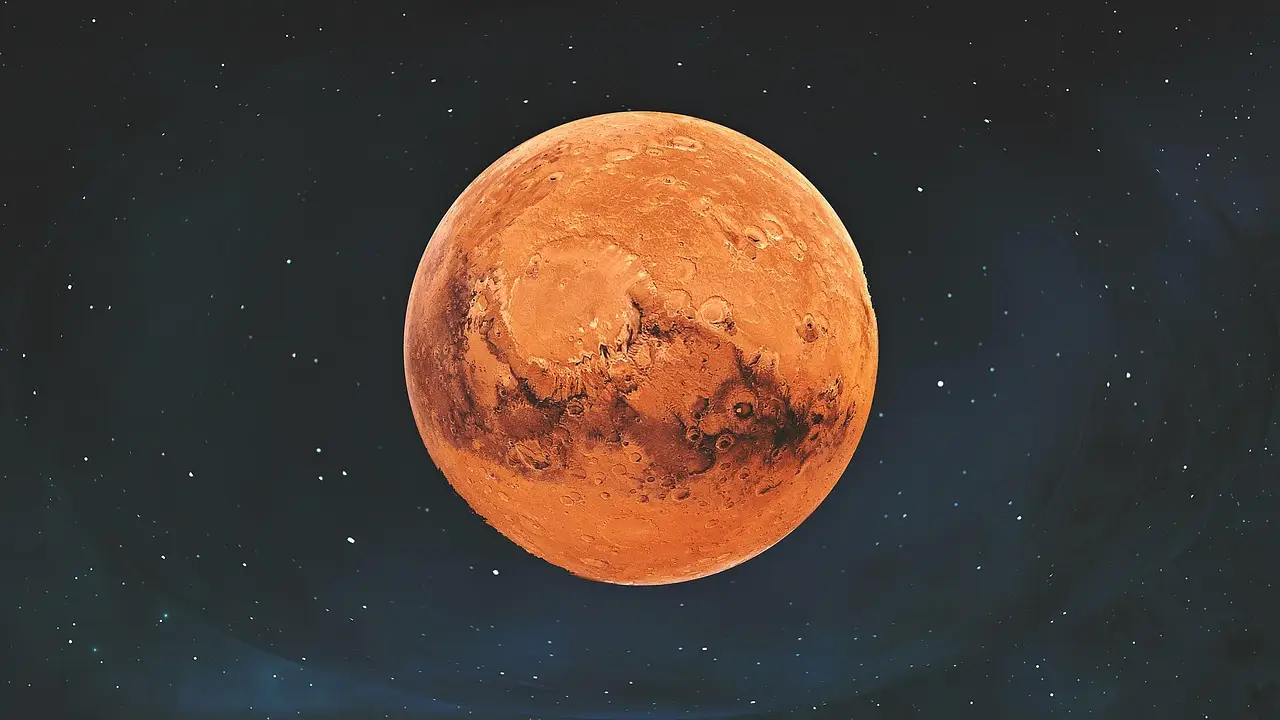
Two NASA spacecraft at Mars stopped science work on the same week, the agency announced on Thursday, Nov. 19, after the Perseverance rover developed an antenna problem and the Mars Odyssey orbiter lost the use of a reaction wheel. NASA hopes both explorers can return to operations by the end of November.
What happened to Perseverance?
The trouble began just 19 days after a triumph. On Oct. 11, the car-sized rover set a new distance record for off-Earth driving, surpassing the 28.06 miles (45.16 kilometers) logged by its smaller cousin, NASA's Opportunity rover. Then, on Oct. 30, the mission team noticed that Perseverance's main UHF downlink radio — the transmitter it uses to send data home via relay satellites in Mars orbit — had stopped sending its usual "heartbeat" pings to the rover's main computer.
Perseverance caught the failure on its own and followed its programming exactly: the six-wheeled robot switched to its backup UHF radio and entered a protective "safe mode," shutting down all non-essential systems.
Engineers pulled the rover out of safe mode, but a second problem surfaced. "The backup UHF radio was transmitting at about half of its expected power output," NASA officials wrote in Thursday's update.
The team has since stopped using the backup radio as well. Perseverance is now talking to Earth directly, bypassing relay orbiters and beaming signals through its high-gain antenna to the dishes of NASA's Deep Space Network.
That pathway offers lower data rates, so the mission has paused science work — including observations by the rover's cameras — to prioritize sending diagnostic information home. Fans who follow the mission's raw image feed may have noticed the gap already: no new pictures have been uploaded since Nov. 7.
NASA urged calm. "The rover is stable and communicating with the team," agency officials wrote. "The team is hopeful the rover could return to science by the end of November, and NASA will provide further updates in the future as the team works the issue."
Why is Odyssey's situation more serious?
Mars Odyssey, which arrived at the Red Planet in October 2001 and has operated there longer than any other spacecraft, lost one of its four reaction wheels — spinning devices that help a spacecraft control its orientation in space. Three of the four must work for the job to be done, and Odyssey had already lost one wheel in 2013.
The latest failure cropped up on Nov. 4, when the orbiter entered safe mode. It remained in that protective posture until Nov. 6 while engineers diagnosed the problem. They have made some progress, at one point coaxing the faulty wheel to move when commanded. "Further testing is being conducted to confirm whether the wheel is recoverable," NASA officials wrote.
Although Odyssey has been out of safe mode for two weeks, it has not resumed its science work or its long-standing role as a communications relay for surface craft. NASA aims to restore both functions at the conclusion of testing during the last week of November.
The stakes are real. If the wheel cannot be recovered, the team would have to steer Odyssey using its thrusters alone, and the orbiter carries only enough hydrazine fuel for a month or two of that approach, according to NASA.
What has Odyssey contributed?
Whatever happens, the mission's record stands. "Odyssey created the first global maps detailing the composition of the Martian surface, which have become foundational for Mars geologists," NASA officials wrote.
The orbiter's maps have also flagged hazards at landing sites, identified scientifically interesting locations for landers and rovers, and charted water molecules — including buried ice — in the top 3 feet (1 meter) of the surface, ice that could serve the first astronauts on Mars.
Perseverance, for its part, has already fulfilled much of its own brief since landing in Jezero Crater in February 2021. The mission team has determined that Jezero hosted a potentially habitable lake billions of years ago, and the rover has detected a wealth of complex organic compounds — carbon-containing molecules — in Martian rock, some of which might themselves be signs of life. Scientists caution that confirming that hypothesis will likely require bringing the collected samples back to Earth for analysis.
For now, both spacecraft wait on diagnosis.
via space.com (Source)
More from Priya Raman
Show full bio
Senior reporter covering people, launches and day-to-day practice in general science news at SciBeat.
549 articles
Nearby plates
- Perseverance Sets Off-World Driving Record at 28.10 Miles
- Perseverance Breaks Off-World Driving Record: 28.10 Miles on Mars
- NASA's Perseverance Drives 45.22 km, Breaking the Off-World Distance Record
- NASA Books a Ride for Its $400 Million Moon Rover PROMISE
- Private spacecraft burns up after $30 million NASA telescope rescue fails