Plate Nº 18 · recorded October 31, 2026
Biology & EvolutionReported finding
Vitamin A Discovery Upends 30-Year Theory of How Human Vision Forms
Johns Hopkins researchers found retinoic acid and thyroid hormones convert blue cones into red and green cones in the developing foveola, upending a 30-year theory of retinal development.
By James Calloway4 min read771 words
In brief
- Blue cones in the foveola convert to red and green cones between fetal weeks 12 and 14, the study found.
- The foveola, a tiny retinal region, accounts for roughly 50% of human visual perception.
- Findings published in PNAS (2026, 123(7)) challenge a roughly 30-year-old model of cone cell identity.
- Retinoic acid, a vitamin A derivative, limits blue cone formation; thyroid hormones drive the conversion.
- The discovery concerns prenatal development only — it does not show vitamin A supplements improve adult vision.
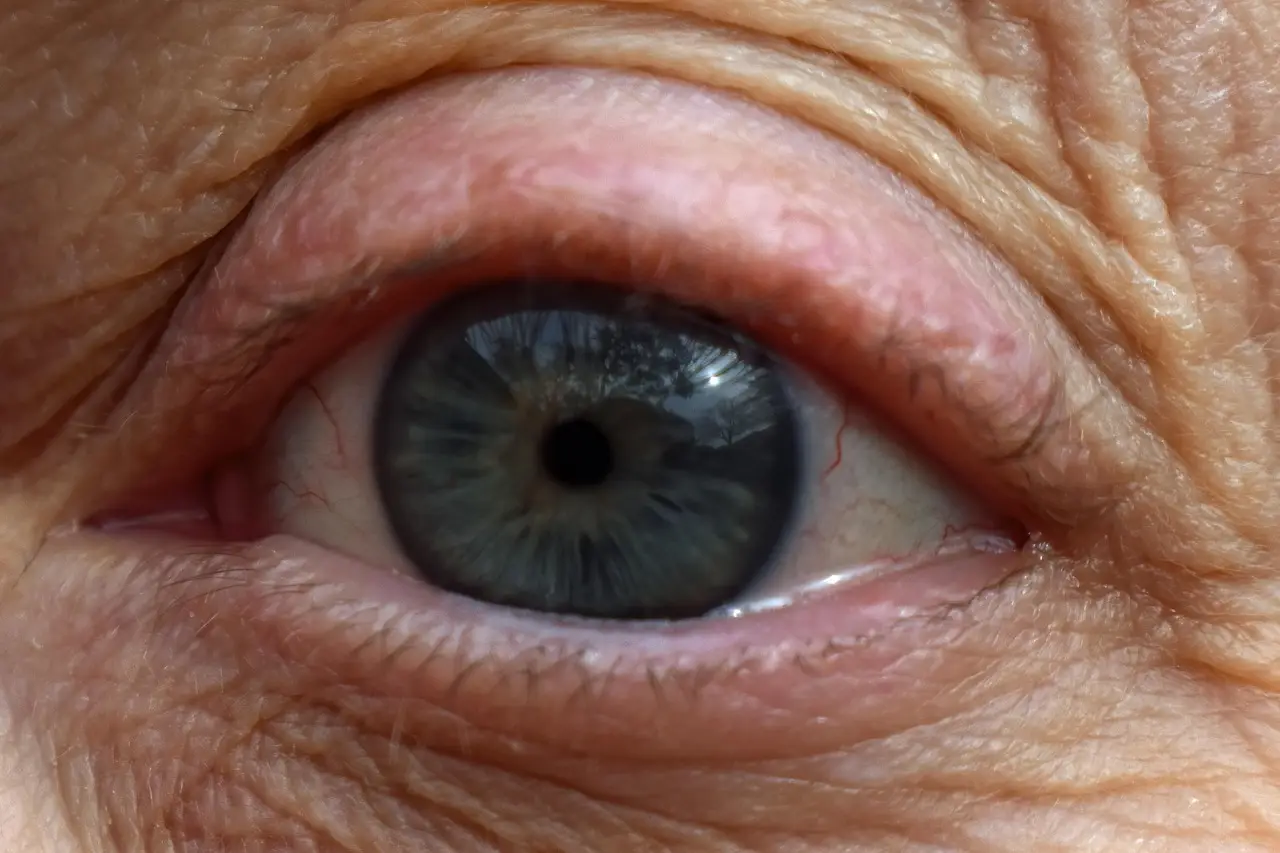
A vitamin A derivative, working with thyroid hormones, appears to reshape cells in the center of the human retina before birth — overturning a theory that has stood for roughly 30 years. Researchers at Johns Hopkins University published the findings in Proceedings of the National Academy of Sciences on a study led by biologist Robert J. Johnston Jr.
The surprise sits in the foveola, a pinprick-sized region at the retina's center. Despite occupying a small fraction of the retina, it drives approximately 50% of human visual perception. That's what lets you read, drive, and recognize faces.
What did the researchers actually find?
The team grew miniature human retinas — organoids, tiny clusters of cells grown from fetal tissue — and watched them for months. This matters because the standard lab animals, mice and fish, simply don't share our retinal layout. Until now, nobody could watch a human foveola form.
Between weeks 10 and 12 of fetal development, a small number of blue cones — cells sensitive to blue light — sit inside the foveola. By week 14, they appear to have transformed into red and green cones.
Two chemical influences drive this, according to the study:
- Retinoic acid, a molecule made from vitamin A, limits how many blue cones form in the central retina in the first place.
- Thyroid hormones, better known for regulating metabolism, then push the leftover blue cones to convert into red and green cones.
"First, retinoic acid helps set the pattern. Then, thyroid hormone plays a role in converting the leftover cells," Johnston said. "That's very important because if you have those blue cones in there, you don't see as well."
The foveola's cone arrangement — red and green present, blue absent — is essential for the exceptionally sharp vision the eye's center produces. Humans have three cone types, and the brain compares their signals to distinguish a broad palette of color.
Why does this challenge 30 years of dogma?
Here's the old model. Blue cones in the foveola were thought to simply migrate away as the retina matured. Once a cell picked its cone type, scientists assumed, that identity stayed fixed forever.
The new data points elsewhere. Rather than moving out, at least some blue cones change identity outright.
"The main model in the field from about 30 years ago was that somehow the few blue cones you get in that region just move out of the way," Johnston said. "We can't really rule that out yet, but our data supports a different model. These cells actually convert over time, which is really surprising."
Note the hedge. Some cells may still migrate; the researchers haven't excluded it. What the study does establish is that developing cones are more flexible than textbooks assumed.
And before anyone reaches for supplements — the discovery concerns vitamin A signaling during prenatal development. It does not show that vitamin A pills sharpen adult vision. They don't, on this evidence.
Could this lead to restoring lost vision?
"This is a key step toward understanding the inner workings of the center of the retina, a critical part of the eye and the first to fail in people with macular degeneration," Johnston said. "By better understanding this region and developing organoids that mimic its function, we hope to one day grow and transplant these tissues to restore vision."
Macular degeneration, a leading cause of central vision loss in older adults, currently has no cure. Glaucoma is another target the researchers name.
The team is now refining its organoids to better mimic the human eye. The long-term goal: precisely controlled populations of photoreceptors — the light-detecting cells — for transplantation into damaged retinas.
Katarzyna Hussey, a study author now at CiRC Biosciences, a cell therapy company in Chicago, sees a path toward made-to-order photoreceptors. "A big avenue of potential is cell replacement therapy to introduce healthy cells that can reintegrate into the eye and potentially restore that lost vision," she said.
The caveats are real, and Hussey doesn't hide them. Transplanted cells would need to survive, wire into the eye's existing circuitry, and work safely. "These are very long-term experiments, and of course we'd need to do optimizations for safety and efficacy studies prior to moving into the clinic. But it's a viable journey."
So what does this change for you today? Nothing clinical. It changes the map. Scientists now have a mechanism — retinoic acid setting the pattern, thyroid hormone converting the stragglers — and a lab model to test it. That's how restoration research starts. Not with a transplant. With a corrected explanation.
via dx.doi.org (Original)
More from James Calloway
Show full bio
Staff writer covering regulation, policy and their impact on general science news at SciBeat.
271 articles
Nearby plates
- Brain Wiring Starts Precise, Not Random, Mouse Study Finds
- Optogenetic therapy improves vision in 10 blindness patients
- Smartphones as Retinal Cameras: A New Tool for Global Eye Care
- Eye Scans May Flag Heart Rhythm Disorder Years Before Diagnosis
- Scientists reconstruct 10-second videos from mouse brain signals