Plate Nº 26 · recorded November 17, 2026
Space & AstronomyReported finding
Voyager 1 reaches one light-day from Earth on November 18
Voyager 1 will sit exactly one light-day from Earth on November 18. Its 48-hour radio delay underscores both extraordinary science and a shrinking power margin.
By Elena Vasquez4 min read799 words
In brief
- Voyager 1 reaches one light-day, 16.09 billion miles, on November 18 at 5:18 a.m. EST.
- A one-way radio signal takes 24 hours, making the round trip 48 hours.
- Voyager 1 has occupied interstellar space about 11 billion miles from Earth since 2012.
- Two of the 10 scientific instruments active at launch remain active as the probe's plutonium supply declines.
- NASA estimates the Deep Space Network will lose contact with Voyager 1 around 2036.
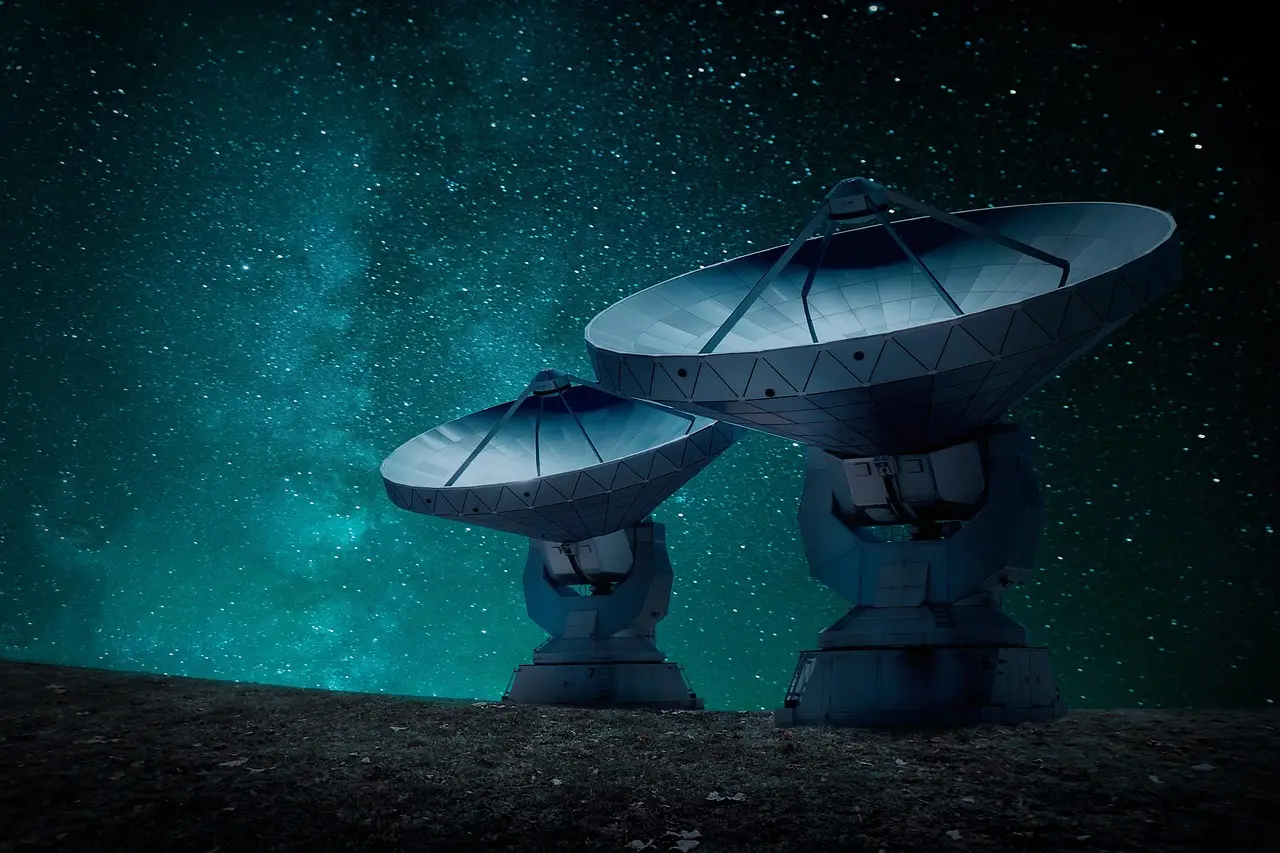
Voyager 1 will be exactly one light-day from Earth at 5:18 a.m. EST on November 18, putting the NASA probe 16.09 billion miles away and setting a communications milestone.
A light-day is the distance a photon can travel in a single day. At that moment, a radio signal from Earth would take 24 hours to reach Voyager 1, and the probe's answer would take another 24 hours to return.
That delay is no abstraction. Jamie S. Rankin, a Princeton University research scientist and heliophysicist who studies the Sun's influence in space, compares it with turning on an oven Friday morning and not learning whether it is hot until Sunday, by which time it has baked most of Saturday.
Voyager 1 already travels farther from Earth than any other human-made object. Rankin, who also serves as a deputy project scientist for the Voyager mission, called the work “a pretty incredible endeavor.” She said: “In my mind the fun is receiving a signal back from the Voyager, a light-day away.”
Takeaway: At one light-day, even a simple exchange with Voyager 1 becomes a two-day conversation.
How does Voyager 1 study interstellar space?
Voyager 1 has occupied the very local interstellar medium, the region around our solar system, since 2012. It now sits about 11 billion miles from Earth, where it can detect changes in plasma, a gas of charged particles, and changes in the magnetic field.
Rankin said the mission team is trying to determine how far the Sun's influence extends. The Sun continually releases charged particles in a stream called the solar wind. That wind pushes against surrounding interstellar gas and material, sculpting a vast bubble known as the heliosphere.
Rankin said some region farther out has no awareness that the heliosphere exists. She believes Voyager 1 is at the edge of the “undisturbed, pristine interstellar medium.”
Takeaway: Voyager 1 is probing the boundary where the Sun's protective bubble gives way to interstellar space.
How is NASA keeping Voyager 1 alive?
Almost 50 years after its launch, Voyager 1 still supplies astronomers with data. Its 23-watt radio transmitter produces roughly the output of a small refrigerator lightbulb. Only antennas as sensitive as the 70-meter-wide dishes in NASA's Deep Space Network can detect the spacecraft's super-faint signal; without them, the probe would have gone incommunicado years ago.
At launch in September 1977, the nuclear-powered spacecraft had 10 operational scientific instruments. It discovered new moons orbiting Jupiter and Saturn, while its observations of Jupiter's moon Europa hinted at a liquid ocean beneath an icy crust.
After Voyager 1 traveled beyond the solar system's planets, NASA shut down unnecessary equipment to conserve power. Only two instruments remain active as engineers manage the spacecraft's dwindling plutonium supply.
The latest power-saving steps include:
- April: NASA turned off the Low-energy Charged Particles experiment.
- September: The team replaced three systems with lower-power alternatives, about six weeks after the same strategy worked on Voyager 2.
Voyagers 1 and 2 have also operated without several instrument heaters for years. Rankin said without those shutdowns, the mission would have ended a decade ago. She said engineers keep finding new ways to extend the spacecraft's life, but they can turn off only so much.
Takeaway: Voyager 1 survives through a shrinking power budget, deliberate shutdowns and continuous engineering work.
Why did contact briefly stop?
The spacecraft's operating margin remains thin. In late October, NASA briefly lost contact with Voyager 1. The issue appeared to resolve itself and may have been related to a group of thrusters going offline.
Kareem Badaruddin, Voyager mission manager at NASA's Jet Propulsion Laboratory, said: “This is the first time we’ve seen the spacecraft do something like this, but we are at a point in the mission where we have to expect the unexpected. We’re relieved to be back in contact with Voyager 1 and are eager to understand what happened.” JPL representatives did not respond to a request for comment.
Takeaway: The brief communications failure shows how little margin remains as Voyager 1 ages.
How long will Earth remain in contact?
All spacecraft missions must end. NASA estimates the Deep Space Network will lose contact with Voyager 1 around 2036, long before the probe reaches its two-light-day milestone. The spacecraft could freeze and lose its ability to point toward Earth, or its power systems could finally fail.
Rankin said she knows the end is coming but believes it is probably not 20 years away, or even 10. After contact ends, Voyager 1 will continue onward through space in radio silence.
Takeaway: Voyager 1 may keep flying after NASA can no longer hear it.
via popsci.com (Source)
More from Elena Vasquez
Show full bio
Correspondent covering money, funding and market shifts around general science news at SciBeat.
503 articles
Nearby plates
- Voyager 1 reaches 1 light-day from Earth on Wednesday, Nov. 18
- Voyager 1 reaches 1 light-day from Earth on Nov. 18 after 49 years
- Voyager 1 to reach 1 light-day from Earth in November 2026
- Voyager 1 Nears One Light-Day From Earth, a First for Any Human Object
- Voyager 1 Hits One Light-Day From Earth — 49 Years After Launch