Plate Nº 62 · recorded October 21, 2026
Space & AstronomyReported finding
White Dwarf Stars Are Not Always White — Some Are Green
UK astronomers have revealed that white dwarf stars can be pink, yellow, cyan, purple or green — including the first confirmed green star, WD J1330+6435.
By Priya Raman3 min read697 words
In brief
- Announced October 15, 2026, University of Warwick researchers found white dwarfs can appear pink, cyan, yellow, purple and green.
- WD J1330+6435 is the first documented green star of any kind.
- Only 5 of 151 white dwarfs within 65 light-years showed unusual coloring; most appear white at ~6,800 K.
- Findings published October 15, 2026 in the peer-reviewed journal RAS Techniques and Instruments.
- WD J1011+6435, 48 light-years away, may be the reddest star ever observed.
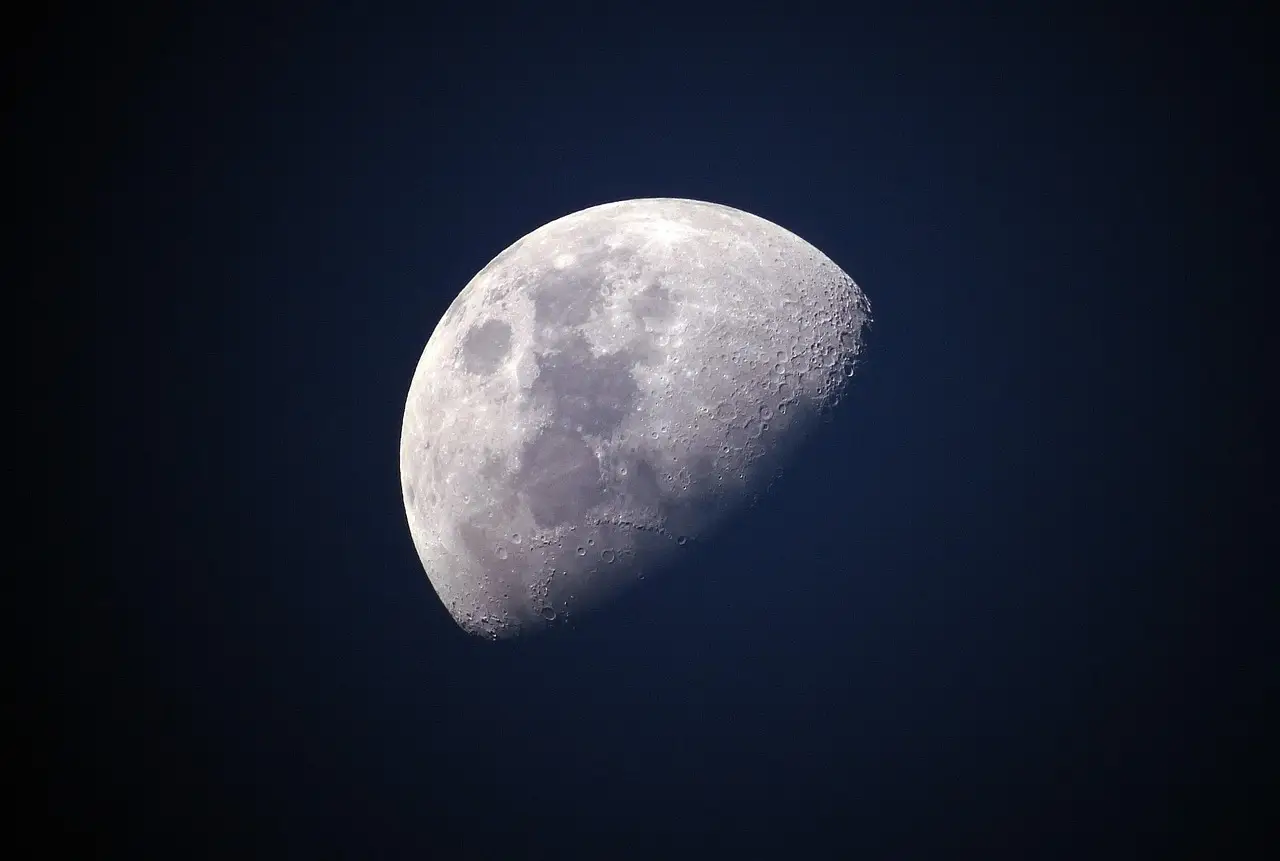
For the first time on record, astronomers have confirmed a genuinely green star — and it is a white dwarf. On October 15, 2026, researchers at the University of Warwick announced that white dwarfs, the dense dead cores of burned-out stars, can appear pink, cyan, yellow, purple and green, upending the assumption that these objects are always white.
The peer-reviewed findings appeared in RAS Techniques and Instruments on the same date. Green is the headline surprise: no green star of any kind had ever been identified before. The stars we see in the night sky are typically orange, white or blue.
What are white dwarfs, and why were they thought to be white?
White dwarfs do not shine through nuclear fusion like ordinary stars. They are the hot, dense cores left behind when stars exhaust their fuel and expel their outer gases into space. Our own sun will one day become one — which now raises a new question about what color it will be.
Most stars, including most white dwarfs, behave like perfect radiators, meaning their color is set almost entirely by temperature. Study leader Mark Hollands of the University of Warwick said: "But nobody had really looked into what else might be possible for white dwarfs. It turns out these incredibly dense stars can produce colors nobody expected, and some of them genuinely surprised me."
How can a dead star turn green?
Density is the key. The coolest white dwarfs carry the highest densities, around 0.036 pounds per cubic inch (1 gram per cubic centimeter) — millions of times denser than the sun's photosphere, its visual surface. Under such conditions, trace elements like carbon, calcium and sodium interact with the dense helium plasma (an electrically charged gas) across a much wider range of colors than in less dense white dwarfs.
Astronomers cannot observe these colors directly, so the team worked with existing spectral data, in which starlight is split into its constituent wavelengths. They then applied a model of human color vision to determine what each star would look like to a viewer standing close by.
The results sorted into distinct families:
- Carbon-rich white dwarfs tend toward pink or purple.
- White dwarfs polluted by asteroid or comet debris tend toward yellow.
- White dwarfs with hydrogen and helium atmospheres appear cyan or blue, because hydrogen molecules collide with helium atoms in their atmospheres.
The green star itself, WD J1330+6435, owes its hue to calcium, lithium and sodium in its atmosphere, which together give it a chartreuse appearance. Hollands said: "The traces of sodium in the atmosphere of this white dwarf absorb the orange part of the spectrum, leaving behind a ghostly green glow. Imagine standing on a planet and looking up at a green star. It feels like something out of science fiction."
Is this also the reddest star ever seen?
Possibly. The team identified WD J1011+6435, located 48 light-years from Earth, as a candidate for the reddest star observed so far. This white dwarf has a deep internal convection zone, a region of churning material that carries carbon from far below up to the surface. There, carbon molecules distort the star's light so severely that almost all of it is squeezed into wavelengths beyond 600 nanometers, producing a deep salmon-pink glow unlike that of any ordinary star, even a red dwarf.
Are all white dwarfs colorful?
No. Most remain white. When the researchers examined a more representative sample of 151 white dwarfs within 65 light-years of Earth, only five showed unusual coloring: three pink and two yellow — roughly 1 in 30 across the broader picture.
The remaining stars had a median color temperature of about 6,800 Kelvin (6,500 degrees Celsius, or 11,700 Fahrenheit), which looks white to the human eye. The study also corrects a common misconception: white dwarfs are not typically blue. Hotter, bluer ones simply appear disproportionately often in surveys because they can be detected from farther away.
The finding adds a curious footnote to earlier discoveries, such as the 2023 detection of Janus, a white dwarf with two faces — one hydrogen, one helium.
A green star is no longer science fiction.
via academic.oup.com (Original)
More from Priya Raman
Show full bio
Senior reporter covering people, launches and day-to-day practice in general science news at SciBeat.
259 articles
Nearby plates
- First Truly Green Star Found: A Dead Sun Glowing Chartreuse
- SPHEREx Finds Thousands of Brown Dwarfs With Star-Like Weather
- The phoenix planet: Astronomers spot a world rebuilt from stellar ashes
- Strong magnetic fields can push white dwarfs past the Chandrasekhar limit
- SPHEREx Telescope Finds Water and Methane on Dozens of Brown Dwarfs