Plate Nº 30 · recorded October 10, 2026
Science Policy & FundingReported finding
White House Plans Major Redirect of Research Funds Toward AI
The White House is preparing to redirect billions in federal research funding away from universities and toward artificial intelligence, the Wall Street Journal reported Monday in an exclusive.
By Elena Vasquez3 min read547 words
In brief
- The White House is preparing to redirect billions of dollars in federal research funding toward artificial intelligence, according to an exclusive Wall Street Journal report.
- The proposed redirection would move money away from colleges and universities.
- The National Institutes of Health budget exceeds $47 billion annually, and the National Science Foundation requested roughly $8.8 billion for fiscal year 2024.
- Specific dollar amounts, affected agencies, legal authority, and implementation timeline were not disclosed in the WSJ reporting.
- The White House has not publicly confirmed the plan as of Monday.
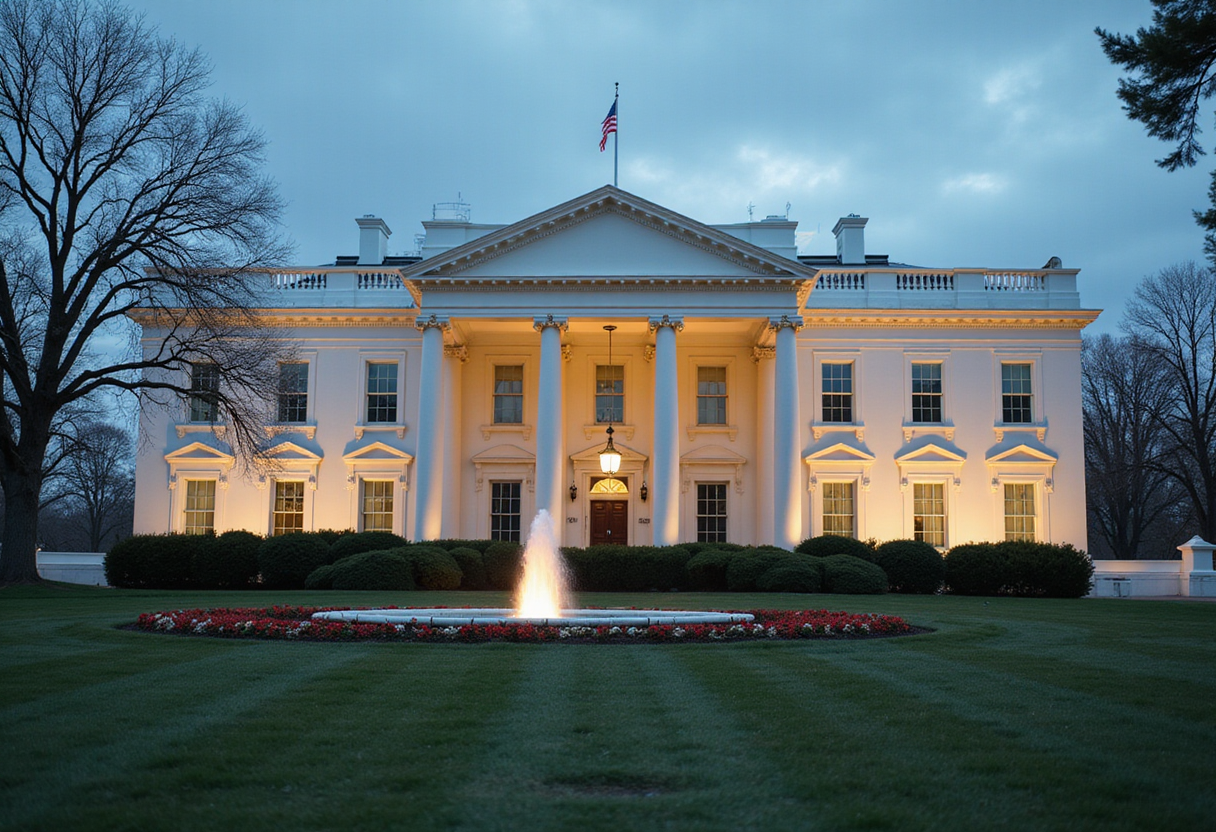
The White House is preparing to redirect billions of dollars in federal research funding away from universities and toward artificial intelligence, the Wall Street Journal reported Monday in an exclusive story.
The proposal, if implemented, would mark a significant shift in how the U.S. government distributes money for basic scientific research. Most of that money has historically flowed through competitive grants awarded to universities and research institutions.
How much money is at stake?
The WSJ report refers to "billions" in research funding but does not specify exact totals. Federal research spending is substantial: the National Science Foundation alone requested roughly $8.8 billion for fiscal year 2024, and the National Institutes of Health budget exceeds $47 billion annually.
Much of that money supports work in biology, physics, chemistry, engineering, and the social sciences at U.S. universities. Under the reported plan, a significant share of those dollars would be steered toward AI projects instead of the traditional academic pipeline.
Why is AI the priority?
Artificial intelligence has become a top-tier policy concern across both parties. AI systems now power search engines, medical diagnostics, autonomous vehicles, and military logistics.
Senior officials have publicly warned that falling behind rival nations in AI development could carry economic and security costs. Directing research money toward AI may accelerate work on large language models, AI infrastructure, or national-security applications. It could also mean bypassing the slow peer-review process that governs most university grants.
What would change for universities?
Universities rely on federal research dollars for faculty pay, graduate student stipends, laboratory equipment, and the "indirect costs" — overhead charges for libraries, utilities, and administration — that keep research facilities running. A pullback could affect everything from physics labs to biomedical centers.
The WSJ report does not name specific institutions that would lose funding, nor does it specify which federal accounts the redirected money would come from.
What is not yet known?
Several important details remain unclear in the WSJ reporting:
- The exact total being redirected
- The specific agencies or programs affected
- The legal authority for the shift
- The timeline for implementation
- Whether Congress must approve the changes
The White House has not publicly confirmed the plan. Additional details from the WSJ reporting were not available Monday.
A break from precedent?
This is not the first time an administration has tried to reshape federal research priorities. Past efforts have targeted specific agencies, particular grant programs, or politically sensitive research areas.
A wholesale redirection of "billions" toward a single emerging technology, however, would represent a more dramatic break with the post-World War II compact that has underwritten U.S. science.
Under that compact, the federal government has long invested in basic, curiosity-driven research at universities, on the theory that such work produces unexpected breakthroughs — including many of the technologies that later power AI itself.
Why this matters
If the plan moves forward, the effects will reach beyond research budgets. Universities train most of the country's scientists, engineers, and AI researchers. Cutting the academic pipeline could reduce the talent pool that AI labs — in industry and government — depend on.
It could also reshape which problems scientists study. Peer review tends to fund incremental, hypothesis-driven work. Politically directed funding tends to favor large, applied projects with measurable near-term goals.
via Google News: Science Funding (Source)
More from Elena Vasquez
Nearby plates
- White House Redirects Science Funding Toward AI and Individual Researchers
- White House Unveils AI Funding Push, Signaling New Era for US Science
- White House to Cut University Research Funding for AI Push
- DOE's AI Push Is Squeezing Funding for Research Grants
- Trump Officials Want to Shift Research Funding Toward Individual Scientists