Plate Nº 68 · recorded October 10, 2026
Science Policy & FundingReported finding
White House Unveils AI Funding Push, Signaling New Era for US Science
The White House has rolled out new AI funding, a move that observers say signals a broader shift in US science policy priorities.
By Marcus Bennett4 min read706 words
In brief
- The White House has announced new federal funding dedicated to artificial intelligence.
- Nature characterized the rollout as signaling a new era for US science.
- Specific funding amounts, recipient agencies, and program details have not yet been fully detailed.
- The announcement fits a broader pattern of growing federal investment in AI across administrations.
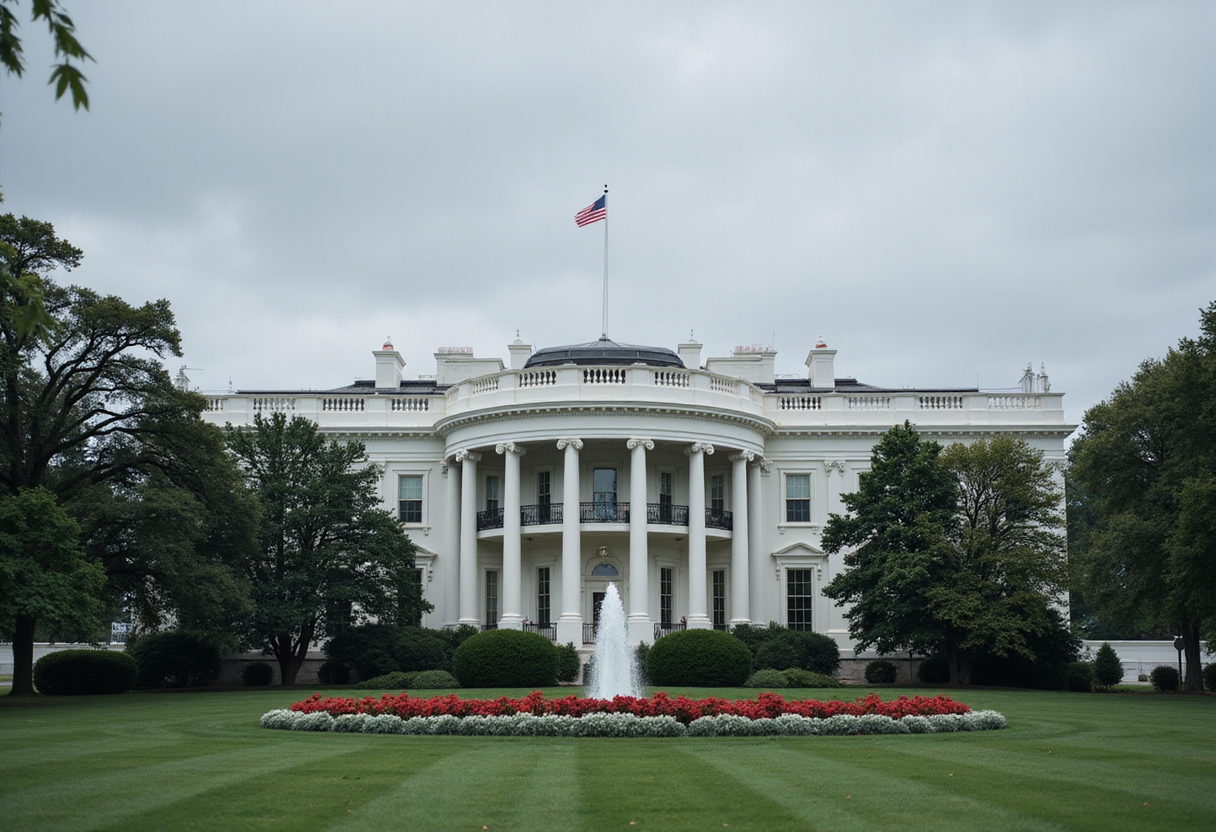
The White House has announced new federal funding dedicated to artificial intelligence, in a move that observers say signals a broader shift in how the United States government approaches science funding.
The announcement, reported by Nature, marks the latest in a series of federal actions aimed at accelerating AI development across the US research enterprise. While specific figures and program details were outlined in the rollout, the deeper significance may lie in what the move represents: a deliberate reorientation of national science policy around artificial intelligence as a central priority rather than a niche discipline.
What do we actually know so far?
Details about the funding initiative remain limited at this stage. What is clear is that the White House is directing new money toward AI, and that the administration frames the effort as part of a new chapter for American science.
That framing matters. Federal funding decisions shape the research agenda of universities, national laboratories, and federal science agencies for years to come. When the White House publicly ties money to a field, it sends a signal to institutions, researchers, and private investors about where the country's scientific priorities lie.
This is a developing story. As additional details about the funding — including amounts, recipient agencies, and eligibility rules — become available, we will update this article.
Why does government AI funding matter?
Artificial intelligence research is expensive. Training advanced AI models, building the computing infrastructure they require, and supporting the scientists who work on them all demand significant, sustained investment. Government funding helps fill gaps that private industry may leave open, particularly for foundational research whose commercial payoff is uncertain or distant.
Public money also tends to come with public expectations. Federally funded research traditionally carries requirements for transparency and broad dissemination of results, which can influence how quickly scientific advances spread beyond the companies and laboratories that produce them.
For US science agencies, a White House directive centered on AI could mean rethinking how they distribute grants, which programs they expand, and where they consolidate. Fields that compete for the same budget pool may watch these decisions closely.
What are the open questions?
Several important questions remain unanswered, and we caution readers against drawing firm conclusions until more information emerges:
- How much money is involved, and over what timeframe? The scale of the commitment will determine whether it meaningfully changes the research landscape or serves primarily as a symbolic gesture.
- Which agencies and institutions will receive the funds? The distribution mechanism will shape which areas of AI research — and which parts of the country — benefit first.
- What happens to non-AI research fields? If the new funding comes from existing science budgets, other disciplines could see their support shrink.
- How will the initiative be measured? Without clear benchmarks, assessing success or failure will be difficult.
Nature's coverage suggests the announcement is more than a routine funding notice — it points to a "new era" for US science, in the publication's characterization. But what that era looks like in practice will depend on implementation details that have yet to fully emerge.
The bigger picture
The United States is not acting in a vacuum. Governments around the world have ramped up national AI strategies in recent years, treating leadership in the technology as a matter of economic competitiveness and national security. Federal AI investments in the US have grown steadily across administrations, reflecting a rare area of bipartisan policy continuity.
Against that backdrop, the White House's latest rollout fits an established pattern: successive administrations have each sought to put their stamp on AI policy, balancing innovation incentives with concerns about safety, security, and workforce impacts.
Still, announcements are easier than outcomes. The history of federal science initiatives includes both transformative programs and ones that faded once headlines moved on. Whether this funding push becomes a genuine turning point for American science — or a incremental step in an ongoing trend — will only become clear as the money moves and the research follows.
What comes next?
Watch for follow-up actions in the coming weeks and months. Key indicators will include formal budget requests, agency-level program announcements, and reactions from the scientific community and industry.
We will continue reporting on this story as details develop.
via Google News: Science Funding (Source)
More from Marcus Bennett
Nearby plates
- White House Redirects Science Funding Toward AI and Individual Researchers
- White House Plans Major Redirect of Research Funds Toward AI
- White House to Cut University Research Funding for AI Push
- White House Calls for Science Funding Shake-Up, Per AIP Report
- DOE's AI Push Is Squeezing Funding for Research Grants