Plate Nº 73 · recorded September 30, 2026
Science Policy & FundingReported finding
White House Proposal Would Give Political Appointees Final Say on Research Grants
The White House has proposed rules giving political appointees final approval over federal research grants, alarming scientists who fear politicized funding.
By Priya Raman2 min read422 words
In brief
- The proposed rules would give political appointees final approval over federal research grants.
- Current practice relies on expert peer review panels and career program officers to decide funding based on scientific merit.
- Critics warn the change could politicize funding and discourage research on politically sensitive topics.
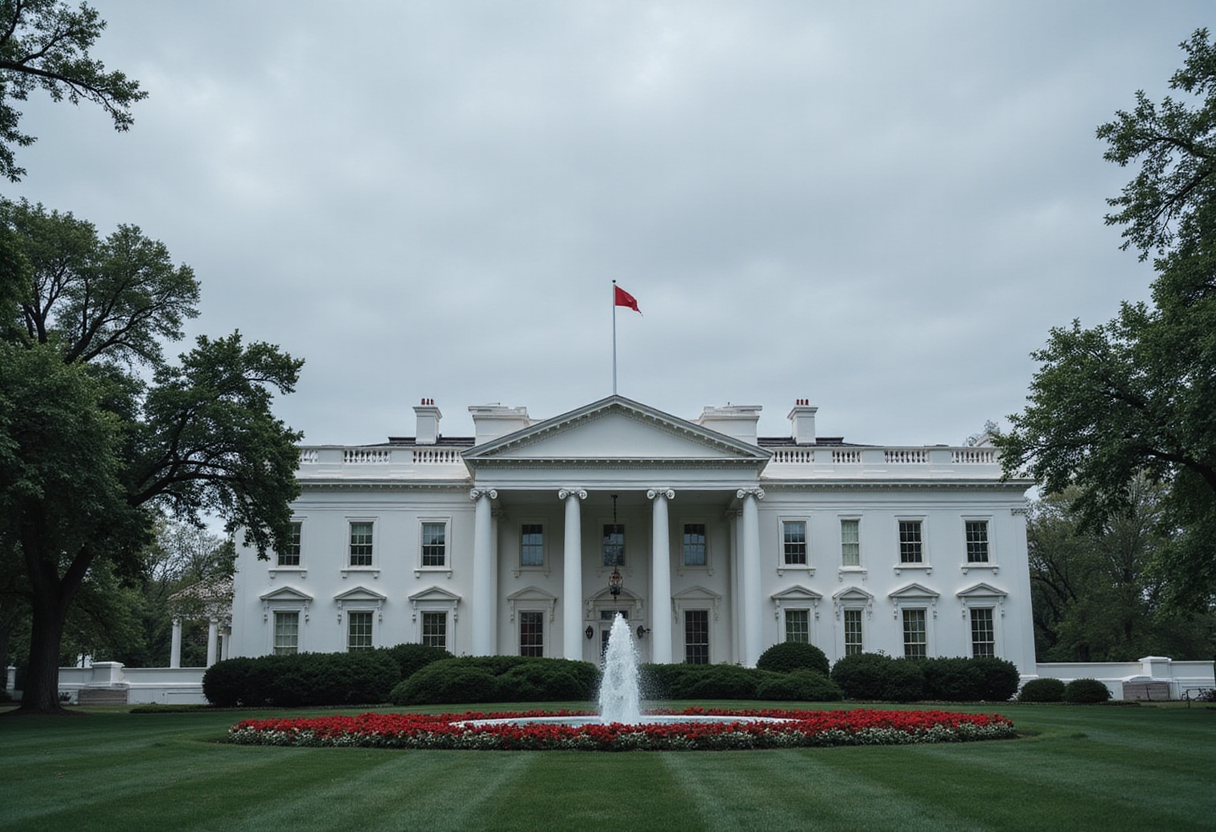
The White House has proposed new rules that would give political appointees final approval authority over federal research grants, a change that scientists say could significantly alter how the U.S. government funds scientific research.
Under the proposed rules, political staff — rather than career civil servants and expert review panels — would hold the ultimate power to decide which research projects receive federal funding. Currently, agencies such as the National Institutes of Health (NIH) and the National Science Foundation (NSF) rely heavily on peer review, a system in which independent scientists evaluate grant applications based on scientific merit.
Peer review works like this: researchers submit proposals, and panels of experts in the relevant field score them on criteria such as the quality of the science, the qualifications of the researchers, and the potential value of the work. Career program officers then make funding recommendations based on those reviews. The new proposal would insert political appointees into the final stage of that process.
Supporters of politically appointed oversight argue that elected administrations should have control over how taxpayer money is spent. Critics, however, see a different risk: if officials with political motivations can override scientific reviews, funding decisions could tilt toward projects that align with an administration's agenda rather than those with the strongest scientific merit.
Scientists and science policy experts have raised concerns that the change could undermine the long-standing tradition of merit-based review, which dates back decades and is designed to insulate research funding from political pressure. They warn that researchers might begin self-censoring — avoiding topics that could prove politically sensitive — or that entire fields of study could lose funding if they fall out of political favor.
The proposal comes amid broader tensions between the administration and the scientific community over the direction of federal research funding. Agencies that distribute tens of billions of dollars in grants each year would be affected by the change.
What happens next depends on the formal rulemaking process. Proposed federal rules typically go through a public comment period before they can be finalized and implemented, giving scientists, universities, and research organizations an opportunity to respond.
It remains unclear exactly how the new approval process would work in practice, including which officials would hold approval authority and what criteria they would apply. That uncertainty itself concerns many researchers, who say vague rules leave room for arbitrary decisions.
For now, the research community is watching closely. The outcome could reshape the relationship between science and politics in the United States for years to come.
via Google News: Science Funding (Source)
More from Priya Raman
Show full bio
Senior reporter covering industry trends and analytics at SciBeat.
57 articles
Nearby plates
- Scientists Overwhelmingly Oppose Rule Change on Grant Oversight
- White House Moves to Take Control of N.I.H. Grants
- Scientists Urge Congress to Act on Trump's Dismissal of Funding Agency Board
- Report: Agency Redirected $1.4 Billion in Congress-Earmarked Science Funds
- Survey of NIH-Funded Scientists Points to a Shaky U.S. Research Enterprise