Recorded November 24, 2026
Biology & EvolutionReported finding
Witchweed Costs African Maize Farmers $1 Billion a Year, Study Finds
A parasitic weed invisible until harvest fails drains $1.04 billion a year from African maize, with half the losses concentrated on 5.8% of infested land, a new Nature Communications study finds.
By Elena Vasquez6 min read1,290 words
In brief
- Striga, or witchweed, costs sub-Saharan maize farmers $1.04 billion a year ($940M–$1.15B range, 95% confidence interval).
- 5.8% of infested land generates half the economic losses; Kenya alone loses $217 million, or 17.5% of its maize.
- The study used 2,171 field-verified Striga records from 1990–2020 and 100,000 stochastic simulations.
- By 2050 losses could reach $2.21 billion under institutional failure, or $0.80 billion under optimal management.
- Prevention matters because newly cleared land takes four to seven years to reach established infestation levels.
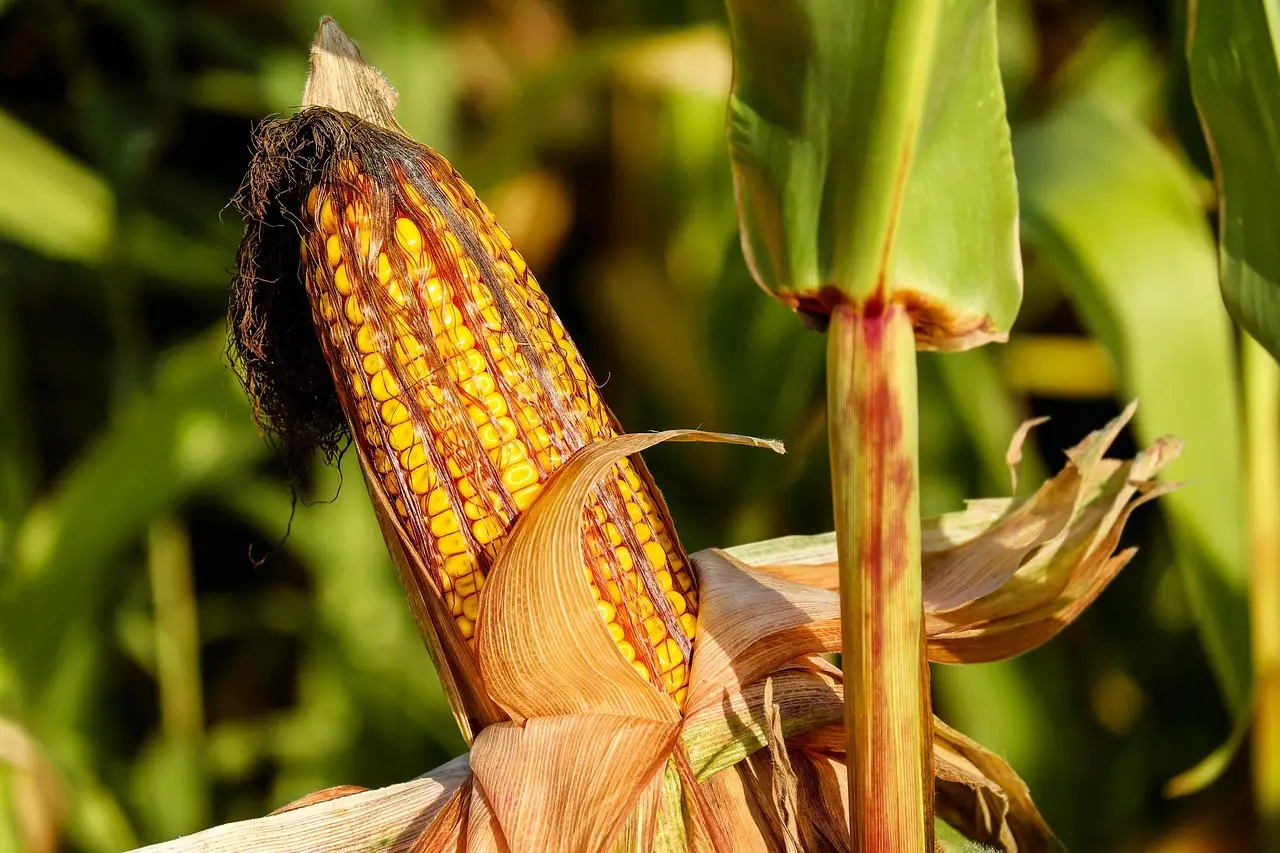
A parasitic weed invisible to farmers until it's too late drains $1.04 billion a year from sub-Saharan Africa's maize harvests, according to a new study published in Nature Communications. Half of those losses sit on just 5.8% of infested land, and eastern and western Africa together account for 92% of the continental bill.
The weed is Striga, known as witchweed. It latches onto maize roots underground and siphons off water and nutrients long before it breaks the surface, so by the time a farmer sees damage, the blame lands on drought or exhausted soil. For 30 years, nobody could pin a reliable figure on the pest, and without one, the response stayed scattered.
"A pest you cannot see eventually disappears from the statistics," said Alcade C. Segnon, one of the study's authors. "For three decades, Striga has taken the equivalent of a billion dollars a year out of African harvests without ever appearing on a balance sheet."
How did researchers put a number on it?
Scientists led by the Alliance of Bioversity International and CIAT, working with CIMMYT, IITA, the African Union Inter-African Phytosanitary Council (AU-IAPSC) and icipe, assembled 2,171 georeferenced, field-verified Striga records collected between 1990 and 2020 from the CIMMYT data repository. They combined those records with climate, soils, road network and maize production data mapped by MapSPAM.
The team then used agroecological similarity mapping to extend known points to comparable areas, and machine learning to extract adoption rates and control efficacy from published literature. Finally, 100,000 stochastic simulations quantified the uncertainty. The result is not a single number but a range: $940 million to $1.15 billion a year, with a 95% confidence interval.
"We were told for a long time that Striga could not be costed for lack of data," said Franck Tonle, the study's lead author. "We worked with the same data as our predecessors. What we changed was to accept uncertainty and measure it, instead of working around it."
The model held up under testing. It correctly separated infested from uninfested locations about 80% of the time, and when researchers altered production data by 10% to 30% and prices by 20%, fewer than three of 44 countries shifted risk band. Earlier estimates had swung from $383 million to more than a billion dollars depending on the method. More than 4,000 scientific papers on Striga have appeared since 2000, but almost all cover biology and control techniques, not economics.
Takeaway: by embracing uncertainty instead of avoiding it, the team replaced guesswork with a defensible range.
Why has the pest stayed invisible?
Striga's biology makes it persistent. A single plant produces more than 200,000 microscopic seeds that stay viable in soil for over 15 years. Once a seed bank establishes itself, it lasts more than a decade. Under moderate infestation, Striga cuts yields by around 20%; under severe infestation, it takes the whole harvest. Across sub-Saharan Africa, parasitic weeds affect 64% of cereal-cultivated land.
The timing is the real problem. Most damage happens underground, before the plant emerges. Losses get blamed on drought or poor soils, and in the worst-affected regions, farmers abandon productive plots for marginal land.
"I am a soil agronomist. For years we put down to land degradation losses that in fact came from a parasite," said co-author Robert Zougmoré. "As long as the diagnosis is wrong, money invested in soil fertility will never deliver what we expect of it."
Takeaway: a billion-dollar pest has stayed off the radar because its symptoms mimic bad weather.
Where does the damage concentrate?
Ten countries account for 84% of continental losses. Eastern Africa carries $429 million, western Africa $531 million. Nine high-risk countries alone bear roughly $800 million, or 77%.
In dollar terms, Kenya leads with $217 million, followed by Nigeria ($173 million), Mali ($103 million) and Benin ($85 million). Measured against national production, the picture flips. Kenya loses 17.5% of its maize against Nigeria's 6.5%. Senegal loses 19.5%, Benin 17.3%, and Niger 13% for only $1.4 million.
"Anyone who looks only at the amounts will never see the countries where Striga hurts most," Segnon said.
The study names priority areas where losses are high, improvement is possible and households are vulnerable: the Lake Victoria basin, Sikasso in Mali, Nahouri in Burkina Faso, northern Nigeria and Cameroon's Far North. More than 300 million Africans depend on maize.
Takeaway: absolute dollars rank the big producers, but percentage losses expose the countries hit hardest.
What happens by 2050?
Researchers projected futures for nine countries representing 68% of continental losses, about $0.71 billion, under four scenarios:
- Current trends: losses climb to $1.33 billion by 2050, up 88%.
- Institutional failure: $2.21 billion, more than triple today's level.
- Optimal integrated management: $0.80 billion, 40% below the current trajectory.
The spread between countries is striking. Mali faces a 220% increase, Uganda stays flat at +1%, and most others fall between +49% and +108%. Even under optimal management, only five of the nine countries drop below their 2020 levels. What has accumulated in the soil doesn't undo itself in a generation.
Takeaway: the gap between scenarios puts a price on the strength of plant health institutions.
Why is timing the key finding?
The main driver of future increases is not climate but agricultural expansion. A newly cleared plot starts out Striga-free, but contaminated seed and spread from neighboring fields do their work, and infestation usually reaches established levels within four to seven years. That's a short, cheap window, and it expires.
Geography demands two strategies. In East Africa, 76% of the projected increase comes from expansion into Striga-prone land, where prevention pays. In West Africa, 67% comes from worsening infestation on land already farmed, where existing hotspots need treatment.
Takeaway: prevention on new land costs far less than decades of control on contaminated land.
What should surveillance systems change?
Africa's plant health surveillance has grown stronger at tracking insect pests and diseases through digital monitoring and early warning. Parasitic weeds slip through the net, creating a latent risk: a region that controls its visible pests may watch maize collapse without knowing why. Climate change widens the gap, intensifying parasitic pressure while reducing control effectiveness.
"Our surveillance systems are good at spotting insects and diseases, but parasitic weeds slip through because their damage looks like drought or tired soil," said Dr. Saliou Niassy, coordinator of AU-IAPSC and a study co-author. "Adding Striga to national and regional phytosanitary monitoring is a practical, low-cost step African countries can take now."
The tools exist: remote sensing, artificial intelligence, digital twins. West and Central Africa already has a regional pest and disease preparedness and response plan. The study's authors set four recommendations:
- Target hotspots on land already farmed, where a small share of area produces most losses.
- Prevent establishment on newly cultivated land through clean seed systems and early surveillance.
- Bring parasitic weeds into monitoring and early warning systems.
- Tailor interventions locally, since identical management assumptions produce different results country to country.
Between the current trajectory and optimal management, the gap reaches about $530 million a year across those nine countries alone. The framework could transfer to other under-monitored pests.
"The question is no longer only where to act, but in what order," Segnon said. "For a farmer, the difference is very concrete: knowing that yields are falling because of a parasite, and not because of tired soil, changes what they will do with the next season."
Takeaway: the study offers a map, a deadline and a price tag; the choice of technique stays local.
via phys.org/rss-feed/ (Source)
More from Elena Vasquez
Show full bio
Correspondent covering money, funding and market shifts around general science news at SciBeat.
617 articles
Nearby plates
- MIT-led team gets up to $53 million to seek AI-designed weed killers
- When Humans Vanished, Biodiversity Dropped 40% — Black Death Study
- Nutrient Pulses, Not Amounts, Give Invasive Plants Their Edge
- Satellite AI Tracks Leafy Spurge's 570% Surge Across Minnesota
- Tree-rich landscapes help birds and bats nearly double Peru's cacao yields