Recorded November 19, 2026
Earth & ClimateReported finding
Zimbabwe's Lightning Deaths May Exceed 120 a Year as Myths Persist
Zimbabwe averages an estimated 120 lightning deaths a year. Intense storms, unsafe shelters and beliefs in retaliatory magic compound the risks in a 16-million-person country.
By Nathan Brooks5 min read969 words
In brief
- Zimbabwe averages about 120 lightning deaths a year; the Meteorological Services Department says counts are 20% to 30% too low.
- The central estimate is nearly 10 deaths per million people; some estimates reach 21 per million.
- A single bolt killed 21 people in Chinamasa on December 23, 1975.
- A 103-year-old woman died in an eastern Zimbabwe kitchen hut in January 2025.
- Cooper estimates that 90% of sub-Saharan African housing, schools and churches are not lightning-safe.
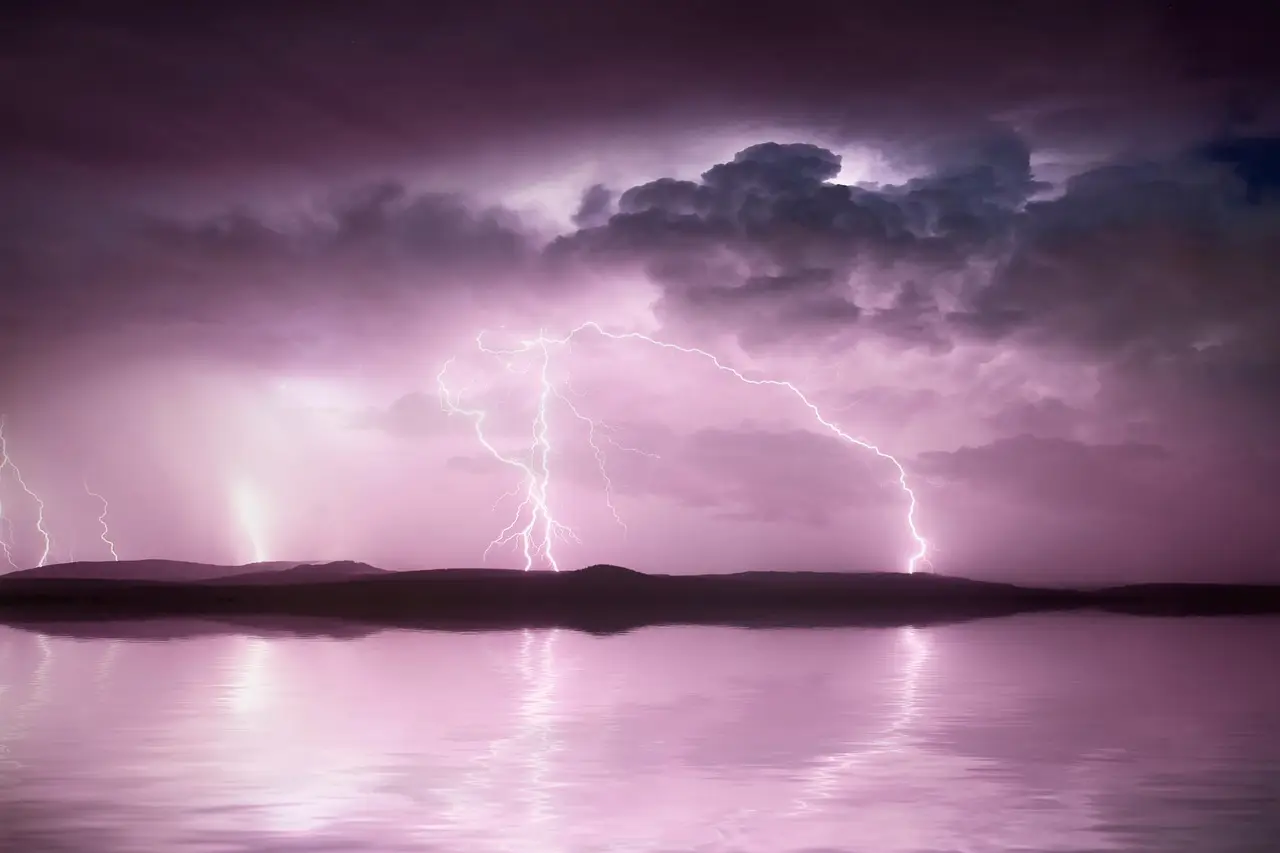
Zimbabwe averages an estimated 120 lightning deaths each year, nearly 10 per million people in a country of roughly 16 million, and its Meteorological Services Department says it underreports the toll by 20% to 30%.
The United States averages fewer than one lightning death per 10 million people; South Africa reports around 2 to 3 per million. Some estimates put Zimbabwe as high as 21 per million, several times the rate in most countries and making it one of the world's deadliest places for lightning.
In January 2025, lightning killed a 103-year-old grandmother while she handled utensils in a kitchen hut in eastern Zimbabwe. The rainy season starts around October, and many people die during its thunderstorms.
On December 23, 1975, one bolt killed 21 people in the village of Chinamasa. Zimbabwe therefore holds the record for the most deaths attributed to a single lightning strike.
How does belief in “mheni” affect lightning safety?
Many people, particularly in rural areas, believe ordinary or “natural” lightning does not kill people; evil individuals supposedly direct it to harm others. The belief has life-or-death consequences because some continue working on farms during thunderstorms, leaving them exposed.
Tichakunda Bote is a traditional healer and legal affairs secretary for the Zimbabwe National Traditional Healers Association, which professionalizes and regulates traditional healers. He said:
“Lightning can be used by evil people to harm others when there is a problem between people. It can be used only when there is a problem.”
Bote said an attempted attack without a grievance would turn back on the sender or the sender's family. He called the alleged practice “mheni,” said it requires rainfall and becomes most common during the rainy season.
He advised people not to work in fields when rain is falling, while conceding that natural lightning can occur alongside the supposed supernatural form. Because people who feel innocent may also feel protected, the belief can leave them physically exposed.
Mutare Museum, in Zimbabwe's eastern border city, displays objects believed to be tools for making lightning. The collection came from a traditional healer or wizard in Nyanga district and includes twigs, a small horn and a bottle containing liquid.
Chiedza Zharare, the museum's curator of antiquities, said the items now form part of its collection on traditional beliefs. She said they have intrigued local and international visitors alike.
What makes Zimbabwe a lightning hotspot?
Heat drives much of the risk. Zimbabwe lies squarely in the tropics, where strong solar heating lifts warm, moist air. As that air rises and cools, water vapor condenses into towering thunderclouds, known scientifically as massive convective systems.
African thunderstorm studies have found these convective towers produce more flashes per storm than systems almost anywhere else. The Intertropical Convergence Zone, a shifting band of moist air that migrates south each summer, also carries warm, humid air from the Indian Ocean.
A 2020 study in Geophysical Research Letters linked tropical Africa's intense lightning to moist winds meeting hot land. Much of Zimbabwe sits on a high plateau 1,000 meters or more above sea level, where terrain pushes air upward faster through a process called orographic lift.
In neighboring Uganda, researchers found lightning activity rose with altitude and peaked above 800 meters, closely matching Zimbabwe's topography. Heat, moisture and terrain together explain the national concentration of strikes.
In 1987, Max van Olst, a University of Zimbabwe electrical engineering lecturer, extensively researched the country's lightning deaths. He told the Associated Press that poorly conducting soils could keep a strike's charge concentrated, sending it along narrow paths for hundreds of yards instead of dispersing evenly.
More recently, Los Alamos National Laboratory researchers found that cosmic-ray showers appear pivotal in triggering flashes. Lead author Xuan-Min Shao, of its Electromagnetic Sciences and Cognitive Space Applications group, said scientists still do not fully understand how lightning begins.
Using 3D radio-frequency mapping and polarisation technology, which tracks electric-field orientation, the team saw flashes begin with a fast positive discharge followed by an even faster negative one. Visible lightning generally follows the separation of opposing positive and negative charges within clouds.
Can public education reduce the death toll?
Dr. Mary Ann Cooper founded the African Centres for Lightning and Electromagnetics Network, or ACLENet, to reduce lightning deaths and injuries through outreach. Since retiring from the University of Illinois, she has directed the non-medical NGO, which began in Uganda in 2014 and expanded during this decade into other countries.
She said ACLENet works with journalists and students because they can reach more people than the group alone. The network knows many African beliefs about lightning and teaches that people can reduce their risk. She tells journalists their stories save lives because media spreads the information.
Cooper's clearest warning is: “When thunder roars, go indoors,” because people who can hear thunder are already in the danger zone for the next strike. She says injury prevention requires two things: lightning-safe structures where people can take shelter and training on reducing risk.
Cooper said simple advice is harder to follow in much of Africa because too few lightning-safe structures exist. She estimates that 90% of sub-Saharan African housing, schools and churches are not lightning safe.
In the United States, annual deaths fell from 55 to 60 in the 1990s to fewer than 20, she said. She credited the National Lightning Safety Council's hundreds of press interviews and training for government and broadcast meteorologists, who could reach millions through print, online and broadcast media.
The risk in Zimbabwe therefore combines intense storms, beliefs that may make people feel safe during thunderstorms and too few protective structures. ACLENet combines education with safe infrastructure, while research helps explain why the hazard concentrates in places such as Zimbabwe.
via zmescience.com (Source)
More from Nathan Brooks
Show full bio
Market editor covering companies, deals and strategy in general science news at SciBeat.
563 articles