Plate Nº 48 · recorded November 14, 2026
Space & AstronomyReported finding
Zombie Star Pulses Every 7.9 Minutes, and a Sun-Like Star May Be Why
A dead star 5,000 light-years away fires radio bursts every 7.9 minutes. Astronomers have traced the signal to a white dwarf orbiting a near-twin of our Sun every 1.35 days.
By Priya Raman4 min read880 words
In brief
- A white dwarf designated J0715−1141 emits radio pulses every 474 seconds, roughly every 7.9 minutes.
- Discovered on December 4, 2024, with the Murchison Widefield Array in Western Australia; 214 pulses were recorded.
- The white dwarf orbits a Sun-like star every 1.35 days, producing a 32.5-hour detection cycle with six-hour windows.
- Keck Observatory spectroscopy showed the companion is a G-type star with about 94% of the Sun's mass and a 5,500 Kelvin surface.
- The study, led by Samuel J. McSweeney of Curtin University, was published in Nature Astronomy.
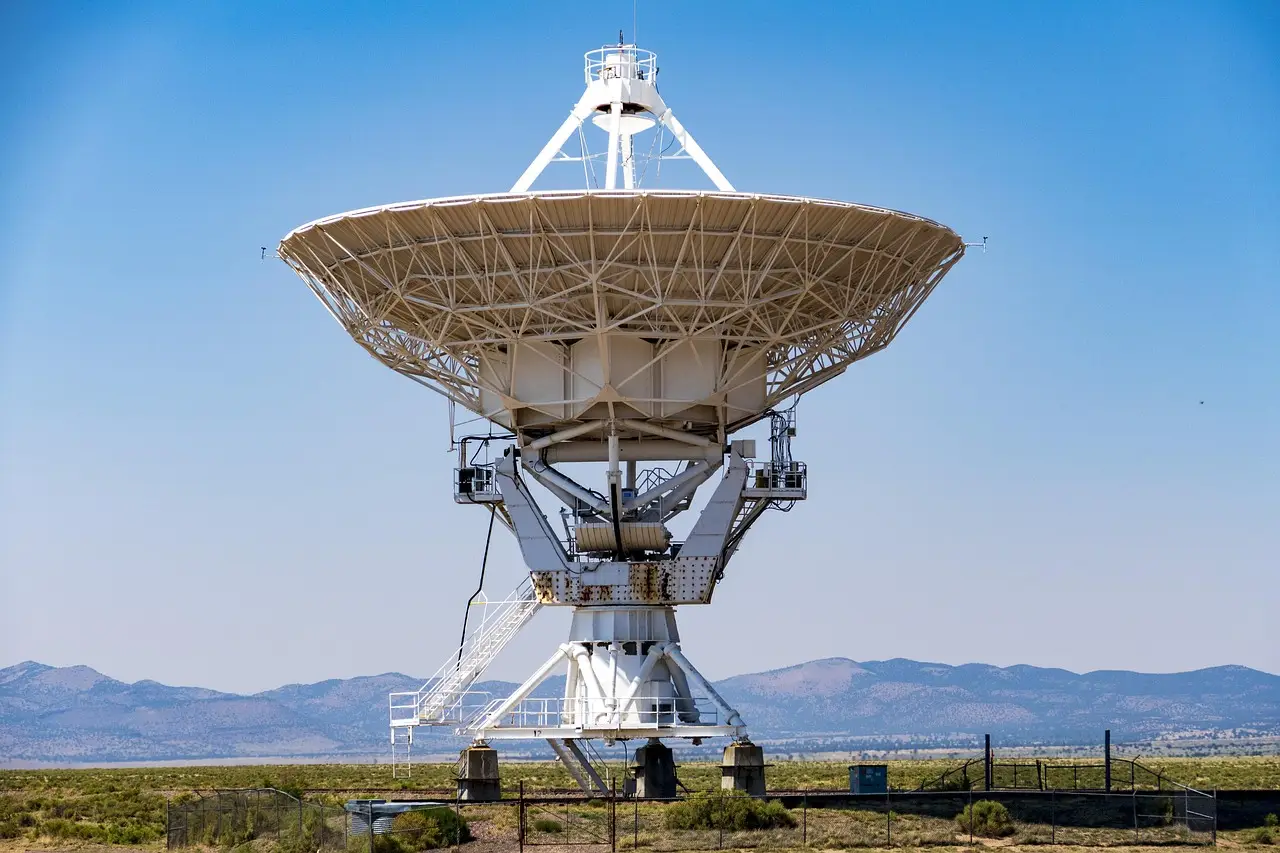
Every 7 minutes and 54 seconds, a dead star 5,000 light-years away emits a radio burst lasting less than four seconds. Astronomers have now traced this relentless cosmic heartbeat to a white dwarf orbiting a star remarkably similar to our Sun, and the living companion may explain why the dead one keeps broadcasting.
What did astronomers actually find?
On December 4, 2024, researchers using the Murchison Widefield Array, a radio telescope in Western Australia, detected exceptionally brief radio pulses arriving from within the Milky Way at remarkably regular intervals of roughly 474 seconds. The source carries the unglamorous designation GPM J071507−114153, shortened to J0715−1141.
The timing itself was the first clue. Ordinary stars cannot spin that fast; they would tear themselves apart. Whatever produced the signals had to be extraordinarily compact. Two suspects remained:
- A neutron star (the ultradense remnant left behind when a massive star explodes)
- A white dwarf (the leftover core of a star that has exhausted its nuclear fuel)
White dwarfs are sometimes called zombie stars. They no longer generate energy through ordinary nuclear fusion, yet they stay hot, dense and capable of strange behaviour. Our own Sun will become one billions of years from now, after shedding its outer layers.
How did the team confirm it?
Over the following months, the Australian telescope recorded 214 radio pulses, and South Africa's MeerKAT radio telescope helped pinpoint their origin and refine their arrival times. That precision revealed a second, slower clock. Approximately every 32.5 hours, the signals became detectable during a window lasting about six hours; outside it, the source generally vanished.
A stellar corpse keeping two separate rhythms pointed to one explanation: it is not alone. A team led by Samuel J. McSweeney of Curtin University turned to the Keck Observatory in Hawaii, which observes visible light rather than radio waves. Using spectroscopy (splitting starlight into its component wavelengths), Keck revealed a stellar fingerprint matching a G-type star, the same class as our Sun.
This visible star, not the white dwarf, is what Keck saw — the zombie star itself is too faint in visible light. The companion has an estimated mass about 94 percent of the Sun's and a surface temperature of roughly 5,500 Kelvin.
The researchers concluded that the system consists of a white dwarf and a Sun-like star orbiting each other roughly every 1.35 days. The eight-minute rhythm is the white dwarf's rotation; the 32.5-hour cycle marks the pair's full orbit.
"This is the first time the pulses are clear enough to see the white dwarf moving in its orbit around its companion, so we know that the pulsations are coming from a region close to the white dwarf, or possibly even from the white dwarf itself," said lead author Dr. Sam McSweeney, a commissioning scientist with the Square Kilometre Array Observatory.
Why the living star matters
The companion may be more than a bystander. Our Sun sits inside a corona, an atmosphere of extremely hot, electrically charged plasma shaped by magnetic fields that form loops, erupt in flares and hurl clouds of particles into space. The Sun-like companion probably hosts similar magnetic activity, and the white dwarf's radio pulses may pass through that environment on their way to Earth.
The team noticed that the polarization of the signals — the orientation of their electromagnetic waves — shifted in ways that depended on the stars' orbital positions. Magnetized plasma can twist polarization through a phenomenon called Faraday rotation, so each pulse acts like a probe sampling the outer atmosphere of a distant star.
"As a bonus, we also saw the white dwarf moving behind a region with a strong magnetic field, most likely a 'stellar prominence', which is a large loop of plasma erupting from a star's surface," said co-author Associate Professor Natasha Hurley-Walker. "It's amazing that by using radio wavelengths we can detect the storms on a star over 5000 light-years away."
What still puzzles researchers?
The central question remains open: what actually generates the pulses? J0715−1141 belongs to an emerging class called long-period transients, objects producing intense, often highly polarized radio signals at intervals from minutes to hours. Astronomers have found only about a dozen, and they differ from one another considerably.
Some resemble pulsars — rapidly spinning neutron stars whose radio beams sweep space like lighthouse beams — but many long-period transients pulse far more slowly. For white dwarfs, one proposal is that a spinning white dwarf's magnetic field interacting with material from its companion can accelerate charged particles and produce coherent radio emission. That idea is plausible but unproven.
The system's origin is also uncertain. The scientists suspect the white dwarf's progenitor once swelled into a giant star, engulfing its companion in a shared envelope of gas. As the stars interacted with that material, the orbit shrank dramatically; the envelope was eventually expelled, leaving the compact pair we see today.
More sensitive radio observations, particularly with the upcoming Square Kilometre Array telescopes, could reveal many more such systems. Each brief pulse may say as much about the living star beside the dead one as about the zombie star itself.
The study was published in Nature Astronomy.
via zmescience.com (Source)
More from Priya Raman
Show full bio
Senior reporter covering people, launches and day-to-day practice in general science news at SciBeat.
381 articles
Nearby plates
- Eight-Minute Radio Pulse Traced to White Dwarf 5,000 Light-Years Away
- Dead Star Fires Radio Pulse Every Eight Minutes, and a Sun-Like Star Answers
- Radio Pulses Every 7.9 Minutes Trace Storms on a Sun-Like Star
- Webb Pins Down the Farthest Fast Radio Burst Ever Seen — and Its Odd Home
- Astronomers Detect Most Distant Fast Radio Burst, 10 Billion Years Old