Plate Nº 90 · recorded November 15, 2026
Biology & EvolutionReported finding
15,000-Year-Old Clay Figures Rewrite Story of Early Human Creativity
Clay figures up to 15,000 years old from Israel show hunter-gatherers made symbolic art millennia before farming, including a child's fingerprint pressed beside an adult's.
By Nathan Brooks3 min read586 words
In brief
- Clay figures from three sites in present-day Israel date to between about 15,000 and 11,500 years ago.
- One artifact preserves an adult fingerprint overlapped by a child's, a possible record of intergenerational learning.
- The study was led by Laurent Davin of the Hebrew University of Jerusalem and published in PLOS One.
- The finds suggest symbolic clay use began thousands of years before farming-era pottery in the Neolithic period.
- Only a limited number of objects survive, since clay is fragile and many prehistoric pieces likely never endured.
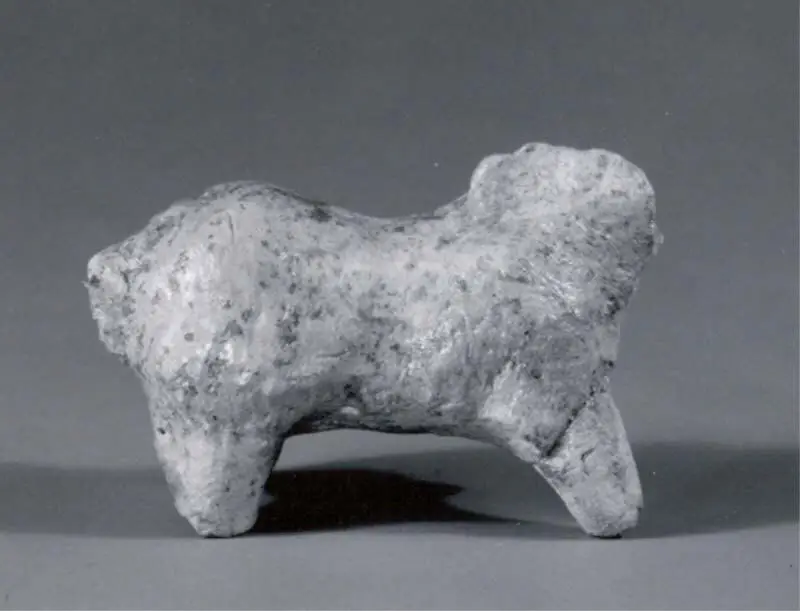
Tiny clay figures made between roughly 15,000 and 11,500 years ago are pushing back the timeline of symbolic art in the Middle East by thousands of years. Archaeologists say hunter-gatherers were shaping clay into meaningful objects long before farming made pottery a household technology.
The artifacts come from three archaeological sites in present-day Israel. They were made by Natufian communities — hunter-gatherers who increasingly lived in settled villages rather than roaming camps. The study was led by Laurent Davin of the Hebrew University of Jerusalem and published in the journal PLOS One.
Why do these figures matter?
Researchers already knew Natufian people carved figures from stone and bone. Clay, by contrast, was generally associated with the Neolithic period — the era when farming spread and pottery became widespread. The new finds challenge that simple sequence.
The study suggests the use of clay for symbolic purposes had deeper roots than previously believed. In plain terms: people were experimenting with clay as a medium for ideas, not just for pots, several thousand years earlier than the textbook version allows.
Some of the recovered pieces appear to depict humans, birds or other animals. Others preserve traces of red or orange coloring. One fragment may represent the facial markings of a mountain gazelle — a detail that suggests the makers observed animals closely and may have used the figures to communicate shared ideas about their surroundings.
What did the fingerprints reveal?
One figure stands out. Its surface carries fingerprints pressed into the clay while it was still soft. Researchers identified an adult fingerprint overlapped by that of a child.
That overlap preserves a possible moment of learning between generations — an adult and a youngster working the same piece of soft clay roughly 13,000 years or more ago.
The finding doesn't tell scientists exactly what was being taught or why the object was made. But it offers rare physical evidence that children may have taken part in creative activities alongside adults in Natufian communities. Archaeological proof of teaching moments is exceptionally uncommon, which makes this small object disproportionately valuable.
How does this change the picture?
Natufian societies already showed signs of more permanent settlements and complex social life before agriculture took hold. The figures add to growing evidence that symbolic expression developed alongside those changes, rather than appearing suddenly once people began farming.
The precise meanings of the objects remain uncertain. They might have been used in storytelling, teaching, ritual or other activities that leave few traces in the archaeological record. The researchers hedge accordingly — the finds open a window, but they don't come with an instruction manual.
What are the study's limits?
Several constraints deserve attention. Only a limited number of objects survive, and reconstructing the original context of ancient artifacts can be difficult. Similar discoveries at other sites would help establish how widespread the clay-figure tradition actually was.
Clay itself compounds the problem. It's fragile and easily damaged, so many objects made in prehistoric times may never have survived at all. That makes the surviving pieces particularly valuable — and the archaeological record inherently incomplete.
New excavations and more detailed studies of fingerprints, pigments and manufacturing marks could reveal further clues about the makers, according to the researchers.
The bottom line
Even with those uncertainties, the findings offer a vivid glimpse into prehistoric life. Long before pottery became a familiar technology, people were shaping clay into meaningful objects — and perhaps sharing those skills with their children, one overlapping fingerprint at a time.
via knowridge.com (Source)
More from Nathan Brooks
Show full bio
Market editor covering companies, deals and strategy in general science news at SciBeat.
379 articles