Recorded November 23, 2026
Space & AstronomyReported finding
20-Ton 'Mars Seed' Would Grow 870 m² of Habitat From Martian Dirt
A 20-ton system called Mars Seed would use a 40 kW nuclear reactor and vinegar-fed bacteria to 3D-print 870 m² of pressurized habitat from Martian resources alone.
By Nathan Brooks3 min read649 words
In brief
- Mars Seed weighs 20 metric tons and builds 870 m² of pressurized habitat roughly every four Earth years
- A 40 kW fission reactor powers the system; it becomes operational about a month after landing
- Engineered bacteria reach 70% bioplastic body weight eating vinegar in four 1,000 L tanks
- Break-even versus shipped materials comes at about 1,400 Martian days
- Paper published on arXiv (2026), DOI 10.48550/arxiv.2611.13064, by Devon A. Stork et al.
A 20-metric-ton package dropped on Mars could build 870 square meters of pressurized astronaut habitat roughly every four Earth years — using nothing but Martian water, soil and air. That's the claim of a new architecture, called Mars Seed, published on the arXiv preprint server by Devon A. Stork and colleagues at Pioneer Labs (DOI: 10.48550/arxiv.2611.13064).
Pioneer Labs is a research institute founded by bioengineer Erika DeBenedictis to develop biological technologies for space exploration. The paper, released under the Astera Institute's Open Science policy, has no plans for a paid journal version — so treat the numbers as preliminary, peer review pending.
How does the system work?
Mars Seed lands at a midlatitude site with flat terrain and subsurface water ice. An autonomous rover unpacks the hardware and assembles a 40 kW nuclear fission reactor, modeled on compact reactors NASA is already developing for Moon and Mars missions. After about a month, the reactor runs at full power, supplying electricity and waste heat.
That waste heat does double duty. It feeds a Rodriguez well — an ice-drilling technique that melts an underground pocket of ice and pumps liquid water to the surface, already proven in Antarctica. Once water flows, a scaled-up version of the urine-recycling system on the International Space Station recovers about 90% of the water from each production batch.
What do the bacteria eat?
Dirt, essentially — with a vinegary diet on the side. The system needs about 4 metric tons of Martian soil, or regolith, delivered daily by autonomous mining machines like NASA's RASSOR. Around 800 kg of that soil is stirred into water-filled tanks to dissolve nutrients such as phosphorus and nitrogen.
That leaves the deadliest part of Martian soil: perchlorates, which would kill most microbes. Pioneer Labs instead evolved a hardy strain of Cupriavidus necator, dubbed sPL.001, that thrives in perchlorate-laced Martian regolith simulant on Earth.
The bacteria's food comes from the atmosphere. An upgraded version of NASA's MOXIE experiment — which successfully split Martian carbon dioxide into carbon monoxide and oxygen — provides the feedstock. While MOXIE discards the carbon monoxide, Mars Seed keeps it. Using a technique inspired by an emerging field called electro-agriculture, the system combines carbon monoxide with water to make liquid acetic acid, the main ingredient in vinegar.
In four 1,000-liter fermentation tanks, the engineered microbes eat that vinegar plus oxygen and pack themselves with a bioplastic called polyhydroxybutyrate until the polymer reaches 70% of their body weight. A high-speed centrifuge harvests the cells, and the paste splits into two assembly lines.
How does paste become a habitat?
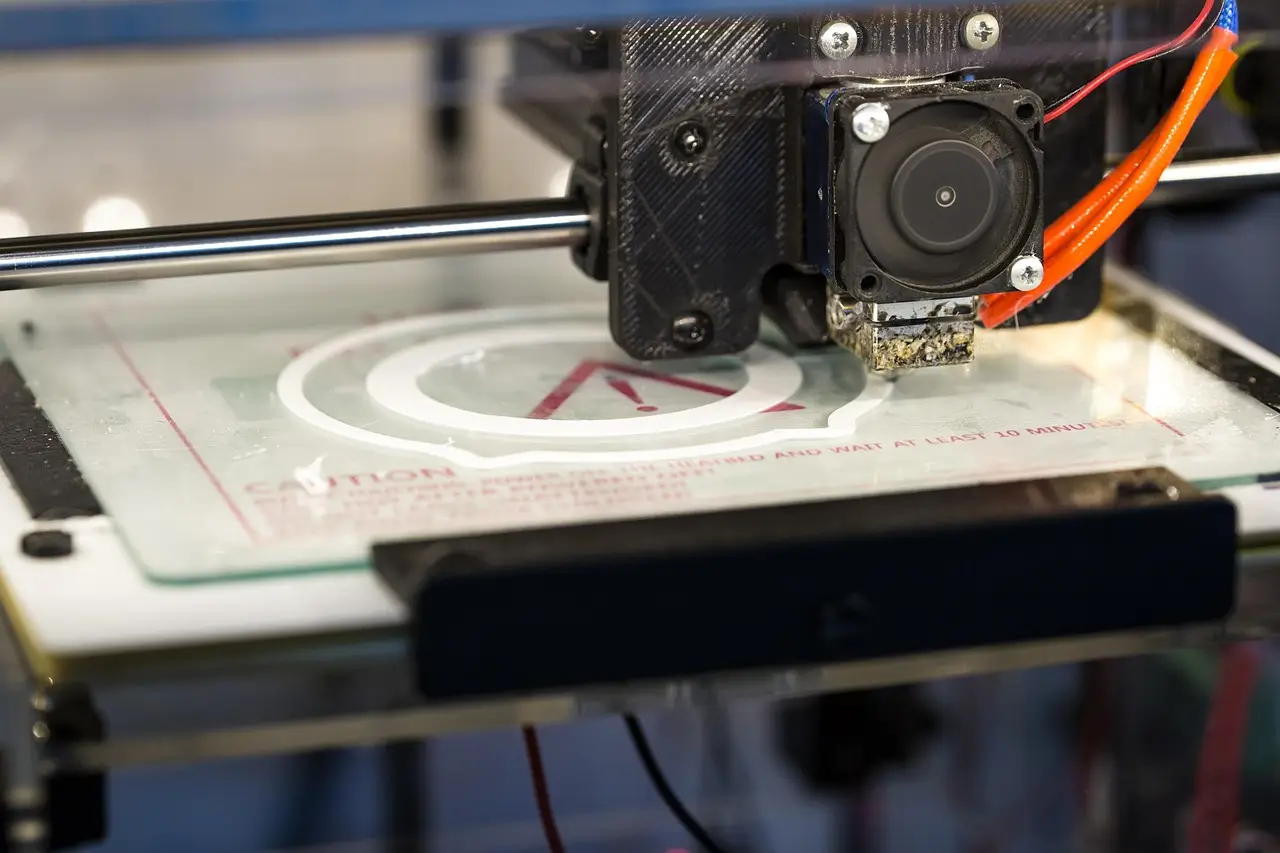
Half the paste is mixed with Martian dirt and fed to a giant gantry 3D printer, which extrudes a corrugated, arched outer shell. Rovers then pile roughly 2 meters of soil on top, shielding against cosmic rays and micrometeorites.
The other half gets a liquid-carbon-dioxide pressure bath — CO₂ pulled straight from the Martian atmosphere — to extract pure bioplastic. That material is melted and spun into an airtight inner tent capable of holding a breathable atmosphere.
The result: a self-contained factory, including two helper rovers, that needs no further input from Earth once established. It produces about 75 square meters of safe shelter every 130 days.
When does it pay off?
Compared with launching 20 tons of premade plastic building materials from Earth, the biofabrication facility breaks even at around 1,400 Martian days — which lines up neatly with the two orbital alignment cycles NASA plans to use before sending human crews. The difference, the paper notes, is that the facility never stops producing.
Plenty of engineering hurdles remain before anything is launch-ready. But if those get solved, future mission planners may have a way to literally grow safe homes out of Martian water, air and soil — before astronauts ever set foot there.
via phys.org/rss-feed/ (Source)
More from Nathan Brooks
Show full bio
Market editor covering companies, deals and strategy in general science news at SciBeat.
580 articles
Nearby plates
- NASA Books a Ride for Its $400 Million Moon Rover PROMISE
- NASA Launches New Plan to Bring Mars Samples Home by 2035
- Three NASA helicopters to ride a nuclear rocket to Mars in 2030
- NASA Picks PSI-Led Team to Probe Possible Cave Beneath Lunar Pit
- Four Volunteers Emerge After 378 Days Inside NASA's Simulated Mars Habitat