Plate Nº 27 · recorded November 14, 2026
Biology & EvolutionReported finding
A $450 DIY 3D Printer Now Builds Living Materials Over 100 Layers Tall
A $450 hacked 3D printer from Anne Meyer's lab prints living materials over 100 layers tall and keeps bacteria alive for weeks, rivaling $100,000 machines.
By Nathan Brooks3 min read676 words
In brief
- A modified $450 3D printer built living materials with more than 100 layers, versus under 20 for earlier DIY bioprinters.
- Commercial 3D bioprinters can cost upward of $100,000.
- A new incubation slurry keeps printed microbes alive for four or more weeks; bacteria previously started dying after about nine days.
- The study, led by Anne S. Meyer, was published in ACS Applied Polymer Materials (2026).
- Build instructions for the DIY bioprinter are freely available on GitHub.
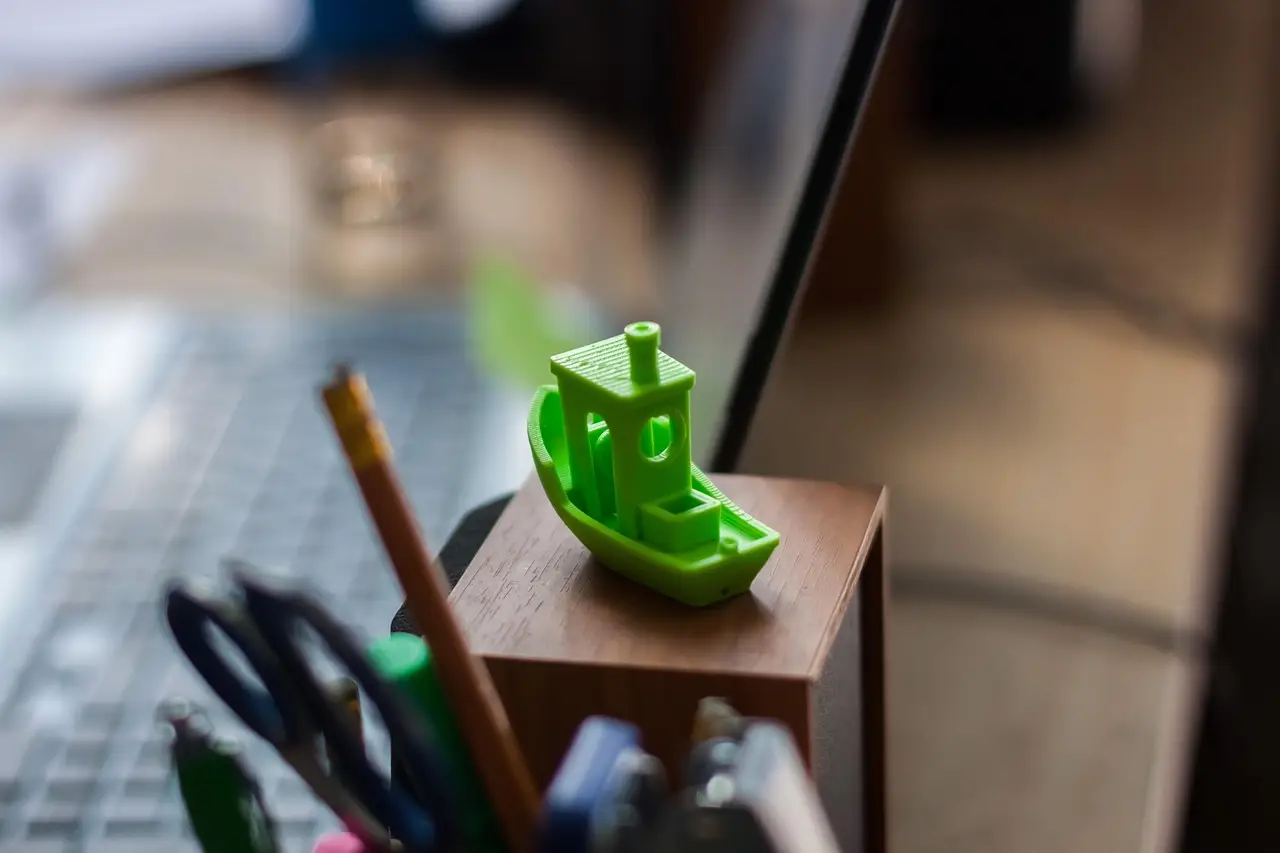
A $450 modified 3D printer can now build living materials more than 100 layers tall, a jump from the sub-20-layer limit of earlier DIY machines. The design comes from a University of Rochester team led by biology professor Anne S. Meyer, working with colleagues at Rochester and Cornell University, and it does a job that commercial bioprinters typically handle — at a price tag upward of $100,000.
That's roughly a 99.5% cost reduction, achieved with parts that any lab can order off the shelf. "We aim to create DIY bioprinters using inexpensive, easily obtainable parts, so that they are affordable and easy for other scientists to make in their own labs as well," Meyer said. The build instructions are freely available on GitHub.
What can printed living materials actually do?
Think of them as living tissues with one big difference: you choose exactly which cells go in, and you decide the final 3D shape. Depending on which bacteria the print contains, the material can clean contaminated water or break down waste such as plastic.
Getting there cheaply has been the hard part. Commercial 3D bioprinters cost six figures, and the soft shapes they produce can collapse before they set. Both problems pushed Meyer's lab toward a do-it-yourself fix.
How did the team modify the printer?
The researchers started with a standard plastic 3D printer and removed the plastic filament extruder. In its place, they installed a syringe pump that squeezes out bio-ink — a specialized formula mixing living cells with a polymer solution. Once printed, the bio-ink hardens into a gel.
The syringe does double duty, and that detail matters. "Our syringe can also perform both extrusion and retraction, preventing oozing at the edges of printed structures," Meyer said. "This new setup allows for printing of crisp shapes with well-defined edges."
Why does 100 layers matter?
Height and complexity were the bottlenecks. Previous DIY 3D bioprinters couldn't manage more than 20 layers. "Our upgraded printer can create living structures that are significantly taller and more complex than was previously possible, and it can even create hollow cavities within the prints," Meyer said.
Hollow cavities raise the surface-to-volume ratio. "This opens up possibilities to make structures that have a high surface-to-volume ratio, so that the embedded bacteria can more efficiently receive signals or nutrients from the environment and can excrete any useful products much more rapidly into their surroundings," she added.
What keeps the prints from collapsing?
The team also developed a support gel, called a slurry, that the bioprinter prints into. The slurry holds up the bio-ink and helps it solidify quickly — at any height.
The researchers created two versions:
- A removal slurry, designed so the finished print can be extracted easily.
- An incubation slurry, which keeps microbes inside the bioprints alive for four or more weeks. Under previous methods, the printed bacteria began dying after about nine days — so survival time has stretched by a factor of three or more.
What comes next?
The incubation slurry could have a significant impact on biofilm research. Biofilms are three-dimensional communities of microorganisms, such as bacteria, that stick to surfaces, and they can be both harmful and beneficial to humans.
For Meyer, the ability to switch between incubation methods opens two doors: the possibility "to create engineered biofilm materials that either have more biofilm characteristics, allowing study of and testing on medically relevant biofilm, or that have stronger mechanical properties, allowing them to be used for applications."
The findings, published in ACS Applied Polymer Materials, are preliminary in the sense that real-world deployments — water cleanup, plastic breakdown — remain downstream goals rather than demonstrated results. But the hardware itself is available now, and at $450, other labs don't need a grant the size of a commercial bioprinter to try it.
Publication details: Ram S. Gona et al., "3D Bioprinting of Engineered Living Materials in Support Slurries for Complex Free-Standing Structures," ACS Applied Polymer Materials (2026). DOI: 10.1021/acsapm.6c01858
via phys.org/rss-feed/ (Source)
More from Nathan Brooks
Show full bio
Market editor covering companies, deals and strategy in general science news at SciBeat.
360 articles
Nearby plates
- AI Finds Six Ways to 3D-Print a NASA Rocket Alloy in 40 Tries
- Lab Robots Grow Deep-Sea Microbes That Die at the Surface
- 3D-Printed Bioreactor Turns Waste Methane Into Chemicals With 10x Efficiency
- AI Predicts How Bioplastics Behave Under Heat — With 82% Accuracy
- New polystyrene is half plant-based and designed to fall apart for recycling