Plate Nº 94 · recorded November 14, 2026
Biology & EvolutionReported finding
New Dinosaur Weighed 400 kg at Age Three — and Wasn't Done Growing
Nyana rooiwalensis, a newly named South African dinosaur, weighed about 400 kg at roughly age three — and its adult size may have reached multiple tonnes, researchers report.
By Elena Vasquez3 min read671 words
In brief
- New species Nyana rooiwalensis described November 13, 2026, in Royal Society Open Science.
- The dinosaur weighed about 400 kg (880 pounds) at an estimated age of at least three years.
- Lived more than 200 million years ago in the Late Triassic of what is now South Africa's Eastern Cape Province.
- It is South Africa's earliest near-complete sauropodomorph skull on record.
- Growth-curve extrapolation suggests adults may have reached multi-tonne body masses.
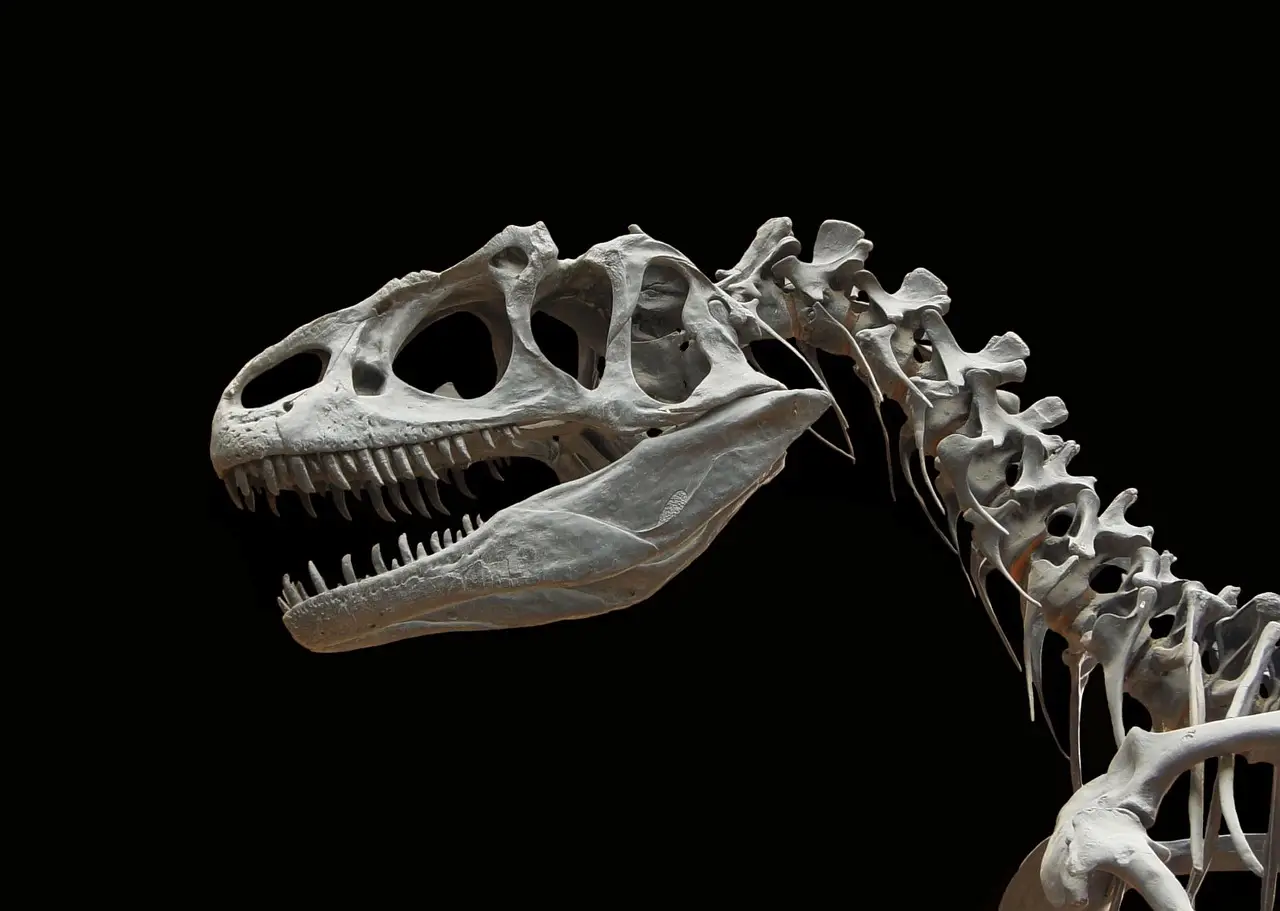
A dinosaur still in its growth phase already weighed roughly 400 kilograms (880 pounds), according to a new study published November 13, 2026, in the journal Royal Society Open Science. The animal, a newly named species called Nyana rooiwalensis, walked on two legs more than 200 million years ago in what is now South Africa.
Researchers identified the species from a near-complete skull plus several other fossilized bones. That skull is the prize. Fossilized skulls from sauropodomorphs of this age — the Late Triassic, when early dinosaurs were still evolving and diversifying — are rare. In southern Africa, they're rarer still.
The find is billed as South Africa's earliest near-complete sauropodomorph dinosaur skull, recovered from Late Triassic rocks of the Eastern Cape Province.
What kind of dinosaur was it?
Nyana belonged to the sauropodomorphs, a group that eventually produced enormous, long-necked giants such as Brachiosaurus and Diplodocus. But Nyana itself was no giant yet. It was an early-diverging massopodan — an early branch of the sauropodomorph family tree — and it probably moved on two legs.
Despite the incomplete remains, the bones told researchers plenty.
How did the researchers work out its age and weight?
A team led by Atashni Moopen of the University of the Witwatersrand in South Africa started with powerful X-rays, using them to build a detailed 3D model of the skull. They then compared its features with those of other sauropodomorphs to place Nyana on the dinosaur family tree.
For age and growth, the team cut thin slices of limb bones and examined them under a microscope. The bone structure showed Nyana was still growing rapidly when it died. The researchers believe it was at least in its third year of growth — despite already weighing as much as a large horse.
Weight came from the thigh bone. The team measured its circumference and compared it against growth curves derived from related dinosaurs. The verdict: big, but far from finished.
"Extrapolation of these growth curves suggests that adult Nyana may have reached multi-tonne body masses," the study authors wrote in their paper.
It's an extrapolation, so treat the multi-tonne figure as a projection, not a measurement. No adult Nyana skeleton has been found.
Why does one skull matter?
The discovery isn't just about a single animal. The researchers argue it could reshape how scientists understand the early evolution and global spread of these dinosaurs.
"It provides critical new data on skull morphology in early-diverging massopodans that will be of use to future phylogenetic studies, suggests a novel biogeographical link between southern Africa and North America and supports the adoption of rapid growth strategies early in sauropodomorph evolution," the authors wrote.
That's three claims bundled in one sentence, each worth unpacking:
- Skull data: The near-complete skull adds missing anatomical detail on massopodans, an early sauropodomorph group, which should sharpen future family-tree analyses (phylogenetics — the science of working out how species are related).
- A continent-hopping link: The fossil hints at a previously unknown biogeographical connection between southern Africa and North America, implying these dinosaurs' relatives spread between the two regions.
- Fast growth, early on: The bone evidence supports the idea that rapid growth strategies appeared very early in sauropodomorph evolution — long before the group's giant descendants came along.
All three rest on one incomplete specimen, and the authors themselves frame the biogeographical and growth conclusions as suggestions and support, not settled fact. Still, a near-complete skull from a time and place with few such fossils gives paleontologists real material to test those ideas against.
The takeaway
A three-year-old, two-legged South African dinosaur already tipping the scales at 400 kg — with multi-tonne adulthood possibly ahead — shows giant-scale growth strategies took root surprisingly early in sauropodomorph history.
The paper: Atashni Moopen et al., "Nyana rooiwalensis: South Africa's earliest near-complete sauropodomorph dinosaur skull from the Late Triassic of the Eastern Cape Province," Royal Society Open Science (2026). DOI: 10.1098/rsos.261002.
via phys.org/rss-feed/ (Source)
More from Elena Vasquez
Show full bio
Correspondent covering money, funding and market shifts around general science news at SciBeat.
415 articles
Nearby plates
- 220-Million-Year-Old Skull From South Africa Unveils New Dinosaur Species
- Giant 20-meter dinosaur found at Brazilian construction site
- 210-Million-Year-Old Dinosaur From Zimbabwe Rewrites Africa's Map
- 240-Million-Year-Old Tanzania Fossil Reshapes Dinosaur Timeline
- Taung Child Dated to 3 Million Years Ago Still Reshapes Human Origins