Plate Nº 83 · recorded October 10, 2026
Biology & EvolutionReported finding
240-Million-Year-Old Tanzania Fossil Reshapes Dinosaur Timeline
A 240-million-year-old dicynodont fossil from Tanzania, named Dinodontosaurus isiyavamanda, may push back the earliest dinosaur timeline by up to 10 million years by linking African and South American deposits.
By Nathan Brooks4 min read855 words
In brief
- Fossil is approximately 240 million years old, from Tanzania's Manda Beds
- First confirmed record of the genus Dinodontosaurus outside South America
- Dating shift: candidate 'oldest dinosaur' rocks may be up to 10 million years younger than previously thought
- Study published September 15, 2026 in the Journal of Vertebrate Palaeontology
- Original fossil collected in 1963 and held at London's Natural History Museum for over 60 years
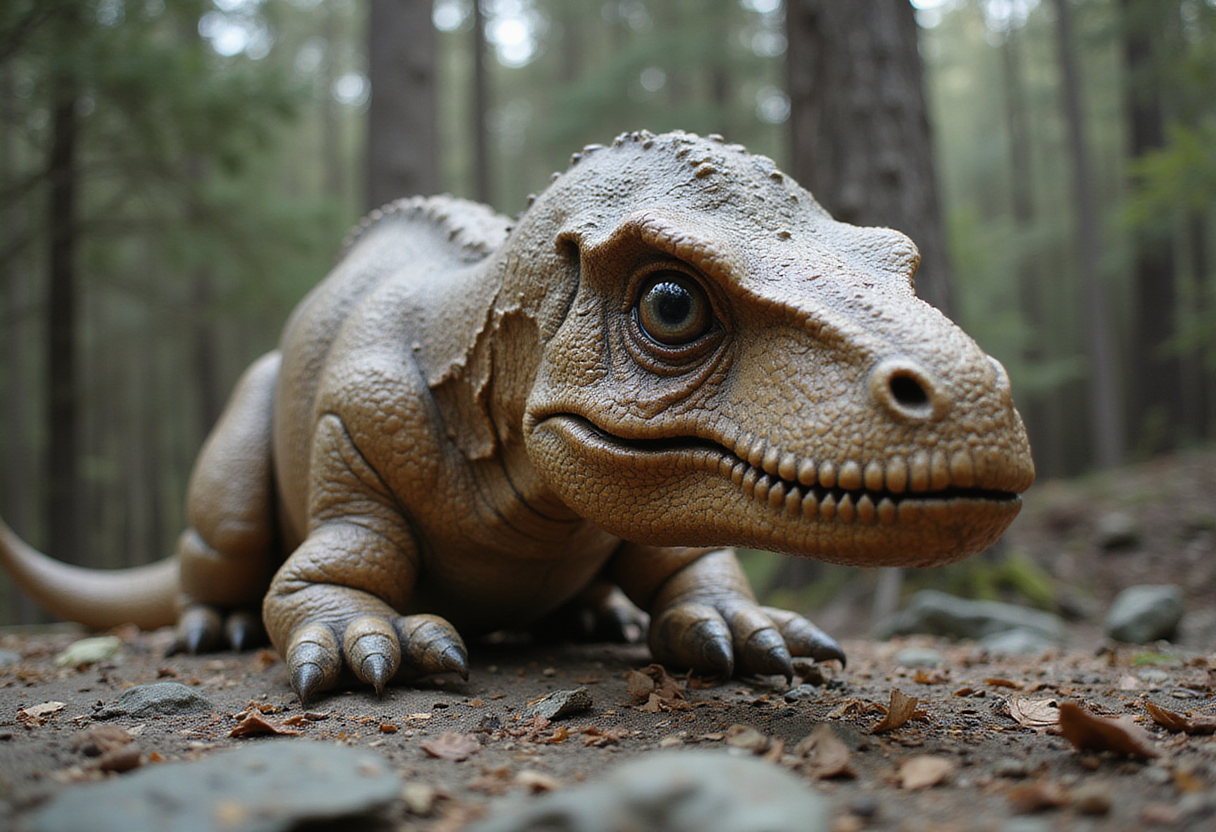
A 240-million-year-old animal named Dinodontosaurus isiyavamanda is forcing scientists to reconsider the timeline for the earliest dinosaurs, possibly pushing it back by as much as 10 million years. The plant-eating creature belonged to a group of mammal-lineage vertebrates called dicynodonts, which lived long before dinosaurs came to dominate land ecosystems.
The study appeared September 15, 2026 in the Journal of Vertebrate Palaeontology. An international team led by the University of Bristol described the species from fossils collected in Tanzania's Manda Beds, geological deposits that have also produced fossils once proposed as the oldest known dinosaurs.
What did scientists actually find?
The story stretches back to 1963, when a British expedition collected a large cache of synapsid fossils — mammal-lineage vertebrates — from what is now Tanzania. Many of those specimens ended up in the Natural History Museum in London, where some sat for decades without full study.
Researchers re-examined an associated dicynodont skeleton from that 1963 haul, plus a fragmentary skull found more recently. Detailed anatomical work, including micro-CT scanning, placed both specimens in the genus Dinodontosaurus.
Until now, Dinodontosaurus had only been confirmed in South America. The team designated the Tanzanian animal as a new species. Its name, isiyavamanda, honors the Wamanda people of the region where the fossils were recovered.
How does this change the dinosaur timeline?
The rock layers holding Dinodontosaurus isiyavamanda are the same deposits that yielded fossils once cited as the earliest dinosaur candidates. Scientists had previously linked those Tanzanian rocks with formations in South Africa thought to be roughly the same age.
The new identification breaks that link. Because the same genus now appears in both Tanzania and South America, researchers have a fresh way to correlate the two rock sequences. Recent radiometric dating of South American strata suggests those early dinosaur-bearing layers may be up to 10 million years younger than the South African rocks they were matched to.
The implication: Tanzania's "oldest dinosaur" fossils may be younger than researchers assumed, and the geography of dinosaur origins may need rethinking.
Lead author Hady George, a PhD student in Bristol's School of Earth Sciences, said: "Our discovery marks the first confirmed record of the genus Dinodontosaurus outside South America. The finding links the Tanzanian and South American fossil-bearing rocks, showing they are of equivalent age."
George added: "This helps confirm that the oldest dinosaur candidates from Tanzania are probably no older than those from South America, refining the timeline of dinosaur origins."
Why did it take decades to publish?
Paleontologist Nigel Larkin first studied the dicynodont skeleton in 1994 for his MSc thesis at University College London. He suspected then that it represented a new species.
"I studied this dicynodont skeleton for my MSc thesis at University College London back in 1994 and judged it to be a species new to science, but it took me nearly 30 years to start the process of writing it up for publication," said Larkin, now a Visiting Research Fellow at the University of Reading. "I'm glad I waited, as the international team we put together, headed by Hady George, has done an amazing job of fleshing-out this story in much more detail and depth than I could have achieved on my own."
Larkin also pointed to dramatic improvements in tools and collaboration. "Techniques have improved vastly over the last 30 years too — we can do so much more with micro-CT scanning, etc. to examine such specimens than we ever could have imagined in the 1990s, and international collaboration is so much easier. And what's 30 years? It's the blink of an eye compared to the age of this prehistoric specimen."
What can museum collections still reveal?
The researchers stressed that old specimens can still transform science. Dr. Mike Day, Curator of Non-Mammalian Tetrapods at the Natural History Museum, London, noted the specimen had been in the museum's care for more than 60 years.
"This fossil specimen from Tanzania has been in our care for over 60 years, and it's wonderful that its identity has now been brought to light," Day said. "By revealing that Dinodontosaurus lived in South America and eastern Africa, it offers a glimpse of our planet 240 million years ago."
"It goes to show how revisiting museum collections can change our understanding of the past just as much as finding new fossils in the field, showing the importance of looking after these invaluable records of life on Earth," Day added.
What's next?
A large share of the Tanzanian Dinodontosaurus material remains unstudied, especially postcranial bones — those from the body excluding the skull. The team plans to:
- Compare those remains with South American Dinodontosaurus fossils
- Investigate the biomechanics of dicynodonts and related species
- Examine how several large plant-eaters coexisted in Triassic ecosystems
The findings are preliminary and based on a small sample of remains, but they offer one of the clearest cross-continental tie points for dating early dinosaur-bearing rocks. Forthcoming research projects will revisit the remaining material and explore the ecology of Triassic dicynodonts in greater detail.
via dx.doi.org (Original)
More from Nathan Brooks
Nearby plates
- Animals May Have Evolved 200 Million Years Earlier Than Thought
- Giant 20-meter dinosaur found at Brazilian construction site
- Adult Fossil Confirms Homo erectus Roamed Southern Africa 2 Million Years Ago
- Gobi Desert Fossil Rewrites 40-Year Mammal Evolution Theory
- New Armored Dinosaur From Japan Points to Ancient Migration