Plate Nº 60 · recorded October 11, 2026
Chemistry & MaterialsReported finding
A Crystal That Turns Sunlight and Water Into Clean Hydrogen
Researchers have developed a crystal that uses sunlight to split water into hydrogen, potentially offering a cleaner alternative to fossil-derived fuel.
By James Calloway2 min read489 words
In brief
- A newly studied crystal uses sunlight to split water and produce hydrogen gas.
- Most hydrogen today is made from natural gas, releasing carbon dioxide before use.
- Photocatalytic water splitting has been researched for decades but faces efficiency and cost hurdles.
- Hydrogen fuel cells emit only water as a byproduct when generating energy.
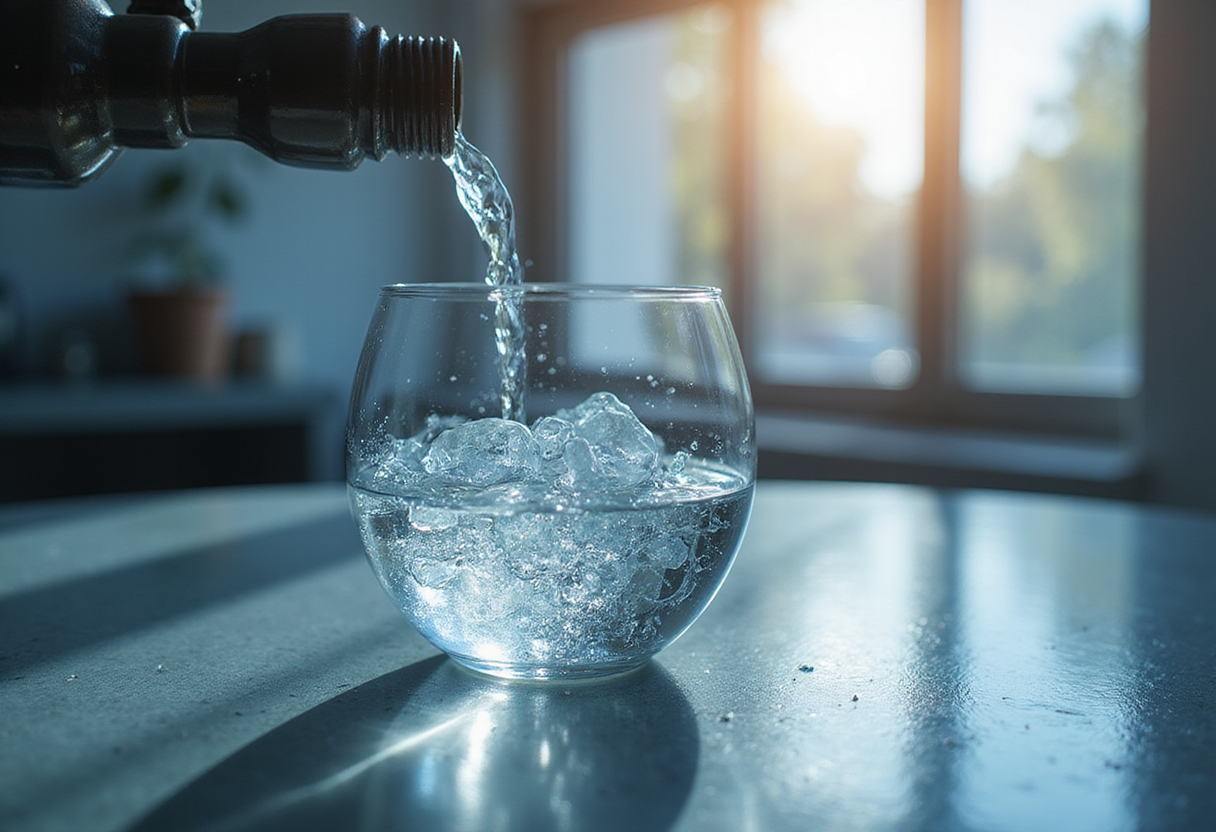
A crystal that uses sunlight to split water into hydrogen could open a new route to cleaner, more affordable fuel, according to researchers behind the work.
Hydrogen already powers fuel cell cars, but the way we make most of it today carries a hidden climate cost. Producers typically extract hydrogen from natural gas, a process that releases carbon dioxide before the fuel ever reaches a tank. That means a "clean" fuel cell vehicle is often running on hydrogen with a fossil footprint.
Water offers an alternative source: every water molecule contains hydrogen atoms that can, in principle, be separated out and collected. The challenge is that splitting water takes energy, and doing it without generating emissions has proven difficult and expensive. This is where the new crystal material enters the picture.
How does the crystal work?
The material acts as a light-driven catalyst — a substance that speeds up a chemical reaction without being consumed itself. When sunlight strikes the crystal, it absorbs the energy and uses it to drive the reaction that pulls hydrogen out of water.
Think of it as a solar panel with a different output. A standard photovoltaic cell converts sunlight into electricity; this crystal converts sunlight directly into chemical energy stored in hydrogen gas. That hydrogen can then be used later, for example in a fuel cell, where it recombines with oxygen and releases energy with water as the only byproduct.
Photocatalytic water splitting, as scientists call this approach, has been studied for decades. Most earlier attempts have struggled with efficiency, durability or cost, which is why the vast majority of industrial hydrogen still comes from natural gas.
Why does this matter for clean energy?
Hydrogen is attractive as a fuel because burning it — or running it through a fuel cell — produces no carbon dioxide. If the hydrogen itself can be produced from water using nothing but sunlight, the entire cycle becomes essentially emission-free.
The research team suggests their crystal could point toward a way of making hydrogen that avoids the carbon dioxide emissions tied to current production methods. If the approach can be scaled up and made affordable, it could compete with conventional hydrogen derived from fossil fuels.
What are the caveats?
As with any early-stage materials research, real-world deployment remains a distant prospect. Laboratory demonstrations of photocatalysts do not automatically translate into industrial production, and questions of efficiency, stability over time, and manufacturing cost will determine whether the technology leaves the lab.
Still, the finding adds a new candidate to the toolkit for renewable hydrogen, an area of intense research interest as countries seek low-carbon alternatives to fossil fuels.
The work has not yet produced fuel at commercial scale, and independent verification of long-term performance will be needed. But the core result — a crystal that harnesses sunlight to extract hydrogen from water — illustrates a pathway that researchers hope can eventually deliver cleaner fuel without the carbon bill.
via google.com (Original)
More from James Calloway
Show full bio
Staff writer covering marketplaces and e-commerce at SciBeat.
206 articles
Nearby plates
- Sulfur-Powered Material Splits Water Into Hydrogen Using Sunlight
- Iodide Coating on Platinum Boosts Solar Hydrogen Output
- Light-Activated Crystals Destroy DNA in Water, Could Curb Resistance
- Researchers Capture Light-Driven Electron and Proton Transfer in Detail
- MIT Team Turns Ammonia Into Pure Hydrogen at 200–300°C