Plate Nº 85 · recorded November 17, 2026
Reported finding
A Maya King Called 'Bat' Ruled a Roadless Jungle City Called Sakil
A 37-acre Maya city found in May 2026 had a ruler named Suutz', or 'bat', hieroglyphs reveal — along with carvings of a captured local and a rival city.
By James Calloway3 min read638 words
In brief
- The roughly 37-acre Maya city was discovered in May 2026 in Campeche, Mexico.
- Residents called the settlement Sakil, a Maya term relating to 'whiteness'.
- Hieroglyphs on 14 pillars and altars record a conflict with rival Maya hub Ocomtún.
- A ruler titled kalo'mte', named Suutz' ('bat' in Yucatec Maya), held authority over the city.
- Structures date back at least 1,100 years and include a nearly 43-foot-tall pyramid.
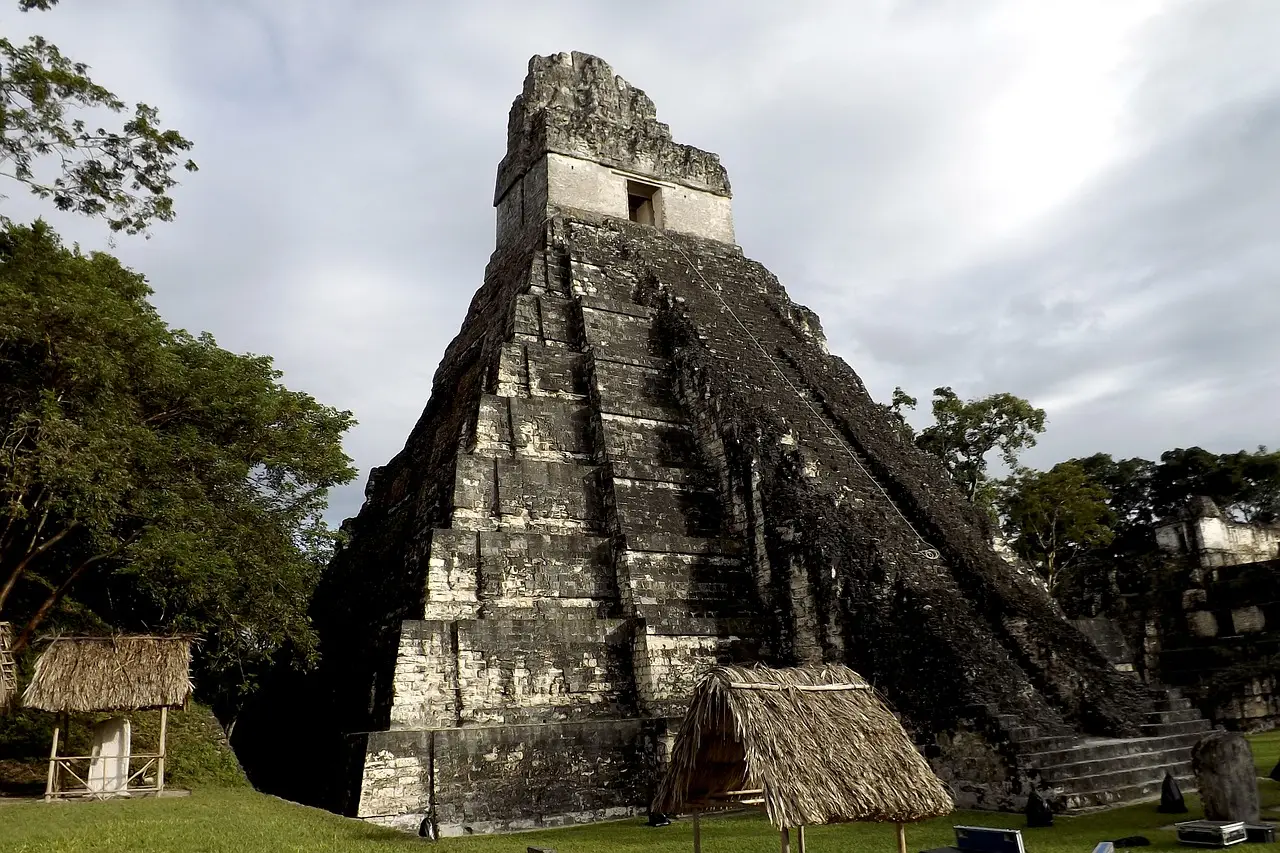
A Maya ruler named Suutz' — "bat" in Yucatec Maya — governed a roughly 37-acre jungle city that archaeologists only found in May 2026, according to newly translated hieroglyphs. The discovery gives researchers a name, a face, and a war story for a settlement so remote that its first visitors nicknamed it Minanbé: "there is no road."
The site sits in the Mexican state of Campeche, which borders Guatemala to the south, north of the Calakmul Biosphere Reserve. Octavio Esparza Olguín, an archaeologist at the National Autonomous University of Mexico, led the hieroglyphic translations. They suggest the city's own residents called their home Sakil, a Maya term related to "whiteness." A nickname from outsiders, it turns out, was wrong on both counts. The people who lived there had a name of their own.
What did the excavations actually find?
The buildings date back at least 1,100 years, placing the settlement in the Maya Late Classic period. Surviving structures include:
- religious facilities
- palace structures
- plazas
- water-management systems
- a pyramid standing nearly 43 feet tall
Architecture is one thing. Names are another. After examining 14 pillars and altars, the researchers uncovered hieroglyphic records of a violent conflict between Sakil and a rival Maya hub called Ocomtún.
One monument stands out. Its carved relief shows a captive lying on his stomach, wrists tied, head turned sideways. Nearby inscriptions state that this individual had been a resident of Minanbé. That is a captured local, carved in stone for posterity. Conflict between neighbors, recorded without euphemism.
Who was Suutz'?
Hieroglyphs on other pillars memorialize a specific regional ruler, titled kalo'mte', named Suutz'. The title matters; kalo'mte' designated a high-ranking regional authority, not a minor village headman.
Associated imagery shows a ruler dressed in decorative clothing, sandals, and a detailed headdress. Combined with additional inscriptions, Esparza Olguín and his colleagues believe Suutz' was a powerful chief who wielded substantial authority over Sakil's residents.
A name, a title, and a wardrobe. For a city found months ago, that is an unusually detailed portrait. But it comes with gaps.
What remains uncertain?
Here's the caveat. The carvings imply some kind of military conflict between Sakil and Ocomtún, yet researchers still cannot say whether that fighting happened during Suutz's reign. The dates and the king do not yet line up on a timeline. The translation work is fresh, the excavations are young, and a short field season has limits.
It's also worth remembering what a 37-acre sample of surface monuments can and cannot tell you. Fourteen pillars and altars are a real dataset, but they are the dataset of whoever chose to carve them. Victors, captors, and elites commission stone. Ordinary residents of Sakil left no glyphs we have found.
What does this change for Maya archaeology?
For now, mostly the map and the cast list. A previously unnamed city now has a name it called itself, a rival it fought, and a ruler with a title and a documented taste for elaborate headwear. Each of those is a thread other researchers can pull. The team hopes further work will reveal more about the settlement and how its residents related to the world around them — a polite way of saying the hard questions are still open.
Still, consider the pace. Discovery in May 2026, translations and a named king within months. Remote sites once took decades to yield this much. Lidar surveys and faster epigraphy — the study of ancient inscriptions — are compressing that timeline, and Sakil is a concrete example of the shift.
Whether Suutz' ordered the carvings of captives, or inherited the feud, or fell to it, nobody yet knows. The stone records a tied man from Minanbé. It does not record who tied him, or when, or why. That is the next excavation's job.
via popsci.com (Source)
More from James Calloway
Show full bio
Staff writer covering regulation, policy and their impact on general science news at SciBeat.
474 articles
Nearby plates
- Two Hidden Magma Reservoirs Found Beneath Nicaragua's Masaya Volcano
- DNA confirms rare cyclopia in 1,600-year-old Nazca infant
- Wet Climate Opened the Door for Corn's Conquest of Mexico's Highlands
- Frozen Inca Hair Reveals Drugs and Drink Before Sacrifice
- 210-Million-Year-Old Dinosaur From Zimbabwe Rewrites Africa's Map