Plate Nº 84 · recorded November 13, 2026
PhysicsReported finding
After Math's Upheaval, Physicists Ask Whether Science Is AI's Next Conquest
AI has dis-proved an Erdős conjecture and attacked the Riemann hypothesis in nine months. Scientists agree change is coming — but not on how far it reaches.
By Marcus Bennett5 min read1,070 words
In brief
- In October OpenAI released 722 AI-generated preprints on some 370 open math problems, including a partial solution to the Riemann hypothesis.
- In May, OpenAI models guided by humans disproved a long-standing conjecture posed by mathematician Paul Erdős.
- In late October, OpenAI and Anthropic independently announced progress on a problem underpinning the Standard Model's mathematics.
- Matthew Schwartz and collaborators released 36 AI-assisted preprints across 22 research areas last month.
- A December 2025 experiment found Claude Opus 4.5 answered graduate-level physics problems in two minutes instead of two weeks.
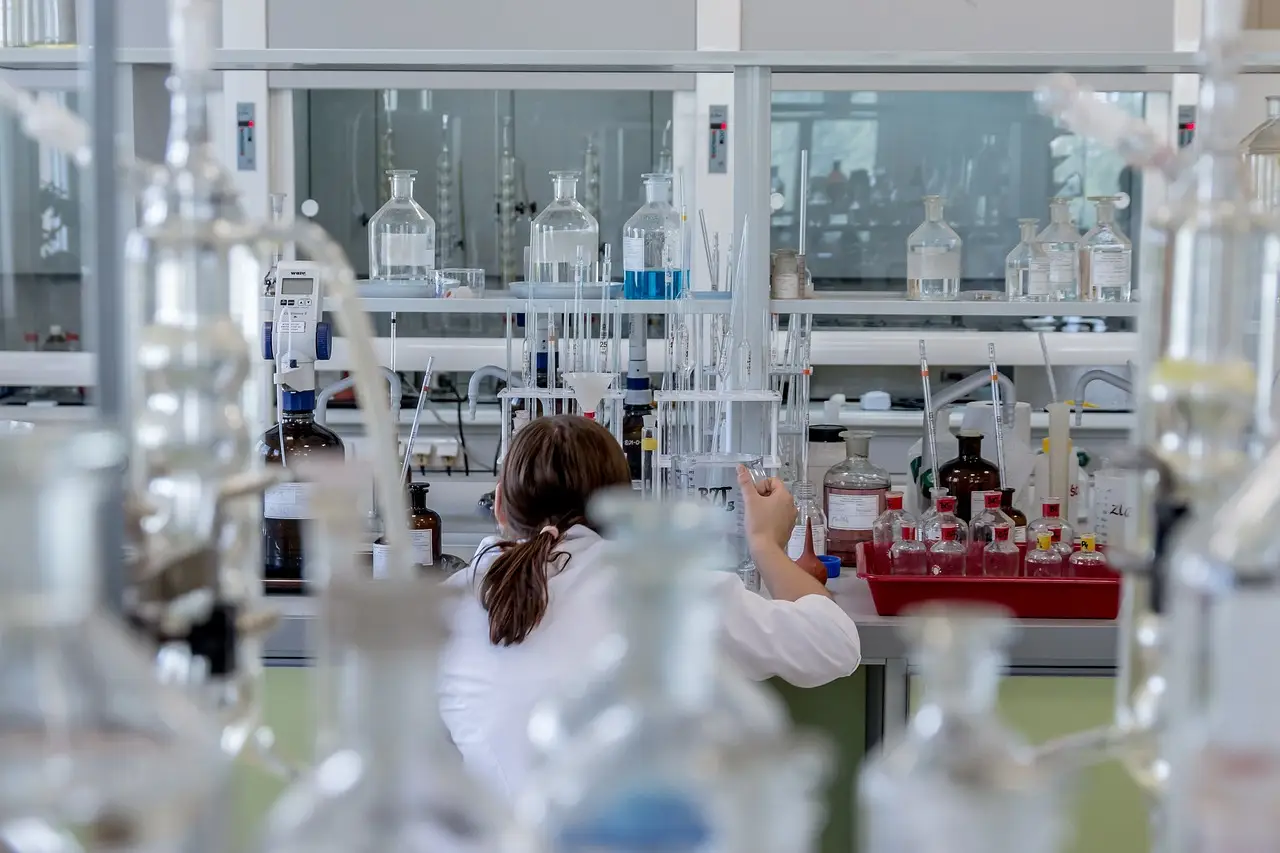
In October alone, OpenAI released 722 AI-generated preprints covering roughly 370 open math problems, including a partial solution to the Riemann hypothesis. That barrage capped nine months in which AI systems also disproved a long-standing conjecture from mathematician Paul Erdős (May) and, amid controversy, effectively solved the Navier-Stokes problem (August). Mathematics is reeling. The open question now is whether the rest of science follows.
The warning came first from a physicist. In March, Harvard theoretical physicist Matthew Schwartz told the American Physical Society's annual meeting that AI was going to do lots of science, so watch out. Many in the audience greeted the forecast with skepticism and derision, finding it too alarmist and too optimistic about AI's capabilities.
Those warnings now seem quaint. And the pace is not slowing, researchers say.
What has actually changed for scientists?
Scientists already use AI routinely for coding and increasingly for analysis. But for genuinely novel discoveries, the record is thin. "I can't name a result that's a deep insight into physics yet," says Schwartz, who also consults for Anthropic, the company behind the Claude models. "Is that a fundamental limit, or is it just that tools aren't ready yet? I'm pretty sure it's that the tools aren't ready yet."
The tools are improving fast, and theoretical physics — arguably the field closest to math — could be next. In late October, OpenAI and Anthropic separately announced progress on a problem underpinning the mathematics of the Standard Model of particle physics. That same month, a separate assessment found the latest AI models nearly flawless at solving research-level theoretical physics puzzles — problems an expert might crack in a day.
Takeaway: the frontier has moved from grade-school arithmetic to expert-level physics problems in under a year.
Why did math fall first?
Four years ago, large language models (LLMs) struggled to add two-digit numbers. They later passed eighth-grade math tests — without any hard-coded arithmetic, since they learn purely from text. Today the dominant models produce merely "good" prose while churning out superhuman quantitative reasoning.
Math has a property the sciences lack: exact answers. LLMs can lean on proof-verification software such as Lean, a programming language that logically codifies and confirms a result is true — even when no one fully understands the underlying math. "In the sciences, we don't have such a verifier," says N. M. Anoop Krishnan, an engineer studying AI at the Indian Institute of Technology Delhi, who doubts LLMs can make similarly epochal autonomous scientific discoveries.
Krishnan cites other limits. Good scientists depend on subtleties that rarely reach peer-reviewed literature: negative results and tacit, hard-won intuition. LLMs also homogenize their responses, blunting their usefulness for genuinely novel ideas. And simulations cannot replace reality: designing a material in silico is no substitute for synthesizing it in a lab.
Materials science illustrates the gap. AI-designed materials have historically produced unphysical results or trivial novelties, and the most promising evidence of AI accelerating the field turned out to be completely fabricated. Still, Princeton physical chemist Leslie Schoop, who also consults for Anthropic, says those failures may not predict the future given AI's dramatic recent gains. "It can now do mostly what I can do, except it doesn't have a lab," she quips. She recently asked AI models to predict a novel structure her lab had found through serendipity, intuition and repetition; none succeeded, because "there's no analytical way to do it."
Takeaway: math verifies itself; the messy physical world does not — yet.
Where might AI still fail?
The most ironic candidate is the study of intelligence itself. "My sense is that the hard questions in the field are really not going to be solved by adding intelligence," says Mark Histed, a neuroscientist at the National Institute of Mental Health. Neuroscience needs better data instead: better neural recordings, more thorough studies of biological networks, and new measurements using frontier tools such as optogenetics.
Even with better data, complicated fields face a hard wall. "At some point the amount of data you need to estimate your downstream nonlinear function is greater than can be acquired before the heat death of the universe," Histed says. The problem is chaos: in systems like Earth's weather — and perhaps the brain — infinitesimal initial changes magnify until predictions diverge.
Takeaway: more intelligence cannot fix fields starved of data or ruled by chaos.
What does the 'AI grad student' look like?
In December 2025, Schwartz began feeding graduate-student-level physics problems to Anthropic's Claude Opus 4.5. The model had plenty of limitations, but "it would come back in two minutes with an answer rather than two weeks." He documented the experiment in what he calls "the most important paper I've ever written."
The trick, Schwartz says, is finding "AI-shaped" problems. Last month he and collaborators released 36 preprints across 22 areas — from outlining the geological history of Earth's atmospheric oxygen to extending phylogenetic trees and determining sunspot demographics. The shared features: checkability, robust data, and often the import of a mathematical tool across disciplinary boundaries.
Human experts remain essential. In one case, the model claimed it had improved earthquake forecasting by 15 percent over current methods; Schwartz's independent human expert easily refuted the claim. "Claude convinced me that this was interesting, but then the expert said, 'Not really,'" Schwartz recalls.
Takeaway: AI compresses weeks of work into minutes, but human judgment still audits the output.
How far does this go?
Schwartz predicts the gap will keep closing: "The content of any paper we could write today, Claude could just generate by thinking." Schoop is less sure the curve holds. "You know, every exponential rise eventually flattens out," she says.
Researchers who spoke about the story showed little consensus on what AI will do or how it should be used — but all agreed science stands on the cusp of massive change. "Right now everyone is trying to figure out where AI is going to go, and scientists are not alone in that," Histed says. "There's a lot of uncertainty."
"My wife hates AI. And a lot of people do. It's scary, and it's impersonal and inhuman, and it's encroaching on who we are," Schwartz says. "But as a scientist, I just can't not use the best available tools to solve problems."
via scientificamerican.com (Source)
More from Marcus Bennett
Show full bio
News editor covering regulation, policy and their impact on general science news at SciBeat.
388 articles