Plate Nº 62 · recorded November 12, 2026
Biology & EvolutionReported finding
After Rain Hits Dryland Soil, Most Microbes Keep Sleeping
Penn State researchers found only a small fraction of dryland biocrust microbes wake within six hours of rain — a finding that reshapes restoration strategy for threatened soils.
By James Calloway3 min read680 words
In brief
- Biocrusts are projected to decline by up to 40% in the next 45 years.
- Six hours after wetting, only a small fraction of bacteria had resumed protein production.
- Samples came from near Moab, Utah, a desert averaging under 10 inches of rain per year.
- Findings published in The ISME Journal (2026), DOI: 10.1093/ismejo/wrag231.
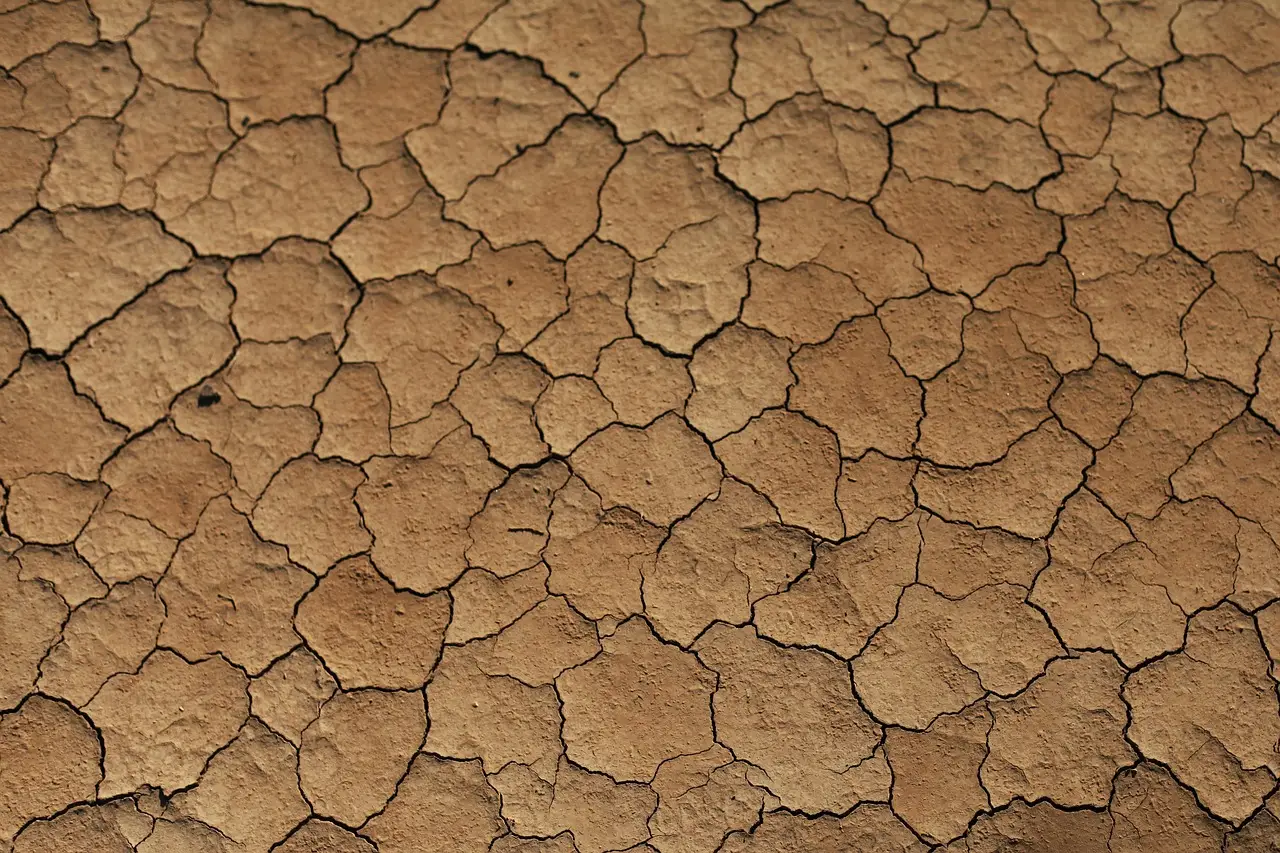
Biological soil crusts could shrink by as much as 40% over the next 45 years, and a new Penn State study delivers a wrinkle for anyone trying to save them: when rain finally arrives, most of the microbes in those crusts stay dormant.
By six hours after a simulated wetting event, only a small fraction of the bacterial community had resumed protein production — the telltale sign that a microbe has exited dormancy and restarted active growth and metabolism. The team published its findings in The ISME Journal in 2026.
So what does this change for restoration? Potentially a lot. If conservationists want to rebuild biocrusts, they may need to know which microbes actually wake up after rain — not just which ones are sitting in the soil.
What are biocrusts, and why should you care?
Biocrusts are communities of cyanobacteria, algae, lichens, mosses and other microorganisms that form a skinlike layer on the top few millimeters of dryland soils. These living crusts power threatened dryland ecosystems across the world's arid regions.
They survive by a neat trick: staying metabolically active when wet, then slipping into quiescence or dormancy during long dry stretches. "That's a very important advantage that allows them to colonize these harsh, barren areas," said study first author Raúl Román, who worked on the project as a postdoctoral scholar in Penn State's Department of Ecosystem Science and Management and is now at the University of Almería in Spain.
How the researchers tested it
The team collected biocrust samples near Moab, Utah, in the Colorado Plateau — a cold, semiarid desert receiving less than 10 inches (25 centimeters) of rainfall per year. Back at Penn State, they studied the samples in a growth chamber with controlled light, humidity and temperature, comparing early-stage crusts against mature ones.
They added small amounts of simulated rainfall, then used two molecular tools:
- BONCAT-FACS, a technique that labels cells actively making proteins, letting researchers physically separate the microbes that "woke up."
- 16S rRNA sequencing, a method that identifies and classifies microbes by their genetic activity.
They ran the simulated rain both at night and during the day.
What surprised the team
Two findings caught the researchers off guard. First, light didn't matter much in the first six hours after wetting. Second, the bacteria most abundant in the soil weren't necessarily the ones that became active after rainfall.
"Because biocrusts are supported by photosynthetic microbes, we expected them to have a very different response when the rain fell at night when they could not do photosynthesis versus during the day," Román said. "But we did not find that."
The team also reported that older, more developed biocrusts responded to rainfall with a larger population of active microbes — a hint that crust maturity shapes how an ecosystem bounces back.
A conserved group of rapid responders
"Our results suggest that across these communities there is a relatively conserved group of microbes that are especially good at rapidly responding when water becomes available," said senior author Estelle Couradeau, Penn State assistant professor of soils and environmental microbiology, who has studied arid-ecosystem resilience for a decade.
Her caution is worth quoting directly: "Simply knowing which microbes are present may not tell us how the soil will function after rainfall."
The caveats
This is one study, in one desert, over one six-hour window. Lab chambers don't perfectly reproduce the Colorado Plateau. And the projection driving this work — up to 40% biocrust decline in 45 years — is a projection, not a measurement.
Still, the stakes are real. As climate change alters the timing and size of rainfall events, with some arid regions facing more frequent rains and others extended droughts, models of microbial resuscitation become essential. "We need to know the dynamics of biocrust microbes' resuscitation to model or to predict what is going to be the fate of those functions," Román said.
The next step, the researchers suggest, is isolating and culturing the active microbes for use in restoration. That work hasn't happened yet. But the roadmap is now on paper.
via phys.org/rss-feed/ (Source)
More from James Calloway
Show full bio
Staff writer covering regulation, policy and their impact on general science news at SciBeat.
346 articles
Nearby plates
- Salt-Loving Microbe Grew for 160 Days Under Simulated Mars Conditions
- Ancient Ocean Chemistry Kept Earth Breathing, Study Finds
- Bacillus Spores Survived Six Years Bolted to a NASA Satellite
- Ancient Mars Rains May Have Delivered a Life-Starting Molecule
- Drones, Satellites and AI Team Up to Track Antarctica's Tiniest Life