Plate Nº 34 · recorded November 9, 2026
Space & AstronomyReported finding
Salt-Loving Microbe Grew for 160 Days Under Simulated Mars Conditions
Haloferax volcanii grew for 160 days at 24 millibars in a Mars-like brine chamber, metabolizing nitrate and perchlorate — but the environment is theorized, not observed.
By James Calloway4 min read733 words
In brief
- Haloferax volcanii grew during a 160-day experiment simulating Martian subsurface brine at 24 millibars, published November 5, 2026, in Applied and Environmental Microbiology.
- Nitrate dropped 15–29% and perchlorate 16–29% in Mars-pressure cultures, with no drop in cell-free controls.
- Liquid loss stayed below 4% over 160 days despite pressure of roughly 2% of Earth's sea level.
- The simulated environment — fluid pockets in salt minerals about 20 cm below the Martian surface — is theorized, not observed on Mars.
- Growth at low pressure was significantly lower than at Earth pressure, and the experiment omitted radiation, freeze-thaw cycles and realistic Martian chemistry.
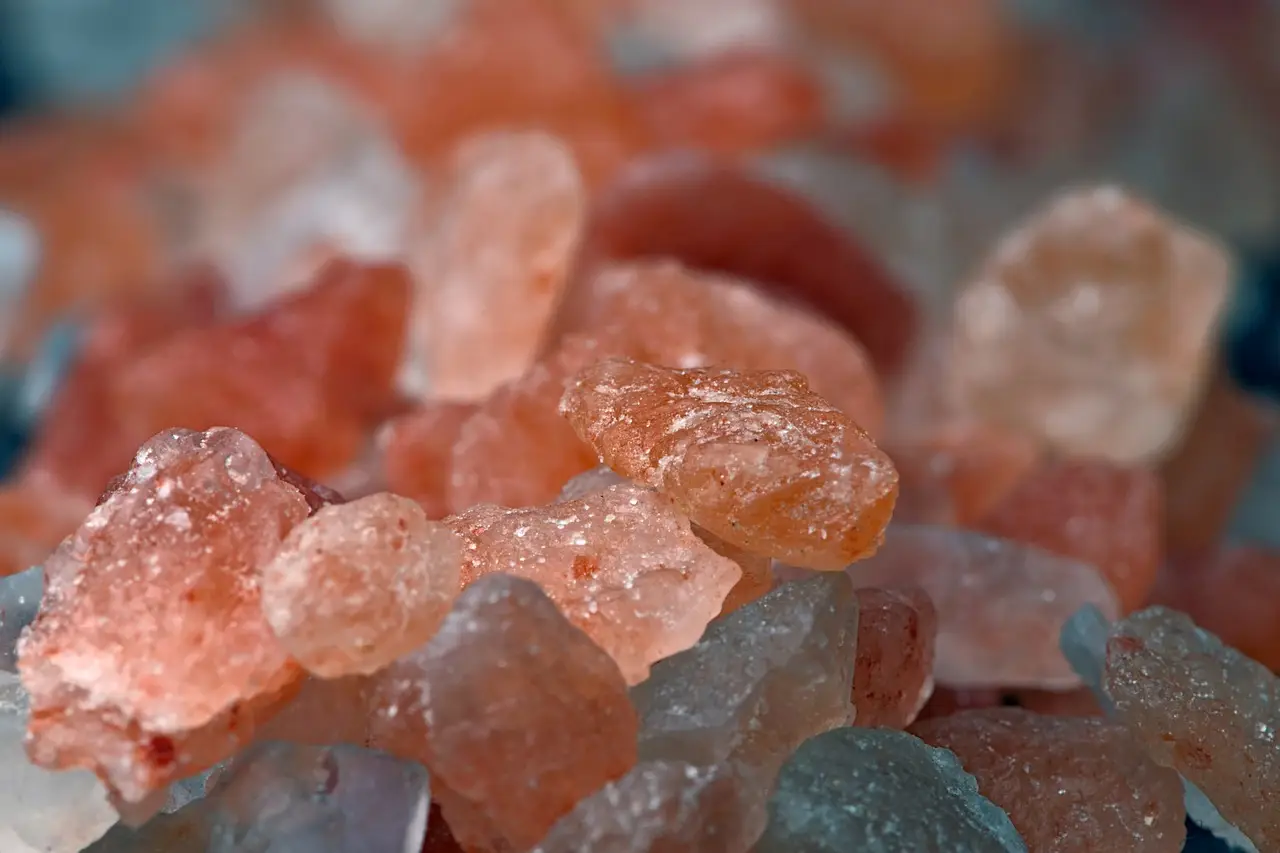
A salt-loving microbe grew for 160 days in a laboratory chamber mimicking a shallow Martian subsurface brine, according to a paper published online November 5, 2026, in the journal Applied and Environmental Microbiology. Before anyone gets excited: the authors say flatly that this does not mean life exists on Mars.
The microbe is Haloferax volcanii, an archaeon — a single-celled organism distinct from bacteria — famous among microbiologists for shrugging off conditions that kill most life. It is what researchers call an extremophile, meaning it tolerates extremes of salinity and dryness here on Earth. That made it a reasonable candidate for the question Dr. Adam Robinson of the University of Florida and his colleagues wanted to test: could anything alive today survive in a pocket of salty water just beneath the Martian surface?
What did the experiment actually do?
The team kept cultures inside a vacuum chamber held at 24 millibars — roughly 2% of Earth's sea-level pressure — filled with carbon dioxide and scrubbed of oxygen. The temperature sat at a steady 21 degrees Celsius, about 70 Fahrenheit.
That pressure, the researchers note, could plausibly occur inside sealed fluid pockets in salt minerals about 20 centimeters, or 8 inches, below the Martian surface. The microbes lived in extremely salty liquid containing either nitrate or perchlorate. Both chemicals occur on Mars, and the organisms can use them in place of oxygen to, in effect, breathe.
One caveat comes right up front. "The environment that we're mimicking in this experiment has not been observed on Mars, but is theorized to exist," Dr. Robinson said. Theorized. Not found.
What grew, and how do we know?
Growth appeared in every low-pressure treatment containing nitrate or perchlorate. The researchers tracked it through optical density — essentially a measure of how cloudy a culture becomes as cells multiply.
The chemistry backed the headcount. Nitrate fell by about 15% to 29% and perchlorate by about 16% to 29% in the Mars-pressure cultures. Cell-free controls showed no such drops, which suggests the microbes were actually metabolizing the chemicals rather than the salts simply degrading on their own.
Two more findings stand out:
- Liquid loss stayed below 4% across all treatments over the full 160 days. Water normally boils off rapidly at such low pressure, which is exactly why long-duration experiments like this have been rare.
- Electron microscope images showed dense biofilm-like structures in the actively growing low-pressure cultures. The same structures did not appear in Earth-pressure controls or in low-pressure cultures that did not grow.
Raman spectroscopy — a technique that reads chemical fingerprints from scattered light — still detected signatures of carotenoid pigments. These pigments, which give many microbes their color, have been proposed as possible biosignatures, though the signals came back weaker than in oxygen-fed controls.
What does this change for the search for life?
Not much yet, and the paper is refreshingly honest about that. Growth at 24 millibars was significantly lower than in identical cultures kept at Earth pressure. The experiment also skipped several things Mars would not: no freeze-thaw cycles, no radiation, no full reproduction of Martian chemistry. The nutrient-rich growth medium, the authors concede, does not represent the sparse organics actually thought to exist on Mars.
There is a practical limitation too. The team measured cultures only at the start and end of the run, because cracking open the chamber would have let oxygen flood in and ruined the simulation. So we get two data points, not a curve.
The framing comes from the researchers' own logic. "The present-day Martian surface is generally considered inhospitable to life because of low atmospheric pressure, intense surface radiation, global desiccation, and oxidizing chemistry," they write. "However, shallow Martian subsurface regions where mineralogy has shown groundwater movement may include localized hypersaline environments capable of retaining liquid water and supporting microbial metabolism."
In other words: the surface is lethal, but salt pockets underground might hold liquid water, and this study shows at least one Earth microbe could make a living there.
"We are adding to the growing body of evidence suggesting that we should consider the possibility of life on Mars today," Dr. Robinson concluded.
Consider the possibility. That is the claim — no more. One organism, one chamber, 160 days, and a long list of things the simulation left out. Interesting evidence. Not proof of anything on Mars itself.
via sci.news (Source)
More from James Calloway
Show full bio
Staff writer covering regulation, policy and their impact on general science news at SciBeat.
346 articles
Nearby plates
- Bacillus Spores Survived Six Years Bolted to a NASA Satellite
- Life on Enceladus? Two Studies Boost the Odds on Saturn's Icy Moon
- Ancient Mars Rains May Have Delivered a Life-Starting Molecule
- Hydrogen Chloride on Mars Hints at Continuing Volcanic Activity
- Enceladus Gives Scientists Two Breaks in the Hunt for Alien Life