Plate Nº 57 · recorded November 9, 2026
Space & AstronomyReported finding
NASA Chief: Hubble Must Not Fall Uncontrolled — Boost It and Keep the Science
NASA chief Jared Isaacman says Hubble must not reenter uncontrolled and any mission should boost it first, as an RFI on commercial options closes this month.
By Marcus Bennett4 min read704 words
In brief
- NASA's RFI on commercial Hubble reboost, servicing, or disposal closes at the end of November.
- Atmospheric drag is expected to bring Hubble down in 2033–2034 without a reboost.
- Hubble operates on 2 of 6 gyroscopes; single-gyro mode has cut observation time by roughly 12 percent.
- NASA studied Isaacman's Polaris servicing proposal in 2024 and did not pursue it.
- The last shuttle servicing mission, STS-125, flew in May 2009.
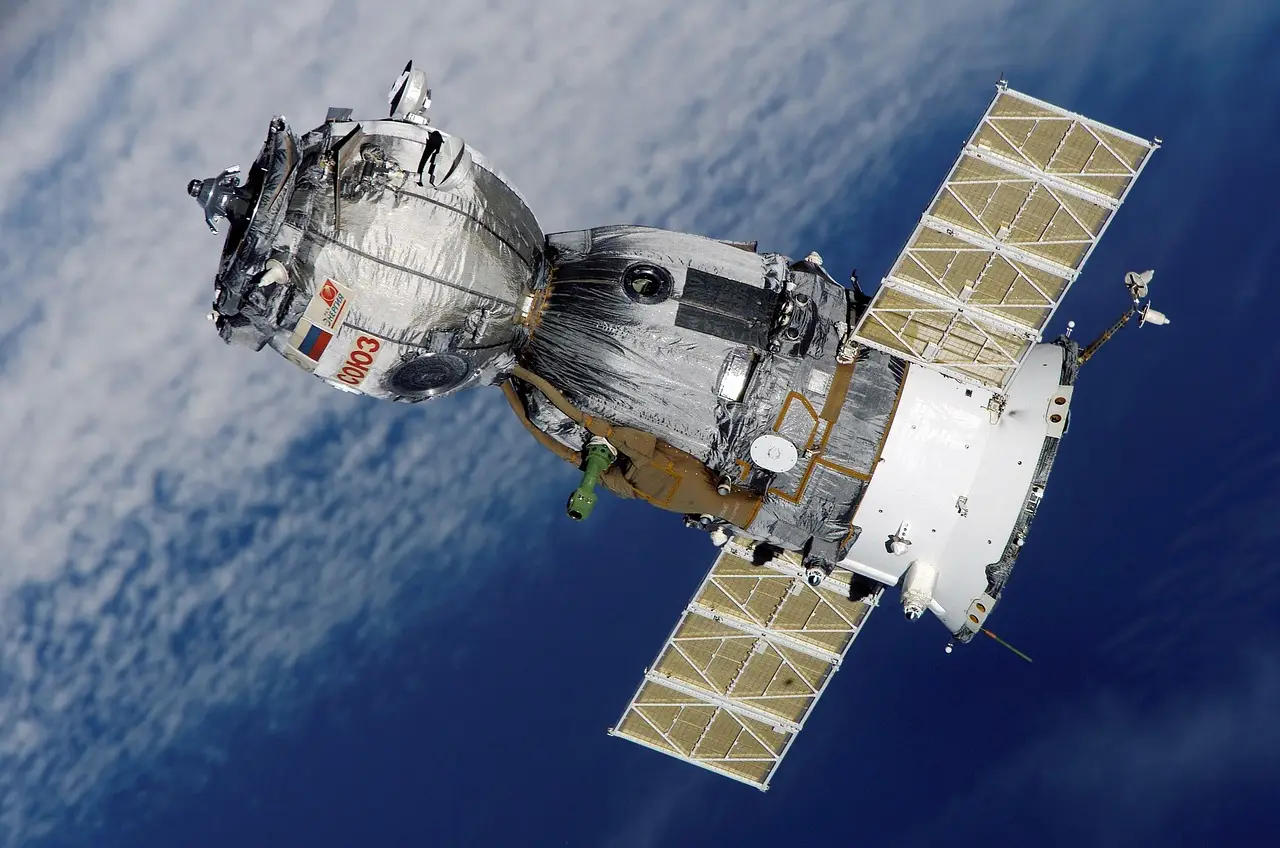
NASA Administrator Jared Isaacman has ruled out letting the Hubble Space Telescope fall back to Earth on its own, saying any funded mission to the observatory should first extend its scientific life. Atmospheric drag is expected to bring Hubble down in the 2033–2034 timeframe unless something changes its orbit.
"Hubble, you can't let it have an uncontrolled re-entry. That would not be the right thing to do," Isaacman said in an interview with NSF during the Flame Trench show. "If you're going to spend money to go up there and do something, you might as well boost it, get as much science as you possibly can out of it."
His comments come as NASA works through a Request for Information, open through the end of November, seeking commercial options for one of three paths:
- A reboost that delays reentry
- A servicing mission that restores or expands capabilities
- A controlled end-of-life disposal
Responses are due by the end of the month.
What changed since the last proposal?
Isaacman has personal history with this question. His own Polaris Program proposed a Hubble servicing concept that NASA studied and declined to pursue in 2024.
"I certainly, you know, had various ideas of how it could have been addressed years ago," he said. "NASA was very involved in that."
The equation has shifted since, he noted, because commercial capture and servicing capabilities have matured. In practice, that means companies can now plausibly approach, grab, and work on a satellite in ways that were speculative when earlier concepts were evaluated.
Isaacman also pointed to NASA's recent attempt to reboost the Swift telescope — an effort that failed — as experience worth having. "That was absolutely a risk worth taking," he said. "They learned from that. NASA learned from that, too. I'm sure that better equips them and others to potentially do it."
For practitioners, the message is straightforward: failed proximity operations still count as progress, and NASA's leadership treats them as such.
How did Hubble get here?
Hubble launched on April 24, 1990, aboard Space Shuttle Discovery on the STS-31 mission. Five shuttle servicing missions followed, repairing and upgrading the telescope over the years.
The final visit, STS-125 / Servicing Mission 4, flew aboard Atlantis in May 2009. That mission:
- Installed the Wide Field Camera 3 and the Cosmic Origins Spectrograph
- Replaced gyroscopes and batteries
- Added a soft-capture mechanism for a future deorbit vehicle
Because Hubble's orbit offered no safe haven at the International Space Station, Endeavour stood ready on an adjacent pad throughout the flight as the STS-400 Launch On Need rescue mission.
What is the telescope's current condition?
The hardware installed in 2009 is aging. Hubble now operates with two functional gyroscopes out of six and has shifted to single-gyro mode.
That change has cut available observation time by roughly 12 percent and limits the telescope's ability to track certain targets. Even so, the observatory continues to fill a unique role in optical and ultraviolet astronomy, and demand for its time remains high — astronomers still compete for every available orbit.
The telescope has no propulsion system of its own. The soft-capture mechanism installed on STS-125 was designed to support a future robotic or crewed deorbit, but no such mission has been baselined.
Could Hubble end up in a museum?
Looking further ahead, Isaacman left open the possibility of eventually recovering Hubble for display rather than destroying it in a controlled deorbit. He credited the capability of SpaceX's Starship vehicle with making that goal credible rather than fanciful.
"I wouldn't rule out the possibility that well into the future somebody could go and get it and bring it back and put it in a museum," he said. "I think that would be one of the greatest artifacts in the Smithsonian. I mean, just be so cool."
For now, though, the near-term question is narrower: whether industry can answer NASA's RFI with a credible plan to raise Hubble's orbit and stretch its science return before drag wins. Any proposal still has to survive the gap between concept and flight — the same gap that closed the 2024 Polaris idea.
via nasaspaceflight.com (Source)
More from Marcus Bennett
Show full bio
News editor covering regulation, policy and their impact on general science news at SciBeat.
370 articles
Nearby plates
- NASA Revives Request to Extend Hubble's Life in Orbit
- NASA Seeks Commercial Ways to Keep Hubble Flying Longer
- Hubble Could Fall From Orbit by 2034. NASA Wants Private Companies to Save It
- Swift Telescope to Reenter Earth's Atmosphere on November 4
- Hubble Spots a Sudden 10-Sided Wave at Saturn's South Pole