Plate Nº 52 · recorded November 2, 2026
Space & AstronomyReported finding
Swift Telescope to Reenter Earth's Atmosphere on November 4
NASA's Swift gamma-ray observatory will likely burn up in Earth's atmosphere on November 4, 2026, after Katalyst's LINK rescue spacecraft lost two reaction wheels and could not boost it.
By Marcus Bennett4 min read746 words
In brief
- Swift's estimated reentry is November 4, 2026, at 05:31 UTC ± 12 hours.
- Two of three reaction wheels on Katalyst's LINK spacecraft failed about three weeks after its July 3, 2026 launch.
- Swift has orbited Earth since 2004 studying gamma-ray bursts.
- Swift can reach visual magnitude +1.5 to +2.0, visible to the naked eye under dark skies.
- NASA expects Swift to burn up entirely, posing no danger on the ground.
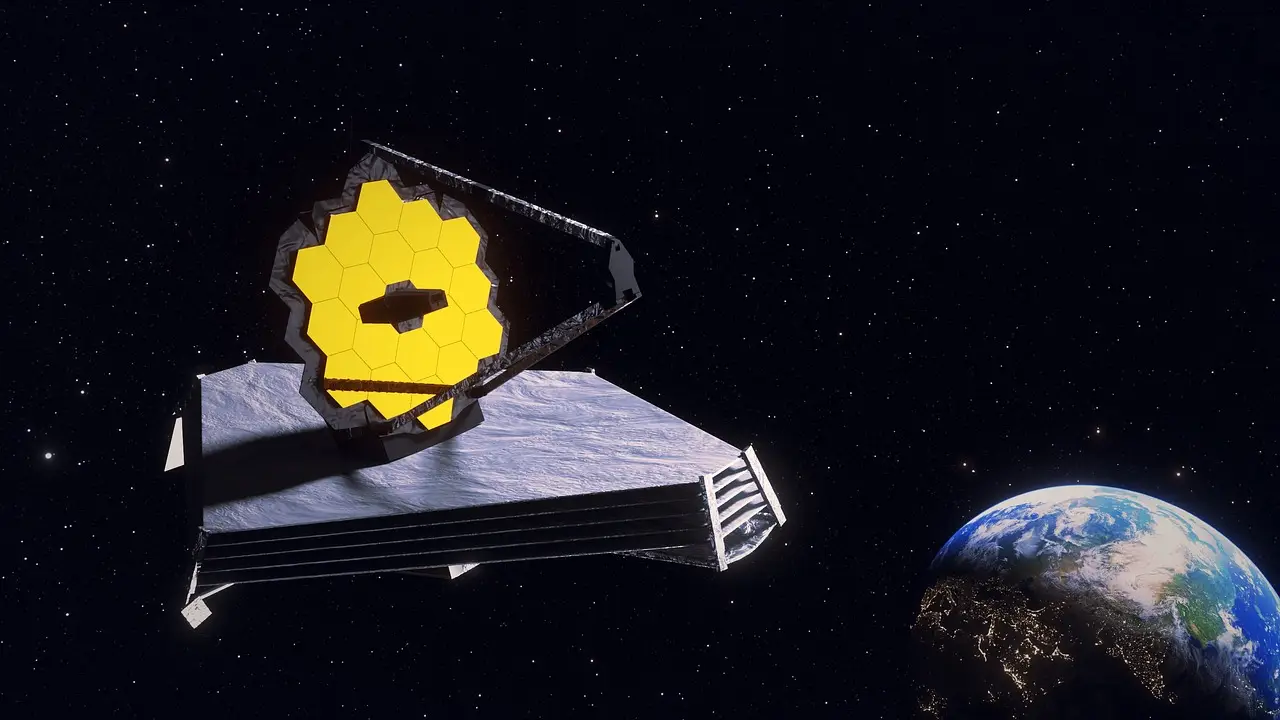
NASA's Neil Gehrels Swift Observatory will likely reenter Earth's atmosphere on November 4, 2026, at 05:31 UTC, give or take 12 hours, after a commercial rescue mission failed in August. Recent active solar weather, which accelerates orbital decay, moved the estimate slightly earlier. In the Americas, that timing translates to the afternoon or evening of Tuesday, November 3, or overnight into Wednesday, November 4.
Swift, a space telescope that has hunted gamma-ray bursts — the most powerful explosions in the universe — since 2004, is expected to burn up entirely in the atmosphere. Experts say it should pose no danger to anyone on the ground. Observers who want to check whether the fiery reentry might be visible from their location can consult the Swift Last Light website.
Why can't Swift be saved?
The would-be rescuer was LINK, a robotic servicing spacecraft built by Katalyst Space, launched on July 3, 2026. Its job was to chase down Swift, capture it, and push it into a higher orbit. But roughly three weeks into the mission, two of LINK's three reaction wheels — the spinning devices a spacecraft uses to control its orientation — failed. The failure sent LINK into an uncontrolled spin and left its communications intermittent.
On August 19, 2026, NASA announced the outcome:
"Due to an ongoing commercial spacecraft attitude control issue, NASA and Katalyst Space announced Wednesday the LINK spacecraft will not capture or boost an agency satellite to a higher altitude to extend its science mission as planned."
NASA Administrator Jared Isaacman framed the failed mission as a step toward future capability:
"This is not the outcome we were working toward, but it does not change why this mission was worth attempting. The team moved with extraordinary speed to give Swift a chance to carry out more science while advancing capabilities America will need for satellite servicing in the future. We are going to learn everything we can from LINK's rendezvous attempt and put those lessons to work on the missions that follow."
NASA and Katalyst will still conduct rendezvous and proximity operations — close approach maneuvers — with Swift to gather engineering data for future servicing missions. The salvage of knowledge, if not the telescope, continues.
How did amateur astronomers watch it happen?
Observers with the Sociedad de Astronomía del Caribe in Añasco, Puerto Rico, captured video of both spacecraft in orbit. A clip recorded around 8:02–8:03 p.m. AST on August 10, 2026, shows LINK passing close to Antares, the brightest star in the constellation Scorpius, with Swift following past the same star about a minute later. An earlier video from August 2 showed LINK trailing Swift by about eight minutes; by August 9–10, LINK had pulled slightly ahead.
Swift itself is still visible to patient observers. It sometimes reaches a visual magnitude of +1.5 to +2.0 — as bright as a moderately bright star — especially under dark skies far from city lights. LINK is fainter, though some experienced observers have reportedly seen it with the naked eye.
Anyone can generate custom pass predictions on Heavens-Above.com or its mobile app:
- Enter your city or GPS coordinates under Configuration so pass times and angles match your horizon.
- Search the satellite database for Swift (NORAD ID 28485) or the LINK payload.
- Open 10-day visible-pass predictions; favor passes above 30 to 40 degrees elevation.
- Click any pass row for an interactive sky chart showing the spacecraft's path against recognizable stars such as Antares.
What has Swift done for 22 years?
Swift carries three telescopes that work in sequence. The Burst Alert Telescope, a wide-field gamma-ray detector, monitors a large portion of the sky continuously. When it catches a gamma-ray burst, it computes the position within seconds, broadcasts the coordinates to astronomers worldwide, and swings the spacecraft toward the event.
The X-Ray Telescope then studies the burst's fading X-ray afterglow, tracking brightness and energy for days or even weeks and pinning down the location more precisely than the alert instrument. The Ultraviolet/Optical Telescope finishes the job, observing in ultraviolet and visible light, supplying Swift's most precise positions and revealing each burst's brightness, color, and evolution. Together, these measurements let astronomers measure distances, identify host galaxies, and decode the physics of the explosions.
Now that instrument suite is headed for a spectacular, fiery end high above the planet it has watched for more than two decades.
via x.com (Original)
More from Marcus Bennett
Show full bio
News editor covering regulation, policy and their impact on general science news at SciBeat.
295 articles
Nearby plates
- NASA Draws Lessons From Swift Boost Mission That Fell Short
- NASA Draws Lessons From Failed Swift Orbit-Boost Mission
- NASA's Swift Observatory Ends 21-Year Mission of Cosmic Rapid Response
- NASA's Swift Telescope Is Back — but It May Have Just Weeks Left
- Private spacecraft burns up after $30 million NASA telescope rescue fails