Plate Nº 44 · recorded November 2, 2026
Space & AstronomyReported finding
Hubble and Webb Find Ancient Icy Worlds That Kept Their Origins
Hubble and Webb spotted 27 ultrafaint worlds beyond Neptune, some just 3 miles wide, that still preserve the chemistry of the solar system's birth.
By Elena Vasquez5 min read984 words
In brief
- NASA's Hubble and Webb telescopes discovered 27 previously unknown trans-Neptunian objects, announced November 1, 2026.
- The smallest object measures 3 miles (5 km) across — about five times smaller than ground-based telescopes can detect.
- Two studies in The Astronomical Journal found the objects' colors match larger TNOs, suggesting surfaces barely changed over billions of years.
- The survey found fewer very small TNOs than some planet formation models predict.
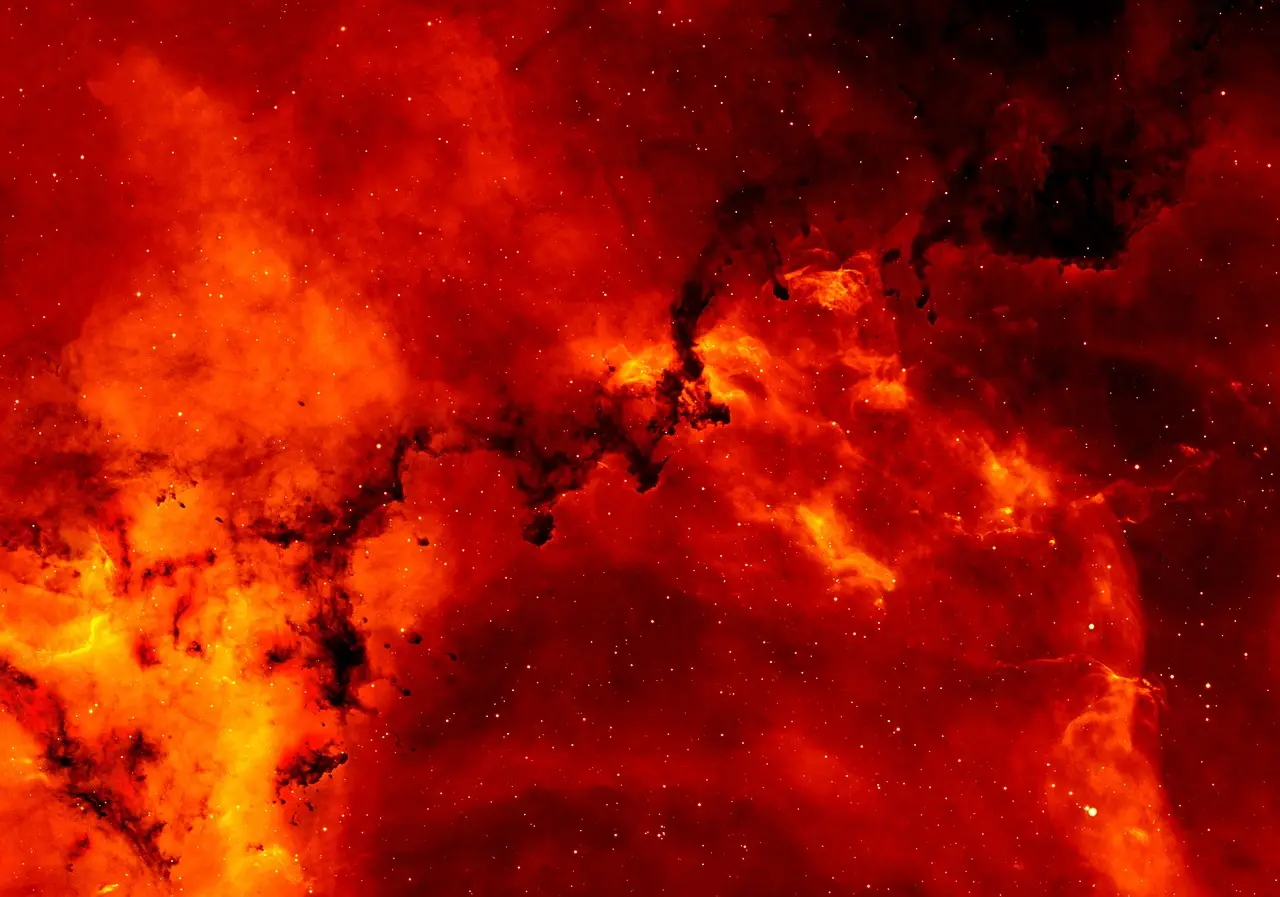
NASA's Hubble and James Webb space telescopes have discovered 27 previously unknown objects beyond Neptune, and the smallest measures just 3 miles (5 kilometers) across — roughly five times smaller than anything ground-based telescopes can catch. Two studies published November 1, 2026 in The Astronomical Journal show these tiny frozen worlds have barely changed since the solar system's earliest days. Their colors, sizes and sheer numbers challenge existing theories of how planets form.
The objects are trans-Neptunian objects, or TNOs — small bodies orbiting the Sun far beyond Neptune's orbit. This marks the first time astronomers have combined Hubble and Webb observations to study them, and the survey is the deepest ever conducted of this population.
Why do these tiny worlds matter?
Planets likely began as dust and pebbles swirling around the young Sun. Those particles clumped into city-sized bodies called planetesimals — the technical term for planetary building blocks — which then merged into the planets we know today.
Beyond Neptune, that final growth stage never finished. Countless smaller bodies survived instead, freezing in place a record of the solar system's first chapter.
There was a catch, though. Most are almost impossible to see. These objects shine more than 100 million times more faintly than anything visible to the naked eye. One of the 27 was so dim that spotting it compares to standing on Earth and noticing a small swarm of fireflies on the Moon.
The takeaway: these faint leftovers are pristine samples of the material that built the planets.
Who did the work, and how?
Research teams led by PhD candidates at the University of Victoria in Canada, under the guidance of the National Research Council of Canada, and at Northern Arizona University in Flagstaff ran the survey. Both telescopes watched the same patch of sky at the same time — Hubble in visible light, Webb in infrared, the heat-carrying part of the spectrum human eyes can't see.
Combining the two views let astronomers measure the objects' colors, estimate their sizes and work out their orbits around the Sun. Colors matter here because they act like fingerprints, revealing the chemistry of an object's surface and, indirectly, its history.
The takeaway: two telescopes, one patch of sky, and a sharper picture than either machine alone.
What did 'cold' and 'hot' objects reveal?
The researchers studied two distinct TNO populations, labeled dynamically "cold" and "hot" — names describing orbits, not temperatures.
- Cold TNOs stayed close to where they formed. Their orbits are relatively circular and hug the plane where most planets travel.
- Hot TNOs formed between the present-day orbits of Uranus and Neptune, then got scattered outward as the giant planets shifted positions early on. Their orbits are elongated and carry them above and below the main orbital plane.
Despite these radically different histories, the two groups showed an unexpected similarity. The smallest objects keep surface characteristics resembling their larger counterparts.
Before the survey, scientists expected billions of years of repeated collisions would have fractured the small bodies and exposed fresh material, changing their colors. That didn't show up. Collisions may have altered these surfaces far less than assumed — or the surfaces somehow keep their original makeup even after impacts. Researchers haven't yet worked out which explanation holds.
"You could imagine a scenario where getting knocked around and fragmented would change the surface composition, and then you would see a different surface color for tiny TNOs compared to their larger siblings. So it's really fascinating to see that the smallest objects are somehow 'remembering' and preserving the history of how they were made," said Anastasia Morgan, a Northern Arizona University PhD candidate who led the color and composition study.
"These dynamically 'hot' TNOs retain a signature of where they were born, even though they've been orbitally scrambled since then," said co-author David Trilling of Northern Arizona University.
The takeaway: even after 4.5 billion years of orbital chaos, these objects still carry their birth certificates.
Why are there fewer small objects than predicted?
Webb's data also let scientists count how many objects exist at each size, and that produced a second surprise. Hot and cold TNOs formed in different parts of the early solar system, yet their size distributions look remarkably alike.
"It's very interesting that the process of planetesimal formation ends up producing the same distribution of sizes for both cold and hot populations, despite forming in different regions of the early solar system. The process seems to be insensitive to disk conditions, producing similar planetesimal sizes whether the disk is hot or cold, and dense or fluffy," said Marielle Eduardo, a University of Victoria PhD candidate who led the size-distribution study.
The teams also found a shortage of very small TNOs compared with what some planet formation models predict. Explaining the deficit could help scientists refine how they think the solar system's original building blocks developed.
These are preliminary reads, and the researchers themselves flag open questions — the collision puzzle chief among them.
The takeaway: planetesimals may form the same way everywhere, and current models may simply predict too many small ones.
What changes for planet-formation science?
The discoveries hinged on complementarity. Hubble's visible-light vision and Webb's infrared sensitivity delivered a fuller portrait of these distant bodies than either telescope could manage alone.
Together, they've opened a window onto a largely unexplored population of ancient remnants. Their shared colors, preserved surfaces and unexpected numbers all feed into a better picture of how the planets took shape billions of years ago.
The findings appear in two companion papers in The Astronomical Journal (172: 187 and 172: 188, 2026), led by Eduardo and Morgan respectively, with co-authors including Wesley Fraser, Gary Bernstein, John Stansberry and William Grundy.
The takeaway: the solar system's smallest survivors just became some of its most informative witnesses.
via dx.doi.org (Original)
More from Elena Vasquez
Show full bio
Correspondent covering money, funding and market shifts around general science news at SciBeat.
288 articles
Nearby plates
- Rubin Observatory Finds Giant Dwarf Planet Candidate in Pluto's Neighborhood
- Webb Telescope Witnesses Planet-Smashing Collisions Around Young Stars
- JWST Survey of 72 Young Stars Maps How Planet-Forming Gas Escapes
- James Webb Catches a Lopsided Bulge in an Exoplanet's Air
- Rubin Observatory Finds New Dwarf Planet Candidate Beyond Pluto