Plate Nº 34 · recorded October 30, 2026
Space & AstronomyReported finding
Rubin Observatory Finds New Dwarf Planet Candidate Beyond Pluto
Rubin Observatory has detected ED138, a possible dwarf planet beyond Pluto that may rank among the largest ever found, hidden in the crowded plane of the Milky Way.
By Priya Raman3 min read673 words
In brief
- Object ED138 orbits beyond Pluto and may be one of the largest dwarf planet candidates ever found.
- Only five dwarf planets are currently recognized: Pluto, Ceres, Eris, Haumea, and Makemake.
- In April 2025-era operations, Rubin submitted observations of over 11,000 new asteroids.
- Rubin's camera is the largest ever created for sky surveying.
- The IAU Minor Planet Center assigned the provisional designation ED138.
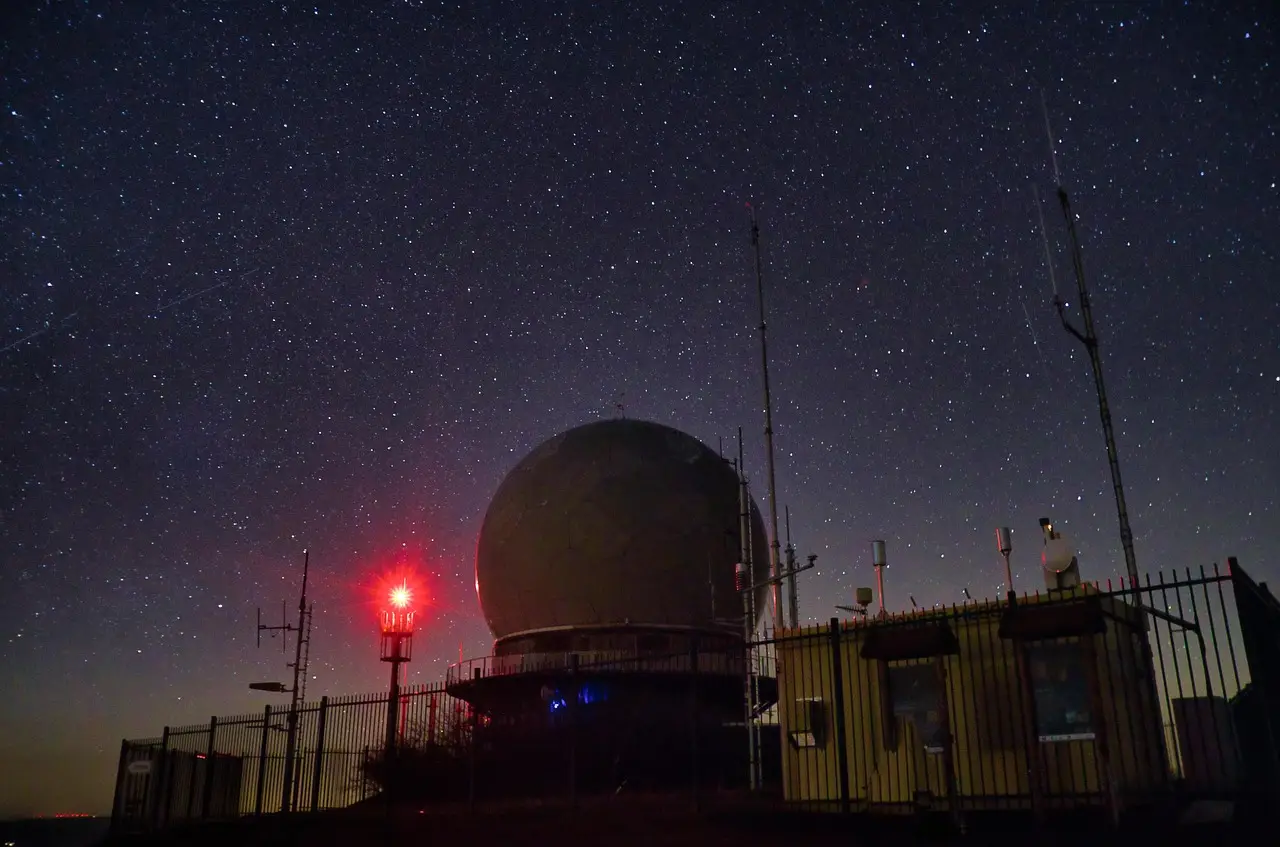
A preliminary analysis of a newly discovered object, designated ED138, shows it orbiting in the outer solar system beyond Pluto — and it may be one of the largest dwarf planet candidates ever found. The U.S. National Science Foundation–Department of Energy Vera C. Rubin Observatory detected the object, and the International Astronomical Union's Minor Planet Center has now assigned it a provisional designation.
If scientists confirm its status, ED138 would join a short list of just five recognized dwarf planets: Pluto, Ceres, Eris, Haumea, and Makemake. A dwarf planet is a body massive enough for its own gravity to pull it into a rounded shape, but one that has not cleared other objects from its orbital neighborhood. That confirmation, however, remains pending, and early assessments of distant objects frequently change as follow-up data arrive.
Why did nobody see ED138 before?
The object sits in a patch of sky close to the plane of the Milky Way, a region visually packed with millions of stars. That crowding is likely why earlier surveys missed it. Previous telescopes scanning such dense stellar fields struggled to distinguish a slow-moving icy body from the countless fixed stars behind it.
Rubin solved the problem through repetition. The observatory monitors the southern hemisphere sky on a regular schedule, capturing every visible change with precision. Powerful data algorithms then compare successive images and flag anything that moves. That combination — routine monitoring plus automated comparison — let scientists pick out ED138 drifting through the crowded field.
The observatory's camera, the largest ever built, gives it this reach. Rubin's sheer speed lets it survey enormous areas of sky quickly enough that moving objects reveal themselves across repeated exposures rather than hiding in the noise.
"Rubin Observatory's superpower is the ability to clearly capture movement and change among a vast number of objects and phenomena that humans have never seen before," said Edward Ajhar, NSF Program Director for Rubin Observatory. "That power greatly extends our ability to reveal and understand new things about our solar system, the Milky Way, and billions of other galaxies across the universe."
What happens next?
Scientists at other observatories can now point their instruments at ED138 to gather follow-up observations. These measurements will help determine the object's size, orbit, and surface properties — the evidence needed to establish whether it truly qualifies as a dwarf planet and how it compares with Pluto, Eris, and the other known members of the class.
The public can follow along. Orbitviewer, an interactive web-based application, offers students, teachers, and curious readers an intuitive way to explore solar system objects, including new discoveries like this one.
The finding also carries a broader significance for physics. Rubin Observatory is jointly funded by the NSF and the DOE's Office of Science, and its mission extends well beyond the solar system.
"Rubin Observatory's unique strengths make it an incredible tool for investigating a wide range of astrophysical phenomena, from dark energy to the discovery of this dwarf planet candidate," said Kathy Turner, Department of Energy Program Manager for Rubin Observatory. Dark energy is the mysterious force driving the accelerating expansion of the universe, and studying it is one of the observatory's central science goals.
Is ED138 an isolated find?
Hardly. ED138 is one of many solar system objects Rubin has uncovered this year. In April, the observatory submitted observations of more than 11,000 new asteroids to the Minor Planet Center — a single batch that illustrates the scale at which the facility is cataloging small bodies.
For now, ED138 remains a candidate rather than a confirmed dwarf planet. Its size estimate comes from a preliminary data analysis, and the crowded region of sky that concealed it for so long also complicates precise measurement. Astronomers will need months of follow-up work before the object's place in the dwarf planet roster is settled.
Until then, it stands as the latest evidence that the outer solar system still holds large, undiscovered worlds waiting in the star fields.
via orbitviewer.app (Original)
More from Priya Raman
Show full bio
Senior reporter covering people, launches and day-to-day practice in general science news at SciBeat.
280 articles
Nearby plates
- Rubin Observatory Finds Giant Dwarf Planet Candidate in Pluto's Neighborhood
- Rubin Observatory Finds Candidate for Solar System's Sixth Dwarf Planet
- A Star Is Slowly Eating Its Companion — and Could for Billions of Years
- Astronomers report a possible first moon beyond the Solar System
- Star Caught Slowly Snacking on a Brown Dwarf 300 Light-Years Away