Plate Nº 54 · recorded October 30, 2026
Space & AstronomyReported finding
Astronomers report a possible first moon beyond the Solar System
A Jupiter-mass candidate around a brown dwarf in CD-35 2722 may be the first moon beyond the Solar System, but its unusual mass and orbit still require confirmation.
By Nathan Brooks4 min read880 words
In brief
- The candidate has at least Jupiter’s mass and orbits a brown dwarf more than 30 times Jupiter’s mass.
- The central star, CD-35 2722, has approximately half the Sun’s mass.
- The study appeared in Nature on Oct. 24, 2026, using radial-velocity measurements from ESO’s CRIRES+ instrument.
- More than 6,000 exoplanets are known, but no exomoon has been confirmed.
- ESO’s Extremely Large Telescope will use a 39-meter mirror to search for smaller exomoons.
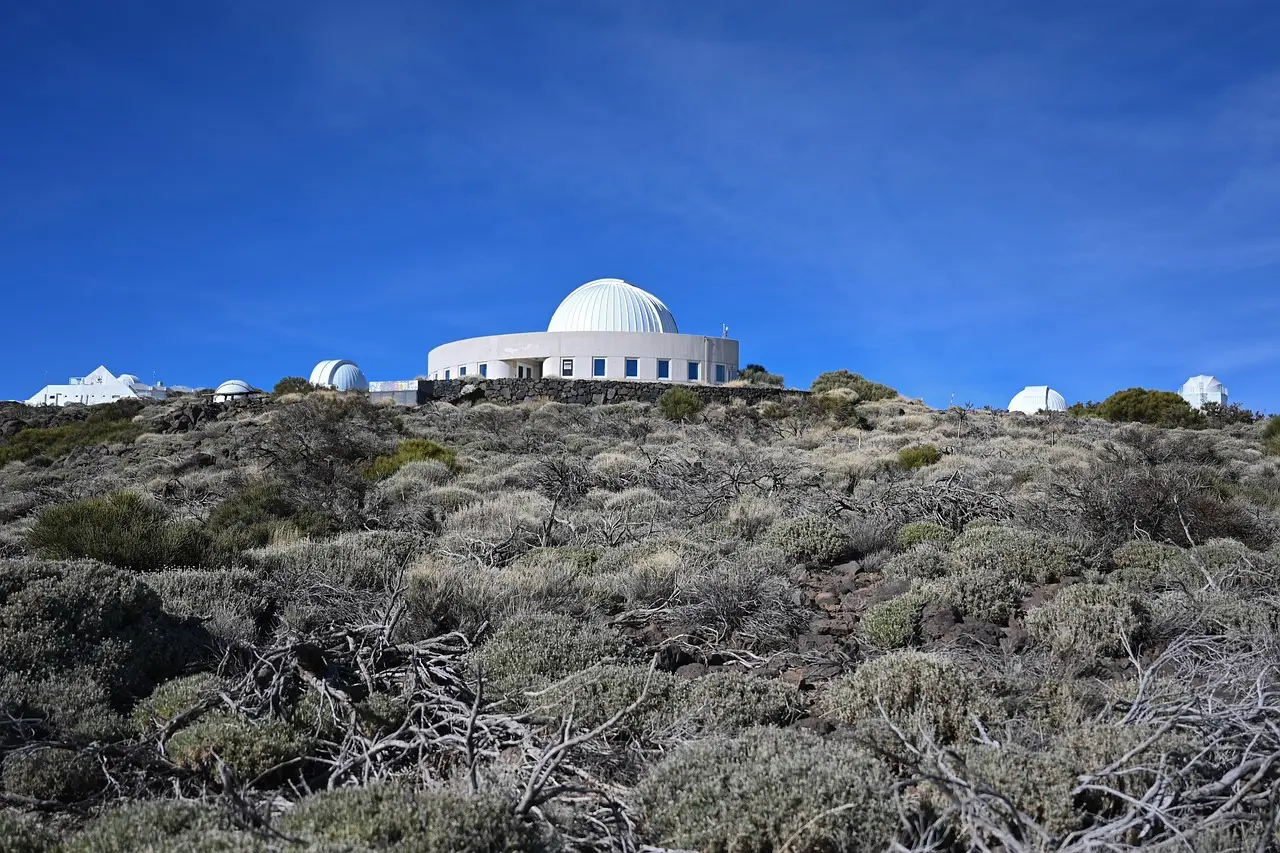
An object at least as massive as Jupiter appears to orbit a brown dwarf in the CD-35 2722 system, giving astronomers the first plausible detection of a moon beyond our Solar System. The team reported the candidate on Oct. 24, 2026, in Nature, but said it remains unconfirmed.
If subsequent observations validate the finding, it would be the first natural satellite detected outside our Solar System. Its unusual size and position also raise a classification problem: astronomers have no universally accepted definition of what qualifies as a moon.
What did astronomers find?
The relatively young CD-35 2722 system contains three nested bodies:
- Central star: CD-35 2722 has approximately half the mass of the Sun.
- Brown dwarf: The object orbiting the star has more than 30 times Jupiter’s mass, making it more massive than a planet but too small to sustain the hydrogen fusion that powers an ordinary star.
- Possible moon: The newly detected body has at least Jupiter’s mass and circles the brown dwarf, making it more massive than any natural satellite in our Solar System.
Kevin Hoy, an ESO student based in Chile and the paper’s lead author, spent months examining the system. He is also affiliated with Chile’s Universidad Diego Portales and the Millennium Nucleus of Young Exoplanets and their Moons, known as YEMS.
Hoy said: “The exosatellite is clearly massive enough to be a planet, but it does not orbit a star, though it orbits an object that orbits a star.” He described the arrangement as strikingly unlike our own and said familiar Solar-System terms become difficult to apply.
Alice Zurlo, YEMS director, study collaborator and astrophysicist at Universidad Diego Portales, described the candidate as a giant gaseous body orbiting a highly massive companion. She said: “As exotic as it is, this system is truly unique and represents a breakthrough: the first plausible detection of an exosatellite.”
How was the candidate detected?
Hoy, Zurlo and their colleagues used the CRIRES+ instrument on ESO’s Very Large Telescope. They applied the radial velocity method, which measures extremely small changes in an object’s motion and previously helped discover the first exoplanet orbiting a Sun-like star.
Two orbiting bodies pull on each other through gravity, causing both to move around a shared center of mass. Even a smaller companion can leave a detectable wobble in the larger object’s motion, known as its shared orbital pivot.
By examining subtle changes in the brown dwarf’s motion, the researchers identified what they consider strong evidence for another massive body. Its estimated mass, size and composition resemble those of a planet, but its position makes it a candidate for a different classification.
Is this really the first exomoon?
Astronomers have searched for years for moons around objects beyond the Solar System, but no candidate has yet met the standard required for a confirmed discovery. More than 6,000 exoplanets have been identified, while only a handful of possible exomoons have emerged from observations, usually with limited supporting evidence.
Earlier in 2026, a team led by Quentin Kral reported possible signs of a satellite in the HD 206893 system. Observations from ESO’s Very Large Telescope Interferometer suggested that a moon-like companion might be present, but the researchers did not establish a definitive detection.
The CD-35 2722 candidate offers a separate opportunity for confirmation, supported by measurements of how the suspected satellite affects its larger companion’s motion. Neither candidate has yet produced an undisputed discovery.
What counts as an exomoon?
A satellite is any object that travels around another object. Satellites can be natural, such as the Moon, or artificial, such as a spacecraft. An exosatellite is a satellite outside the Solar System.
The term exomoon generally describes a natural satellite orbiting a planet or another object beyond the Solar System, although astronomers have not agreed on an official definition. That distinction matters here because the CD-35 2722 candidate could qualify as a planet under some classification systems.
In our Solar System, planets orbit the Sun and moons orbit planets, providing a clear dividing line between the categories. CD-35 2722 instead blurs the boundaries among stars, planets and moons, making the satellite’s orbital relationship as important as its mass.
What could follow the finding?
Confirming moons beyond the Solar System could help researchers understand how planetary systems form, how their components interact and why some develop structures unlike ours. Future observations would also show whether massive satellites such as this candidate are rare exceptions or part of a broader population.
ESO’s upcoming Extremely Large Telescope is expected to advance that search. Its 39-meter mirror and advanced instruments could detect smaller exomoons that current observatories cannot reach.
As astronomers identify more satellites in distant systems, they may also find that the familiar distinctions among stars, planets and moons do not apply universally.
The Nature paper, titled “Planetary-mass exosatellite detected around the substellar companion of a star,” lists Kevin Hoy, Alice Zurlo, Pablo A Peña R, Jana Köhler, Silvano Desidera, Raffaele Gratton, Cecilia Lazzoni, Simon Petrus, Florian Rodler, Jonathan Smoker, Valentina D’Orazi, Ilaria Carleo and Ilaria Giovannini. It appeared in volume 655, issue 8124, on page 865, with DOI 10.1038/s41586-026-10751-w.
via eso.org (Original)
More from Nathan Brooks
Show full bio
Market editor covering companies, deals and strategy in general science news at SciBeat.
267 articles
Nearby plates
- A Star Is Slowly Eating Its Companion — and Could for Billions of Years
- Rubin Observatory Finds New Dwarf Planet Candidate Beyond Pluto
- Rubin Observatory Finds Giant Dwarf Planet Candidate in Pluto's Neighborhood
- Stellar activity, not a giant planet, explains nearby wobble
- Star Caught Slowly Snacking on a Brown Dwarf 300 Light-Years Away