Plate Nº 69 · recorded October 30, 2026
Space & AstronomyReported finding
Rubin Observatory Finds Candidate for Solar System's Sixth Dwarf Planet
Astronomers announced on October 27, 2026 that the Vera C. Rubin Observatory spotted 2026 ED138, a 370–930-mile-wide dwarf planet candidate orbiting just beyond Pluto at 46 AU.
By Marcus Bennett3 min read646 words
In brief
- Announced October 27, 2026: candidate sixth dwarf planet 2026 ED138, found by the Vera C. Rubin Observatory
- Estimated diameter 370–930 miles (600–1,500 km); brightest solar system object found in ~20 years
- Orbits at ~46 AU in the Kuiper Belt, beyond Pluto's average 40 AU
- Found in archival Dark Energy Camera images back to 2016 after 20 nights of Rubin tracking
- In a 7:12 orbital resonance with Neptune, the same as dwarf planet Haumea
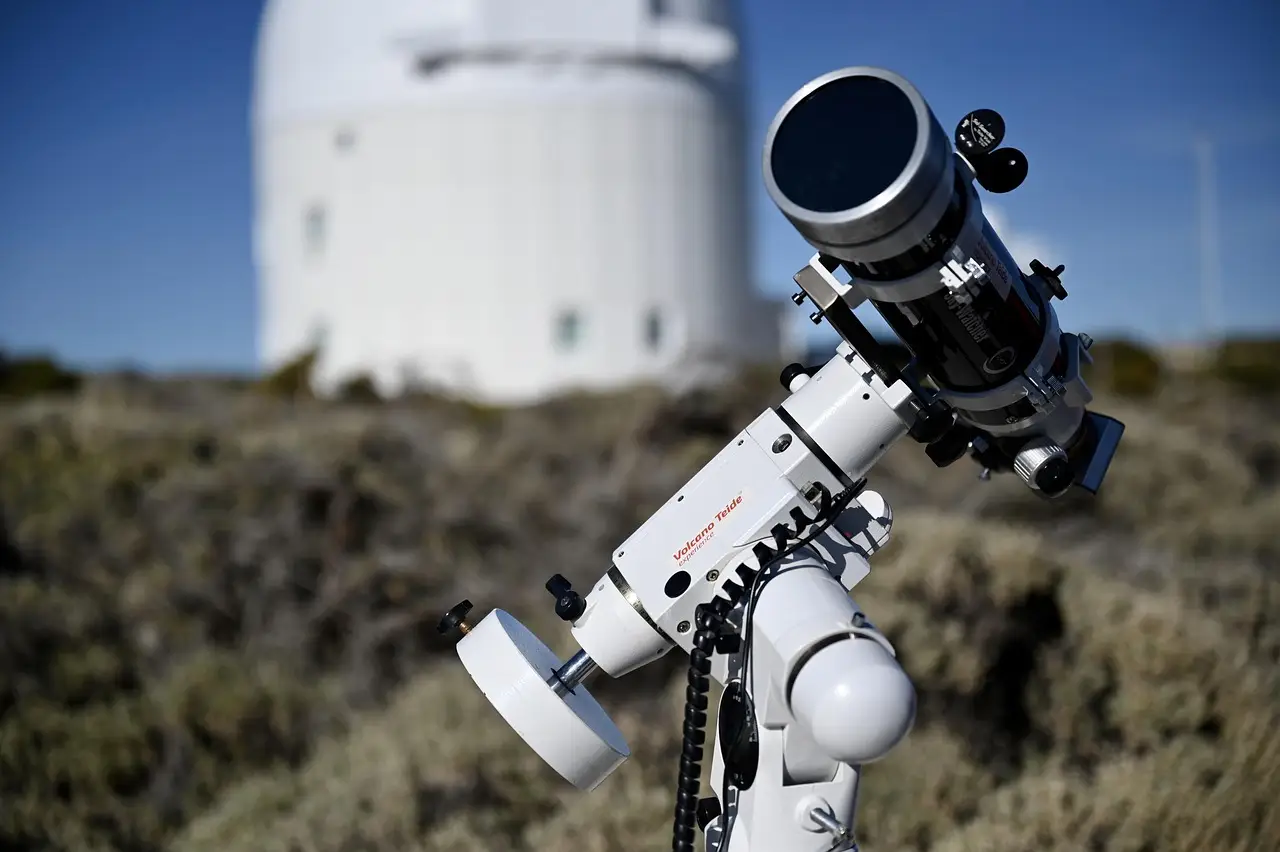
On October 27, 2026, astronomers announced that the Vera C. Rubin Observatory has spotted a candidate that could become the sixth officially recognized dwarf planet in our solar system. The object, provisionally designated 2026 ED138, spans an estimated 370 to 930 miles (600 to 1,500 km) and ranks as the brightest solar system object discovered in nearly 20 years.
For context, only five dwarf planets hold official recognition today: Pluto, Eris, Makemake and Haumea beyond Neptune, and Ceres in the asteroid belt. Pluto, the largest, measures 1,473 miles (2,370 km) across — meaning ED138 could reach nearly two-thirds of Pluto's size. If confirmed, it would likely rank as the third largest known dwarf planet, behind Pluto and Eris.
Who found it, and how?
Matthew Holman of the Center for Astrophysics | Harvard & Smithsonian was running Rubin data on October 13, 2026, when he noticed an object that seemed unusually bright and large for its distance. Holman said:
"My first reaction was one of excited disbelief. Objects like this are very rare, so I immediately started checking whether I or the code had done something wrong."
Additional observations confirmed the icy body exists, in an orbit just beyond Pluto. Mario Juric of the University of Washington put the find in perspective:
"Finding an object this big, roughly 1,000 kilometers across, is something that happens maybe once in a generation. It's the largest trans-Neptunian object found in about 20 years, and Rubin turned it up while we were still commissioning the telescope."
The telescope was not even fully operational when it made the catch.
Where does it orbit?
ED138 circles the sun at roughly 46 astronomical units (AU); one AU equals the Earth–sun distance. Pluto orbits at an average of 40 AU. The object therefore lives in the Kuiper Belt, the disk of icy bodies stretching from about 30 AU beyond Neptune out to roughly 50 AU.
That region already hosts Pluto, Haumea and many smaller, irregular bodies — including Arrokoth, the snowman-shaped object NASA's New Horizons probe flew past. Astronomers believe ED138's size makes it massive enough for its own gravity to pull it into a sphere, the key qualification for dwarf-planet status.
Why did it evade detection for so long?
A bright object this large should have surfaced earlier. The reason it didn't: ED138 sat in a patch of sky near the plane of the Milky Way, competing against a dense field of background stars.
It was, in fact, recorded before anyone noticed. After tracking it over 20 nights earlier this year with Rubin, researchers located ED138 in archival images from the Dark Energy Camera dating back to 2016. Those old data points now let both professional and amateur astronomers trace its path.
What does the orbit tell us?
Tony Dunn, using his Orbit Simulator website, showed that ED138 sits in a 7:12 resonance with Neptune: for every 12 Neptune orbits, ED138 completes seven trips around the sun. Haumea shares the same resonance; Pluto holds a 2:3 resonance. Neptune's gravity herded these worlds into such stable orbits long ago, while Kuiper Belt objects that failed to reach this gravitational harmony were likely flung out of the solar system entirely.
The resonance finding strengthens confidence in the orbit's overall shape, though dwarf-planet status still awaits confirmation through follow-up observations now being planned.
What comes next?
Holman sees ED138 as likely the first of several such finds:
"If confirmed as a dwarf planet, ED138 would join a — currently — very small family of worlds. Rubin will image the whole southern sky again and again for 10 years, so any others hiding in the places earlier surveys skipped are now within reach."
A decade of repeated southern-sky imaging means objects this size hiding in crowded star fields will no longer stay hidden.
via noirlab.edu (Original)
More from Marcus Bennett
Show full bio
News editor covering regulation, policy and their impact on general science news at SciBeat.
295 articles
Nearby plates
- Rubin Observatory Finds Giant Dwarf Planet Candidate in Pluto's Neighborhood
- Rubin Observatory Finds New Dwarf Planet Candidate Beyond Pluto
- Astronomers report a possible first moon beyond the Solar System
- Astronomers Confirm Youngest Known Planet, Under 1 Million Years Old
- Euclid Telescope Finds Its First-Ever New Comet 1.3 Billion Km Away