Plate Nº 78 · recorded November 1, 2026
Space & AstronomyReported finding
Comets Probably Didn't Seed Life on Earth, Cambridge Study Says
A Cambridge study published October 28, 2026, finds comets likely didn't deliver life's building blocks to Earth — a one-off fluke at best, researchers say.
By Nathan Brooks4 min read758 words
In brief
- The peer-reviewed study appeared in Scientific Reports on October 28, 2026.
- Lead author Richard Anslow of the University of Cambridge called comet seeding 'a one-in-a-million occurrence.'
- Comet impacts on Earth dropped considerably after the solar system's first 500 million years.
- The solar system formed about 4.6 billion years ago; comet-based life seeding has been theorized for ~100 years.
- Asteroids or homegrown chemistry remain alternative sources of life's building blocks.
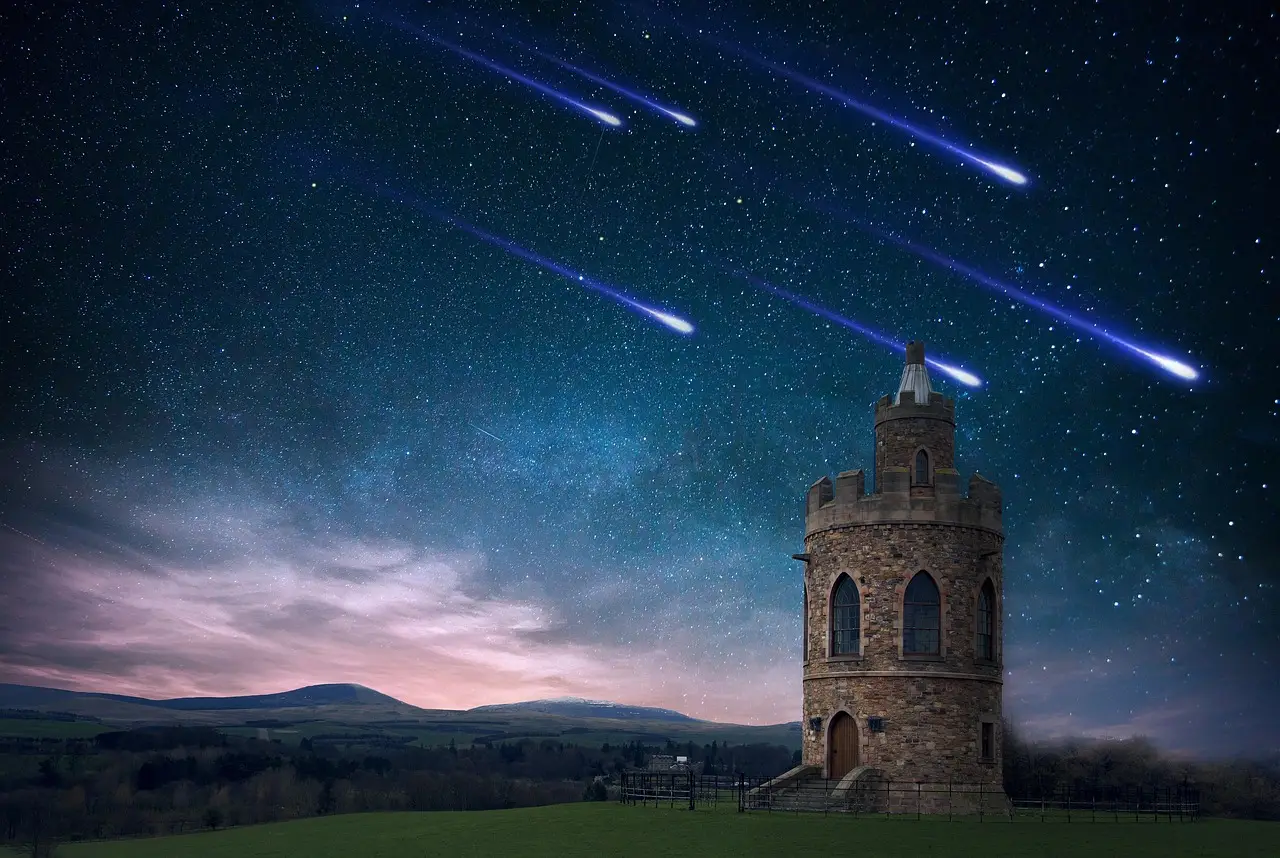
A peer-reviewed study published October 28, 2026, in Scientific Reports concludes that comets almost certainly did not seed life on Earth. Researchers led by the University of Cambridge say any life-related molecules comets delivered here were likely a one-off fluke, not a steady supply raining down from the skies.
The finding challenges an idea scientists have held for roughly the past 100 years: that comets carried prebiotic molecules — the chemical building blocks of life — to our young planet.
Why couldn't comet molecules survive?
The problem is speed. The Cambridge team built a computer model — a digital simulation of a real-world system — combining comet impact simulations, comet-atmosphere interactions, and dynamic modeling of how comets form and evolve.
The model showed comets would approach Earth too fast and at too sharp an angle to deliver their cargo intact. The organic molecules inside them are fragile. Even if they survived the fiery plunge through Earth's atmosphere, they'd likely vaporize on impact.
Mars, with its weaker gravity, offered a slightly better shot. Lead author Richard Anslow of Cambridge's Institute of Astronomy said: "This is not to say it definitely happened on Mars, of course. But suggests it would be unlikely if it happened on Earth and didn't happen on Mars." The more probable alternative, he noted, is that it happened on neither planet.
Anslow was blunt about the old theory's appeal. He said: "Historically, scientists thought that comets were important for the origin of life on Earth, because they carried carbon- and nitrogen-bearing molecules, so these giant space snowballs were almost like a 'get out of jail free card' that brought all the molecules a planet would need to seed life. It's kind of a romantic idea, but our results suggest it's highly unlikely."
Could comets have slowed down enough?
The researchers did test one escape hatch. Earlier work, reported in 2023, suggested that in some young planetary systems comets could "bounce" between closely spaced planets, losing speed with each pass — slow enough, potentially, to land without destroying their cargo.
Could that have happened in our solar system? The team investigated using recent advances in modeling. As Anslow put it: "We're learning more and more all the time about how our solar system and the Earth formed, and pulling this together with lots of different advances in modelling, which allowed us to investigate this idea that has been around for close to a century."
The answer: still rare. Even if molecules survived a slowed impact, there wouldn't be enough of them to kickstart life. That holds true even for hydrogen cyanide (HCN), one of the most important life-related molecules found in comets in our solar system.
What about timing?
The clock works against comets too. Our solar system formed about 4.6 billion years ago from a swirling cloud of gas and dust. The early era was chaotic, with debris smashing into young worlds, but scientists believe comet impacts on Earth dropped considerably after the first 500 million years. For comets to deliver enough organic molecules, the scenario would have had to play out early — and even then, the odds were slim.
Anslow quantified just how slim: "It would really have to be a one-in-a-million occurrence, because not only would you need an impact at just the right speed and just the right angle, you would also need everything to happen after that point, in terms of the concentration and the speed at which the chemical origins of life got going. We can't rule out for certain that it happened that way. But it seems to be a really rare occurrence; at best, a one-off fluke."
So where did life's ingredients come from?
The study leaves the origin question open, with two leading alternatives:
- Asteroids. Asteroid impacts were far more common than comet impacts, and asteroids carry many of the same molecular building blocks.
- Homegrown chemistry. The molecules might simply have originated on Earth itself.
The Cambridge team announced its results on October 28, 2026, the same day the paper appeared. The study is peer-reviewed, but it relies on simulations rather than direct evidence, so it can't fully rule out the comet scenario — it just makes it look like a long shot. The search for the origin of life on Earth continues.
Bottom line: A new University of Cambridge study says comets seeding life on Earth would have been, at best, a one-in-a-million event.
via subscribe.earthsky.org (Original)
More from Nathan Brooks
Show full bio
Market editor covering companies, deals and strategy in general science news at SciBeat.
267 articles
Nearby plates
- 100,000 Simulations Test the Comet Theory of Life’s Origins
- Interstellar Comet 3I/ATLAS Carries Methane Up to 10 Billion Years Old
- Ancient Mars Rains May Have Delivered a Life-Starting Molecule
- One Oxygen Atom May Have Given RNA a Head Start in Forming Life
- New Simulations: The Moon May Have Formed Intact in Five Hours