Recorded November 22, 2026
Biology & EvolutionReported finding
Ancient DNA Reveals Snipes Crossed Oceans Twice to Reach Pacific Islands
Ancient DNA shows a Haitian cave bird was a snipe, not a woodcock, and that snipes crossed an ocean twice—while humans likely ate the island species that traced their route.
By Priya Raman5 min read978 words
In brief
- Ancient DNA shows a 2015 woodcock identification from Hispaniola fossils was wrong; the bird was a snipe.
- Snipes dispersed from Eurasia to South America about 20 million years ago, then to the southwest Pacific roughly 7 million years later.
- Of eight living woodcock species, six are endemic to islands.
- A radio-tagged bristle-thighed curlew flew 10,000 km nonstop to New Zealand.
- The South Island snipe went extinct in 1964 after black rats reached New Zealand.
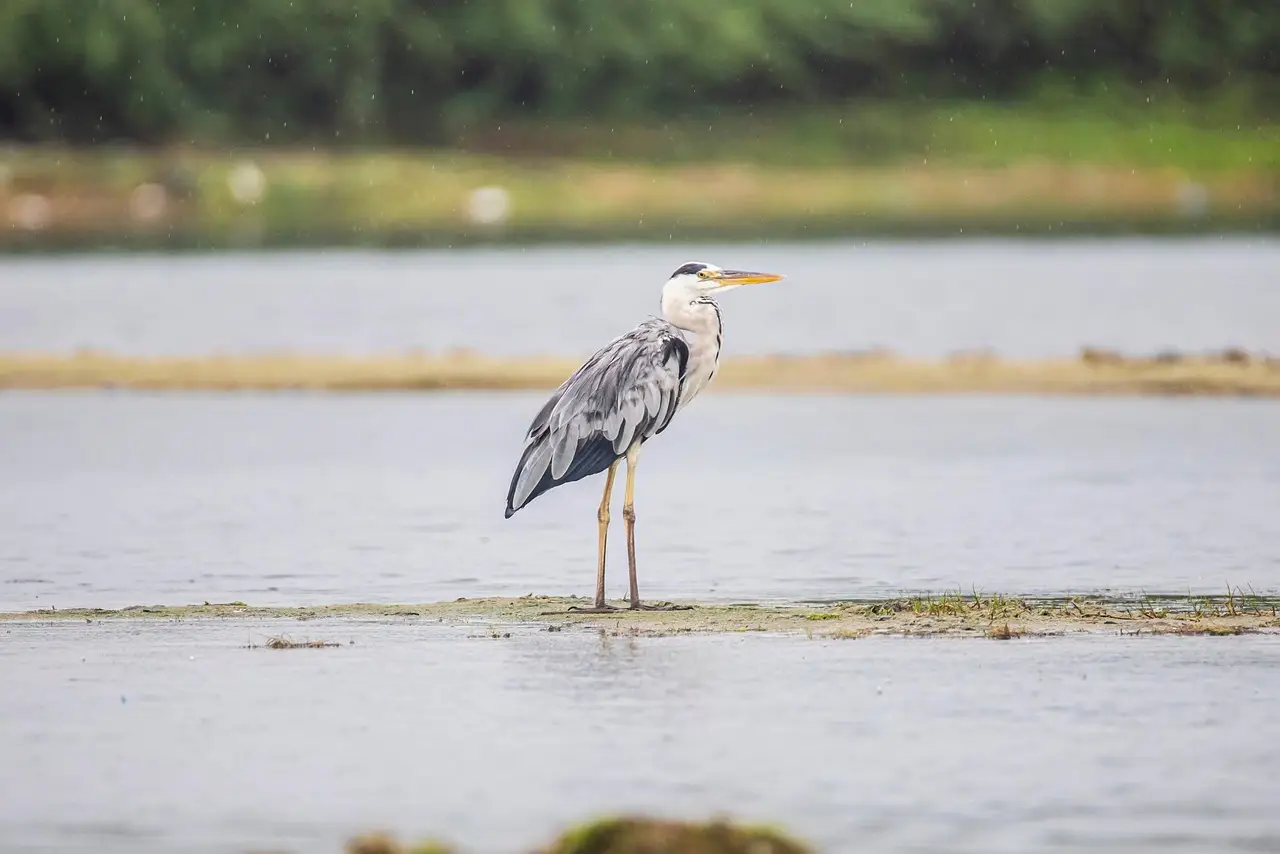
A bird fossil dug from a Haitian cave in 1984 and identified as a woodcock in 2015 is in fact a snipe, according to ancient DNA analysis published in the Proceedings of the National Academy of Sciences. The finding, led by researchers at the Florida Museum of Natural History, opens a larger story: snipes crossed the width of an entire ocean not once but twice, and several island species that could explain the pattern were likely eaten into extinction.
"The whole story began with an extinct bird from Hispaniola," said Min Zhao, a former postdoctoral associate at the Florida Museum of Natural History, now a postdoctoral researcher at Uppsala University.
Woodcocks are medium-sized birds with long, slightly curved beaks and a bouncy, back-and-forth gait. Scientists think this comic walk may mimic the vibrations of falling rain, a cue that draws earthworms upward through the soil before it becomes waterlogged. Instead, the rising worms meet the woodcock's slender bill.
Why did the mix-up happen?
Woodcocks and snipes are each other's closest relatives, having diverged from a common ancestor about 25 million years ago. To the untrained eye, they look nearly identical. The misidentified Caribbean fossil also had short wings and large legs, two common traits in island birds, rather than the build of its truest relatives.
To reconstruct the group's history over the last quarter-million years and beyond, the researchers collected tissue samples from museum specimens for all but one of the 29 living woodcock and snipe species. Postdoctoral researcher Jessica Oswald extracted and sequenced the DNA, and, with help from coauthor Brian Stucky, did the same for the Hispaniolan fossils. She also included DNA from one additional extinct species, the South Island snipe, which vanished in 1964 after black rats, introduced by humans, reached South and Stewart islands in New Zealand.
Combining DNA with the ages of shorebird fossils, the team produced a time-calibrated phylogeny (a species-level family tree with dates attached).
What did the family tree show?
The first surprise dates to roughly 20 million years ago, when one or a few woodcocks traveled from Eurasia, where their relatives originated, to North America. That crossing is unremarkable; the proximity of Russia and Alaska, or stopovers in Iceland and Greenland, would have made it straightforward.
At about the same time, however, snipes in Eurasia dispersed to South America, veering west across an entire ocean rather than following the usual north-south migration route. There they evolved into several species, including the extinct Caribbean snipe whose ambiguous fossils would later vex ornithologists.
About 7 million years later, the South American snipes apparently repeated the feat on a grander scale, flying to the southwest Pacific islands and diversifying again. The result caught the researchers off guard. The austral snipes of the South Pacific, known as tutukiwi in Māori, look so different from their relatives that scientists placed them in their own genus, Coenocorypha. Yet the analysis shows them deeply embedded within a lineage of mostly South American snipes.
If the phylogeny were a genealogy, the austral snipes would be the rebellious sibling that ran away, changed its name and appearance, and still remained part of the family. Scientists will eventually have to lump Coenocorypha into the genus Gallinago, or keep it and create two additional genera for the South American cousins. The authors did not propose any taxonomic changes.
Why do shorebirds keep settling on islands?
"Shorebirds are the ultimate long-distance migrants," said study coauthor David Steadman, emeritus curator of ornithology at the Florida Museum. "It's common for shorebirds to nest up in the Arctic tundra and winter in South America. There was recently a bristle-thighed curlew that was radio-tagged and showed up in New Zealand after flying 10,000 km (6,200 miles) without stopping."
Unlike curlews, though, woodcocks and snipes include species whose ancestors abandoned migration entirely. Of the eight living woodcock species, six are endemic to islands, and the group has radiated across the Caribbean, Japan, Indonesia, the western Pacific and the greater New Zealand area.
"Some people argue that it's their migratory propensity that has led them to colonize islands," Steadman said. "But there are a lot of migrant shorebirds that travel long distances. Woodcocks and snipes are the only ones setting up resident populations on islands."
Are extinct island species the missing links?
The researchers remain perplexed by the geographic split. One hypothesis, Oswald said, is that many closely related snipe species once lived on islands across the Pacific, much as has been shown for rails, forming a trail of evolutionary stepping stones to New Zealand.
Those breadcrumbs were then consumed by humans. Literally.
"People will eat anything," Oswald said. "You get one group of explorers or whalers that stop at one of these islands, and they could wipe out the entire bird community in a weekend because they were hungry."
This is not an exaggeration. Writing in The New Yorker in 1976, the naturalist Peter Matthiessen described 19th-century hunts in which gunners shot down thousands of birds in a single day. The birds "were unsuspicious to a fault," he wrote; the now-extinct Eskimo curlew "would circle back over the guns, calling out for its fallen companions." He also noted that the thick-knee, relying on camouflage, would sometimes permit itself to be picked up from the ground.
Such naivety runs deepest in island birds that had never met humans. Where hunting did not finish a species, the rats and cats that arrived with people often did. The Caribbean snipe disappeared sometime after the 17th century, and six other species in the provisionally named genus Coenocorypha met the same fate.
The study is published as Min Zhao et al., "Transoceanic dispersals and island extinctions shape global snipe and woodcock diversity," Proceedings of the National Academy of Sciences (2026).
via phys.org/rss-feed/ (Source)
More from Priya Raman
Show full bio
Senior reporter covering people, launches and day-to-day practice in general science news at SciBeat.
549 articles
Nearby plates
- DNA traces eight woodcock species’ island lives and shorter migrations
- New megapode found in Liang Bua, the Homo floresiensis cave
- 66-Million-Year-Old Feather in Dinosaur Poop Sheds Light on Bird Survival
- Bone marks suggest eagles prey on human-sized baboons in the Sahara
- Floating Scarecrow Cuts Seabird Deaths in Fishing Nets by Two-Thirds