Recorded November 23, 2026
Biology & EvolutionReported finding
Ancient Virus Proteins Guard Our Genome's Genetic Switches
EPFL scientists found that SCAN zinc-finger proteins, born from an ancient retrovirus, silence transposable-element DNA in 68 vertebrate genomes without histone chemical marks.
By James Calloway3 min read694 words
In brief
- The study, published in Nature Genetics (2026), identifies SZFPs as a second system repressing transposable-element DNA
- The SCAN domain traces back to an ancient retrovirus; the family expanded independently in mammals, lizards and snakes
- The team traced the family across 68 vertebrate genomes and mapped SZFP binding sites on human DNA
- SZFPs silence DNA without the histone chemical marks used by the known KZFP system; removal opened DNA within hours
- DOI: 10.1038/s41588-026-02823-4
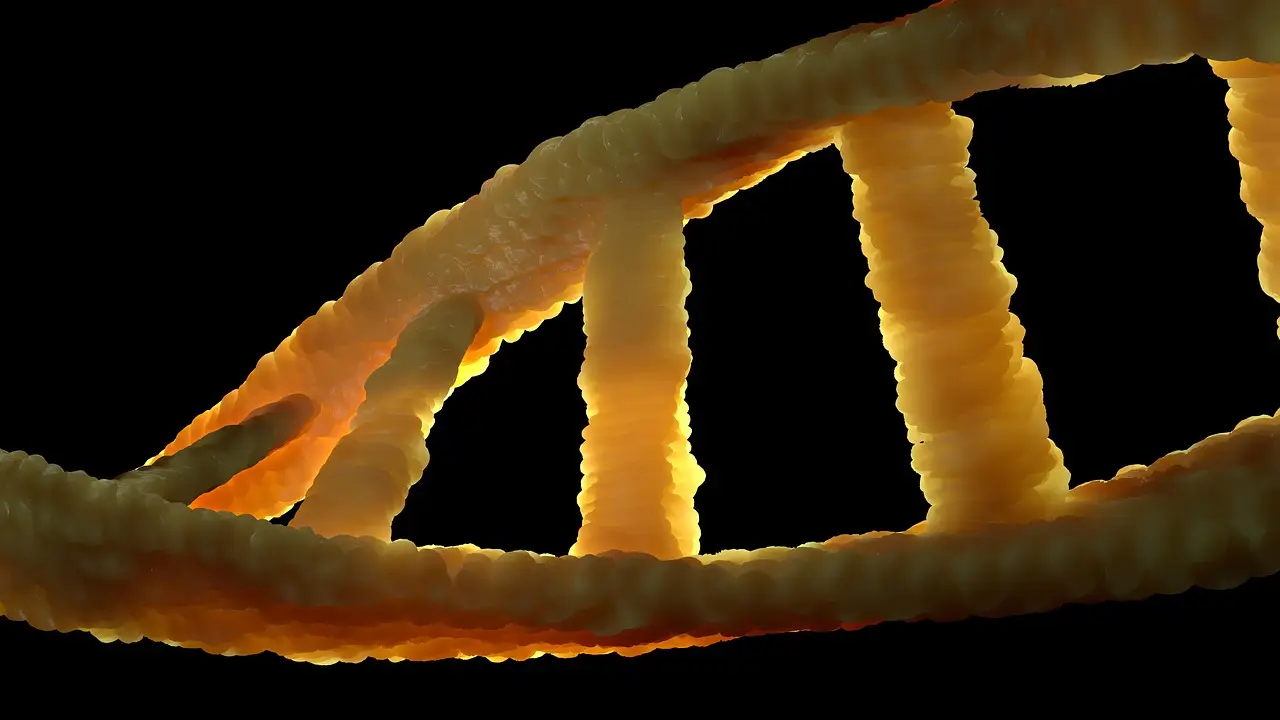
A family of proteins with roots in an ancient retrovirus acts as a second line of defense against leftover viral DNA in our genome, according to a new study published in Nature Genetics (2026). Researchers at EPFL, led by Didier Trono with postdoc Wayo Matsushima, showed that these so-called SCAN zinc-finger proteins, or SZFPs, lock down stretches of DNA inherited from ancient invaders — and they do it without the chemical tagging that biology's textbook silencing systems rely on.
The finding matters because roughly speaking, much of our genome is not originally "ours." It's packed with transposable elements: mobile pieces of DNA that spread and accumulated over millions of years, some originating from ancient viruses. Most no longer move. But their sequences can still influence when nearby genes switch on or off, which makes them both an opportunity and a hazard.
What was the problem to solve?
Cells have repurposed some of these sequences into useful genetic switches over evolutionary time. The catch is control. If transposable-element activity runs uncontrolled, it can disrupt gene regulation and hurt, or even destroy, the cell.
Biologists already knew one enforcement system well: KRAB zinc-finger proteins, or KZFPs. These recruit machinery that adds chemical marks to histones — the proteins that package DNA — locking nearby regions into a closed, inactive state. Here's what the field hadn't explained: the number of transposable elements is vast, and only a small fraction are bound by KZFPs. Something else had to be minding the rest.
What did the EPFL team find?
The Laboratory of virology and genetics group discovered that SZFPs commonly target regulatory sequences derived from transposable elements and keep them inactive through a different mechanism. Key results from the study:
- Tracing the SZFP family across 68 vertebrate genomes, the team found that the proteins' SCAN domain has roots in an ancient retrovirus.
- The family expanded independently in different animal groups, including mammals, lizards and snakes, with DNA-recognizing regions that changed to recognize different transposable-element sequences.
- Mapping where SZFPs attach to human DNA showed that most targeted sequences came from transposable elements, and that different SZFPs recognize different pieces of that DNA — suggesting the proteins and their genomic targets evolved together.
The obvious question is what this changes for our picture of the cell. The answer: a second, parallel security system, viral in origin, policing viral leftovers.
How does the silencing actually work?
DNA winds around proteins and folds into chromatin. Some stretches stay open so regulatory proteins can reach genes; others pack tightly shut. Cells were thought to keep DNA closed mainly by adding chemical marks that maintain a silenced state. The EPFL team found SZFPs work without those familiar marks.
When the researchers temporarily removed one SZFP from cells, DNA around its usual binding sites opened up within hours. Proteins that switch genes on moved in. When the protein returned, the DNA closed again. Further experiments showed that the opening required the cell's normal chromatin-rearranging machinery. A related protein showed a similar effect in mouse stem cells.
The authors call SZFPs "guard" transcription factors: they appear to block DNA-opening proteins from particular regulatory regions. Unlike some conventional silencing, their effects look local — one switch at a time, rather than shutting down a whole neighborhood.
What's the evolutionary payoff?
Transposable elements can introduce new genetic switches, some later adopted by the host genome. By controlling when those switches become accessible, SZFPs may help preserve established gene programs while still letting the genome acquire new regulatory sequences over evolutionary time.
"Repurposing the regulatory elements derived from transposable elements dramatically changes genetic programs and thus may contribute to the emergence of biological features specific to certain species," Matsushima said.
A caveat before anyone oversells this. The work is a mechanistic study in cells and in 68 genomes, not a demonstration of traits in living organisms; the species-difference story remains a hypothesis the data support but don't settle. What's firm is narrower and still striking: cells carry a second, mark-free system for keeping old viral DNA quiet, and it was built, in part, from the viruses themselves.
via phys.org/rss-feed/ (Source)
More from James Calloway
Show full bio
Staff writer covering regulation, policy and their impact on general science news at SciBeat.
583 articles
Nearby plates
- Bacterial immune system works in reverse, baffling scientists
- Dinosaur-Killing Asteroid May Have Triggered Ants' Rise, Study Finds
- MIT team builds method that lets living cells mail out their own RNA
- Large-scale transfer RNA analysis suggests an ancestral code
- Jumping Genes May Explain Why Big Dogs Age Faster and Die Younger