Recorded November 23, 2026
Biology & EvolutionReported finding
Bacteria rip their own membranes in two to stop viruses, study finds
A Molecular Cell study published Nov. 5 details a new bacterial immune mechanism: a signaling molecule splits the cell membrane into two bilayers, killing infected cells and blocking phage spread — and T4 phages fight back with a molecular 'sponge'.
By Nathan Brooks3 min read675 words
In brief
- The study was published in Molecular Cell on Nov. 5, led by Wang Chongyuan of the Shenzhen Institute of Advanced Technology.
- The signaling molecule 2′,3′-cGAMP drives the effector protein Cap14 to split the bacterial membrane into two separate bilayers, killing the infected cell.
- The T4 phage protein Acb2 neutralizes the signal by binding it directly, acting as a molecular 'sponge' rather than degrading it.
- The mechanism differs from known defenses such as membrane pore formation, phospholipid hydrolysis and nucleic acid degradation.
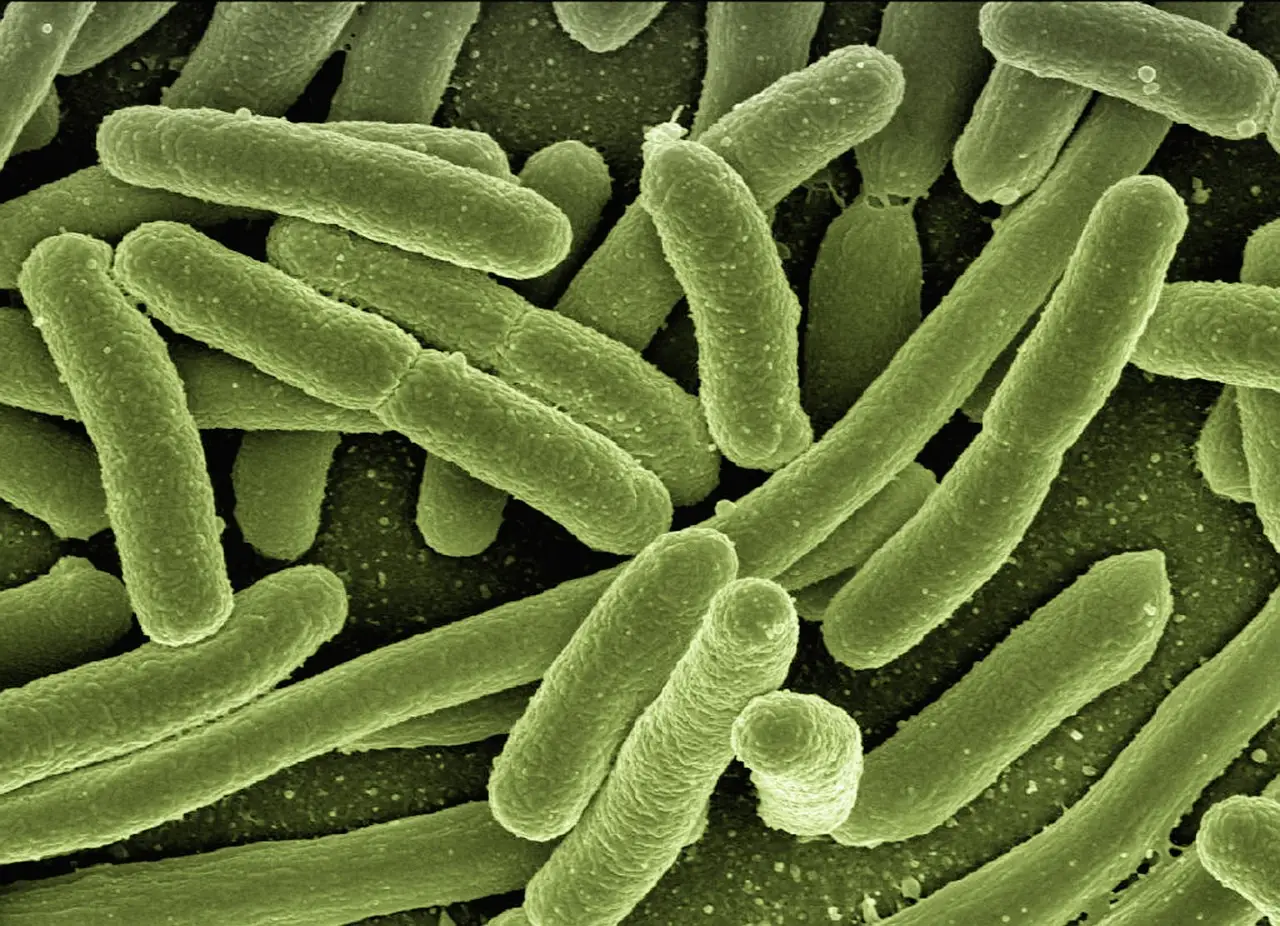
A bacterial immune system kills infected cells by literally splitting the cell's membrane into two separate layers, according to a study published in Molecular Cell on Nov. 5. The mechanism stops viruses from spreading to neighboring bacteria — and it's unlike any antiviral defense scientists had catalogued before.
The signaling molecule at the center of the story is 2′,3′-cGAMP — essentially a chemical alarm that bacteria release when a virus gets in. Led by Wang Chongyuan of the Shenzhen Institute of Advanced Technology (SIAT) at the Chinese Academy of Sciences, with colleagues at Southern University of Science and Technology, the team traced exactly how that alarm turns into cell suicide.
Why would a bacterium kill itself?
It sounds drastic, but it's a classic trade-off. The viruses in question are bacteriophages, or phages — viruses that infect bacteria and are major drivers of bacterial evolution. If an infected bacterium dies before new phage particles are assembled, the virus can't release its offspring. The sacrifice protects the rest of the population.
The system the researchers studied is called CBASS, short for cyclic-oligonucleotide-based antiphage signaling system. It's a form of innate immunity — the fast, general-purpose defense bacteria carry. Scientists knew CBASS could trigger cell death, but the details of how the signal killed the cell, and how phages fight back, remained poorly understood.
What happens inside the infected cell?
The process unfolds in steps the team mapped one by one:
- After phage infection, phage-derived DNA and changes in the cell's internal nucleotide supply release an enzyme called CdnB from its self-blocked, or autoinhibited, state.
- Activated CdnB uses ATP and GTP — the cell's standard molecular fuel — to build the second messenger 2′,3′-cGAMP.
- That molecule binds to a segment of the effector protein Cap14 called the SAVED domain.
The binding transforms Cap14 from a two-part structure called a homodimer into a zipper-like, two-layered filament. That structural change reshapes Cap14's transmembrane region — the part embedded in the cell's outer boundary — and splits the originally continuous lipid bilayer into two distinct bilayers.
Membranes can't survive that. The loss of integrity kills the infected cell and prevents progeny phages from getting out, which limits the infection and shields nearby bacteria.
How do the viruses strike back?
The study also answers the counterpoint: phages haven't stood still. A protein from T4 phage called Acb2 directly binds 2′,3′-cGAMP and sequesters it — locking the alarm signal away before it can activate Cap14. With downstream immune signaling blocked, the phage evades CBASS defense.
That strategy is notable for what it doesn't do. Conventional counter-defenses rely on enzymes that chemically degrade immune signals. Acb2 instead works as a molecular "sponge" that soaks the signal up. It's a new twist in the arms race, not just a bigger hammer.
Does the mechanism matter beyond bacteria?
The findings carry weight in two directions. First, the killing mechanism is genuinely novel: it differs from the known playbook of membrane pore formation, phospholipid hydrolysis and nucleic acid degradation. Second, CBASS is evolutionarily related to the mammalian cGAS–STING innate immune pathway — the same broad family of alarm-signal defenses humans use. The parallels offer fresh insight into how these systems evolved.
There's a practical angle too. The researchers found that removing CdnB's C-terminal autoinhibitory domain makes the enzyme synthesize 2′,3′-cGAMP continuously, without needing the natural triggers. That gives scientists a controllable molecular basis for designing new immune-modulating tools and potential therapies.
Caveats apply, as with any single-cell mechanistic study: the work describes molecular events in controlled conditions, and therapeutic applications remain exploratory. Still, it fills a real gap — a complete chain from viral detection, through a membrane-splitting death switch, to a phage protein that mops up the signal.
The paper is Zhuolin Li et al., "Bacterial 2′,3′-cGAMP signaling induces membrane splitting in antiphage CBASS immunity," Molecular Cell (2026), DOI: 10.1016/j.molcel.2026.10.014.
via phys.org/rss-feed/ (Source)
More from Nathan Brooks
Show full bio
Market editor covering companies, deals and strategy in general science news at SciBeat.
580 articles
Nearby plates
- Phage enzyme cut triggers bacterial suicide defense, study finds
- Bacteria Turn a Virus's Own Weapon Against It, Study Finds
- Bacterial immune system works in reverse, baffling scientists
- Viruses Recruited to Fight Superbugs: 77% of Patients Improved
- Two Protein Plugs Help Superbug P. aeruginosa Block Antibiotics