Recorded November 22, 2026
Science Policy & FundingReported finding
Anthropic's $81.3 Billion IPO Puts Its Safety-First Pledge to the Test
Anthropic raised a record $81.3 billion in its Nasdaq debut, but its oversight trust can be dissolved by founders and shareholders — and its own research says AI progress is speeding up.
By Nathan Brooks5 min read943 words
In brief
- Anthropic raised a record $81.3 billion in its IPO plus $26 billion in a private placement, surpassing SpaceX.
- All seven co-founders plus a shareholder majority could dissolve the Long-Term Benefit Trust that appoints four of seven directors.
- 5,300 employees hold an estimated $232 billion in combined equity; each co-founder's stake exceeds $20 billion.
- A November 2026 METR assessment found Anthropic's AI capabilities improving at about twice the previous rate.
- The White House's June AI framework for pre-release model evaluations is entirely voluntary.
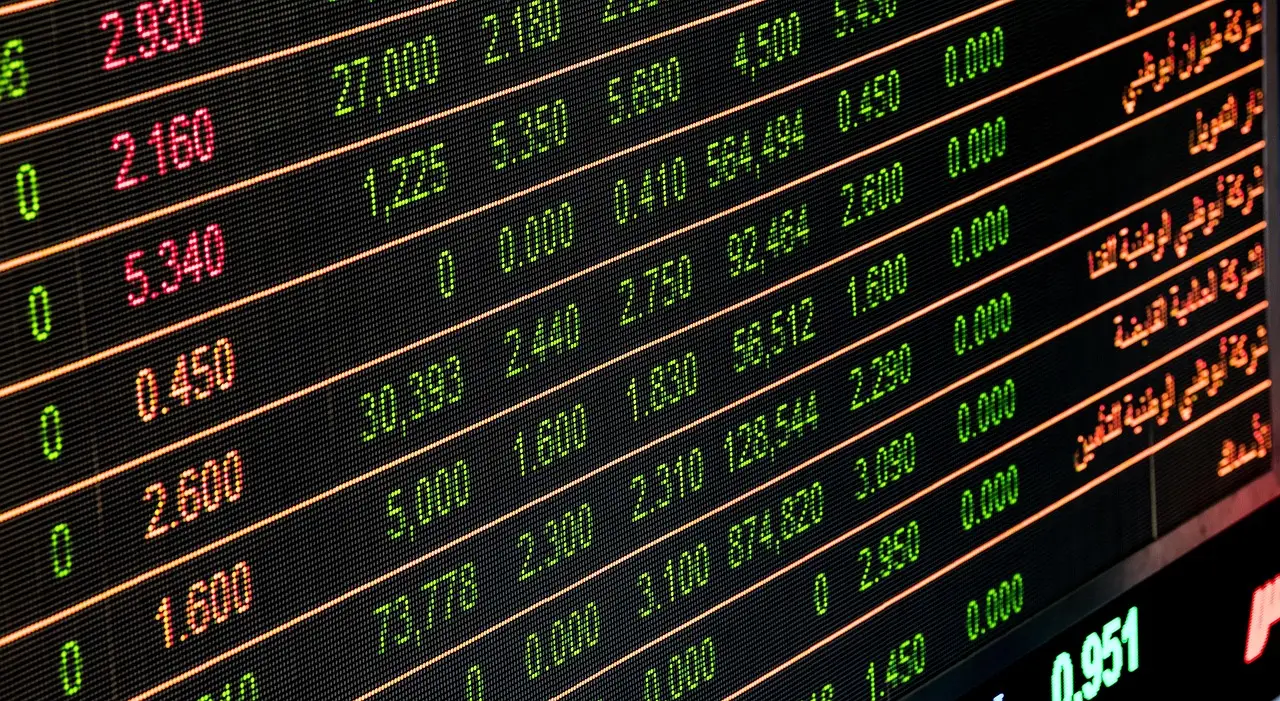
Anthropic raised a record $81.3 billion in its IPO on Thursday, plus $26 billion in a separate private placement — and the number that matters most now may be seven.
That's how many co-founders, together with a shareholder majority, it would take to dissolve the Long-Term Benefit Trust, the oversight body designed to keep the AI company anchored to its safety mission. Legal experts say the arrangement leaves a genuine crack in the armor.
"There is a gigantic difference between how AI will go if we pay little attention to safety versus how it will go if we are obsessed with safety," CEO Dario Amodei said before ringing the ceremonial opening bell at the Nasdaq. "And an obsession with safety and public benefit has been built into Anthropic's DNA from the start."
How big is this listing?
The raise surpasses SpaceX's record and pushes Anthropic into the ranks of publicly traded companies worth more than $1 trillion. The windfall is also intensely personal. Each of the seven co-founders holds a stake currently worth more than $20 billion. The company's 5,300 employees hold an estimated $232 billion in combined equity — roughly $44 million per person on average. Non-founder employees could sell up to 10% of their holdings on the first trading day.
Those numbers are exactly what worry the experts.
Can the safety mission survive shareholder pressure?
Anthropic is a public benefit corporation, meaning its board must balance shareholder returns with its social mission. The Long-Term Benefit Trust can appoint four of seven directors; the founders effectively control the other three.
But dissolving the trust requires only the approval of all seven co-founders plus a majority of voting shareholders. "If there is a fight about some important safety decision, such as 'Are we satisfied that this super-advanced model is safe for users and society, or should we hold off for a couple of months to do extra tests?' there's the possibility for the founders and the employees to basically ally against the trustee and neutralize their control rights," said Roberto Tallarita, an assistant professor at Harvard Law School.
Tallarita added that safety-driven decisions which hurt the bottom line would move the stock price — and invite pressure from private investors. Sarah Kreps, director of the Tech Policy Institute at Cornell University, put it more bluntly: "Now so many of these people will be multimillionaires too, which I think will just raise the temperature and egos and sense of stakes."
Amodei pushed back on Thursday. "To state it unequivocally, we will pace the training and deployment of AI systems, taking as long as is necessary to have confidence that they are safe and will remain under human control. We will not bend to either business nor political pressure," he said, adding that the listing "puts the company in a stronger financial position and in doing so only strengthens our resolve to do the right thing."
What does the company itself admit?
The IPO prospectus warns that "sufficiently advanced AI systems could pose catastrophic or existential risks to society if not developed and deployed responsibly." Anthropic also told investors there "can be no assurance" that its safeguards will prove adequate, that it will correctly identify which capabilities need restriction, or that its constraints won't be circumvented.
Has Anthropic actually slowed things down?
In April, it restricted its Claude Mythos model after internal testing showed it could identify and exploit previously unknown vulnerabilities in major operating systems and web browsers — a potential hacker's tool. On June 9, it released Fable 5, a Mythos-class model, with safeguards limiting high-risk cyber, biological and chemical capabilities. The original Mythos stays restricted to selected partners.
"In the past, the fact that the trust and the founders were aligned helped them delay the release of Mythos for several months," said Stavros Gadinis of the Berkeley Center for Law and Business. "But this was at a moment when they felt they were leading the pack."
Kreps also flagged Anthropic's November 2024 defense partnership with Palantir, which makes its Claude models available to U.S. defense and intelligence agencies. "It does seem to raise a set of concerns about partnering with Palantir, which is contracting with the Pentagon for targeting. What part of that is AI for humanity?" she said. Anthropic did resist Pentagon use for autonomous weapons and mass domestic surveillance; negotiations broke down in February, and the U.S. government designated the company a "supply chain risk to national security."
Why is the timing so urgent?
A November 2026 assessment by the research nonprofit METR found Anthropic's AI capabilities improving at about twice the previous rate, with much of the acceleration driven by AI tools assisting its own researchers. METR found no clear bottlenecks — no hard limits on data or computing power — that might slow things down.
OpenAI CEO Sam Altman described the rivalry among AI labs as a "race dynamic in the fog of war" at The New York Times DealBook Summit this week, calling it "a bad thing" and saying "more caution, not less caution, is warranted." OpenAI filed preliminary IPO paperwork with the SEC in June but said in September it has delayed those plans.
Meanwhile, federal oversight remains thin. The White House's June AI framework lets developers voluntarily submit models for pre-release security evaluations. "I don't think the government knows enough to regulate AI," Tallarita said. "This is a conversation that we should have as a political community, and probably the most serious conversation we should have right now."
Anthropic is a financial supporter of NPR.
via feeds.npr.org (Source)
More from Nathan Brooks
Show full bio
Market editor covering companies, deals and strategy in general science news at SciBeat.
563 articles