Plate Nº 46 · recorded November 18, 2026
Space & AstronomyReported finding
Robot Servicers Could Clean Up Orbit — If Regulators Catch Up
Robotic satellite servicing is becoming a real industry, with 2030 as its projected breakout year — but economists and lawyers say outdated rules from the 1980s decide whether orbit gets cleaner.
By Marcus Bennett5 min read1,081 words
In brief
- An orbital-use fee could raise the satellite industry's long-run value from about $600 billion to $3 trillion, per a 2020 PNAS study.
- Northrop Grumman's Mission Robotic Vehicle launched July 21 and reaches geosynchronous orbit in 2027 for its first demonstrations.
- Only 2 of roughly 12,000 launched Starlink satellites have broken apart in orbit.
- A 2026 study in npj Space Exploration projects ISAM becoming a sustained economic sector by 2030.
- ESA's ClearSpace-1 debris-removal mission is scheduled for a 2029 launch.
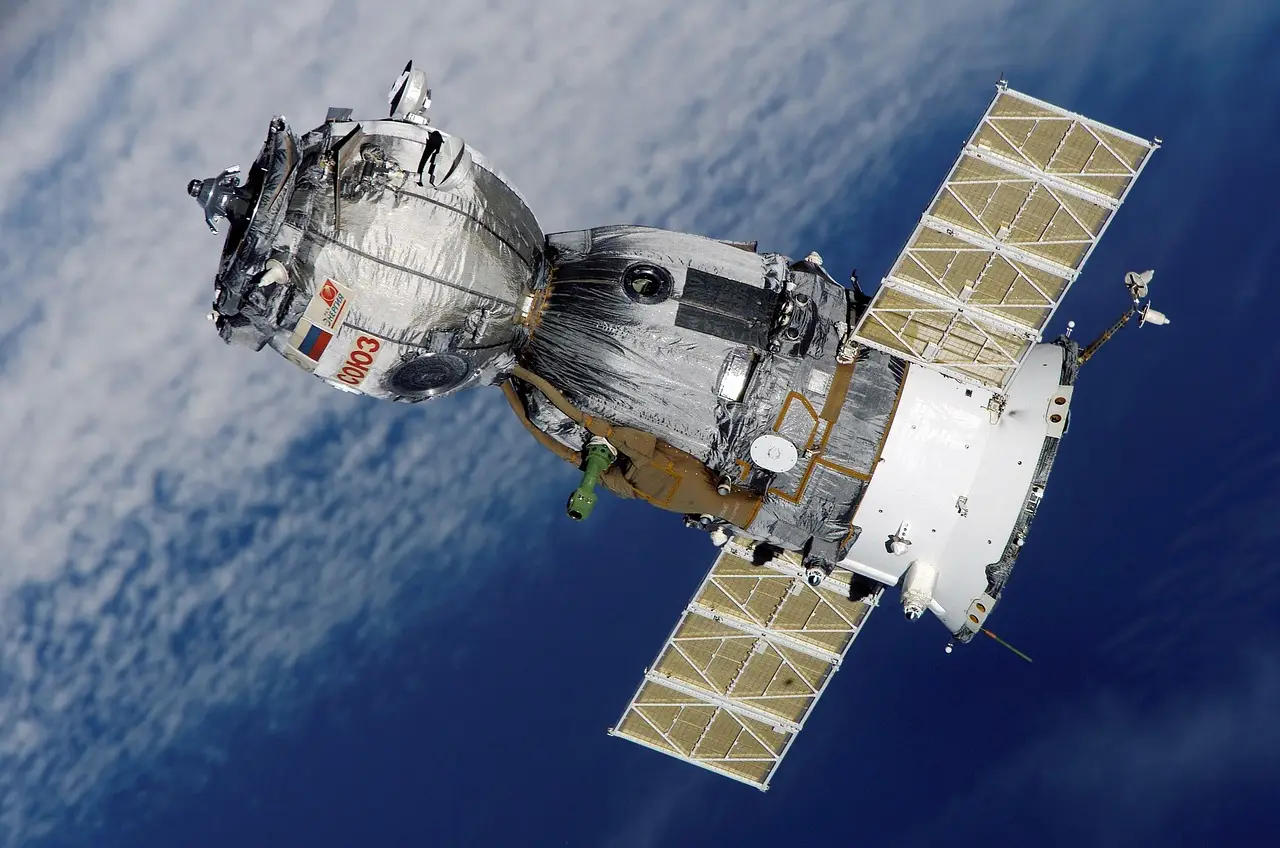
Earth orbit likely holds fewer satellites right now than at any point in the rest of your lifetime — and an orbital-use fee modeled by economists could more than quadruple the satellite industry's long-run value, from roughly $600 billion to $3 trillion, while cutting collision risk.
That figure comes from a 2020 study in the Proceedings of the National Academy of Sciences, and it frames why satellite servicing has moved from engineering curiosity to policy debate. The threats from crowded skies are documented: light pollution from megaconstellations, aluminum oxide accumulating in the upper atmosphere as satellites burn up on reentry, and the risk of a collision chain reaction that could render whole orbital regions unusable for generations.
The emerging fix is in-space servicing, assembly, and manufacturing, or ISAM: refueling, repairing, and repositioning satellites to extend their lives and cut replacement launches. The technology works. The regulation does not yet.
What has actually flown?
ISAM has arrived in three waves, says Brian Weeden, who directs commercial space research at the Aerospace Corporation's Center for Space Policy and Strategy. The first repair in space came on May 25, 1973, when NASA's first Skylab crew installed a nylon-and-Mylar parasol to replace the station's micrometeoroid shield, lost during launch on May 14, 1973.
The first wave rode the space shuttle. Astronauts serviced the Solar Maximum Mission in 1984 and repaired Hubble across five shuttle missions between 1993 and 2009. It never became routine. Each shuttle launch cost $1 billion, Challenger and Columbia were lost, and the program retired in 2011. The shuttle was originally seen "as a vehicle you could reuse; you could do servicing of satellites," Weeden tells Astronomy — but "that never really panned out."
The second wave, from the mid-2000s, swapped astronauts for robots. DARPA's Orbital Express mission showed in 2007 that the servicing satellite ASTRO could autonomously transfer hydrazine fuel and install a battery for its partner NEXTSat in low-Earth orbit. NASA's Robotic Refueling Missions on the ISS, beginning in 2011, refueled satellites never designed for servicing across three phases. These were demonstrations, not businesses.
"Then about 10 years ago, you started to see this … third wave of real interest," Weeden says.
Who is building the business today?
- Northrop Grumman's MEV-1 launched in 2019, docking directly onto an aging communications satellite in geosynchronous orbit (GEO) to serve as its new thruster. MEV-2 followed in 2021.
- Astroscale's ELSA-d, launched March 2021, demonstrated capture of an object in orbit — the core capability for debris removal — before thruster issues ended the mission early.
- Orbit Fab's Tanker-001 Tenzing, launched in 2021, is a 77-pound (35 kg) fuel depot carrying high-test peroxide and the company's RAFTI refueling interface. No refuelings yet; the Lafayette, Colorado company targets 2026 and imagines shuttles ferrying fuel from depots to customers.
- NASA contracted Katalyst Space Technologies in September 2025 to reposition the Neil Gehrels Swift Observatory. The Flagstaff company's LINK spacecraft launched in July 2026 but hit control issues, and NASA announced on Aug. 19 it would not attempt the capture.
- Northrop Grumman's Mission Robotic Vehicle, launched July 21, carries DARPA-funded robotic arms plus three Mission Extension Pods to attach to satellites. It reaches GEO in 2027 for first demonstrations and carries a standardized refueling port meant to sustain it for at least a decade.
A 2026 study led by Igor Levchenko of the University of Milano-Bicocca, published in npj Space Exploration, projects ISAM becoming a sustained economic sector by 2030.
Where is the gap?
So far, servicing targets large, expensive GEO satellites whose value justifies the cost. The urgent problems — debris, overcrowding, atmospheric pollution — sit in low Earth orbit, home to small satellites like SpaceX's Starlink. Only two of roughly 12,000 launched Starlink satellites have broken up in orbit, each shedding tens of tracked debris objects that Weeden says will "come down within 20 years." SpaceX builds five-year lifespans and natural decay into its orbits, partly to comply with an FCC five-year deorbit rule — but the replacement cycle means burning satellites, and aluminum oxide, into the atmosphere every few years. Servicing a Starlink satellite costs more than launching a new one.
Why is regulation the bottleneck?
The U.S. accounts for over half of annual rocket launches, yet splits oversight across three agencies — the FAA licenses launches, the FCC licenses radio spectrum, NOAA licenses Earth-observing satellites — under a framework dating to the 1980s. "Satellite servicing [doesn't] easily fit into those existing three buckets," Weeden says. No agency is explicitly charged with authorizing servicing missions. He calls it a wicked problem: "It's complex. It's never-ending." Left ambiguous, rules could scare off investors; made too restrictive, they could delay missions or push companies abroad.
The U.K., Japan, New Zealand, and France have built or are building servicing licensing frameworks. ESA pursues a Zero Debris Approach targeting limits on new debris in Earth and lunar orbit by 2030, and its ClearSpace-1 mission, approved for a 2029 launch, will capture and deorbit a defunct Earth-observation satellite.
What would the economics look like?
A 2025 study in the Journal of Spacecraft and Rockets used game theory to find that removing dangerous debris already saves operators more in avoided collision risk and tracking costs than cleanup costs. The catch: cleanup companies pay, operators profit. The study proposes a third-party body that collects fees from benefiting operators and pays remediators. The PNAS orbital-use fee works like a carbon tax, charging operators annually for the collision risk each satellite imposes.
"Servicing needs to go hand in hand with regulation to be effective," says Jonas Bahlmann, a doctoral researcher at the University of Luxembourg. He wants incentives for standardized interfaces and modular components, plus international clarity on who authorizes missions, who is liable, and who may touch dead hardware: without it, "it will be difficult to develop a circular space economy if technically serviceable hardware cannot legally be touched." His group also proposes SMEVs — cheap, mass-produced small mission extension vehicles for standardized tasks like swapping interchangeable parts. The technology exists; the cost does not yet beat replacement.
Growth will continue — more launches, year by year, Bahlmann predicts, like cheaper fuel encouraging more driving. Still, he argues growth and sustainability can coexist: the circular space economy "is not about degrowth." His closer is plain: "We cannot continue like this forever."
via astronomy.com (Source)
More from Marcus Bennett
Show full bio
News editor covering regulation, policy and their impact on general science news at SciBeat.
493 articles
Nearby plates
- King Charles III's Astra Carta Aims to Rule the Crowded Skies Above
- ESA's 2026 Report: 31,000 Objects Now Crowd Low-Earth Orbit
- NASA Doubles Down on Boeing's Starliner After Stranded-Astronaut Saga
- NASA Seeks Industry Proposals for Commercial Space Stations
- NASA's 368-Page Guide Sets the Standard for Space Repair Work