Plate Nº 76 · recorded November 16, 2026
Space & AstronomyReported finding
King Charles III's Astra Carta Aims to Rule the Crowded Skies Above
Over 16,000 satellites and 1.2 million debris pieces circle Earth. King Charles III's Astra Carta, launched June 28, 2023, asks the space industry to manage that congestion voluntarily.
By Marcus Bennett4 min read862 words
In brief
- Over 16,000 satellites and 1.2 million debris pieces currently orbit Earth.
- The Astra Carta launched on June 28, 2023, as a 33-page, 13-article voluntary framework.
- SMI's Artemis Celebration Gala on Nov. 7 gathered 450 space, government and business leaders.
- The Astra Carta targets the Commonwealth's 2.7 billion citizens at its upcoming heads of government meeting.
- A version 1.0 of the charter is currently in consultation.
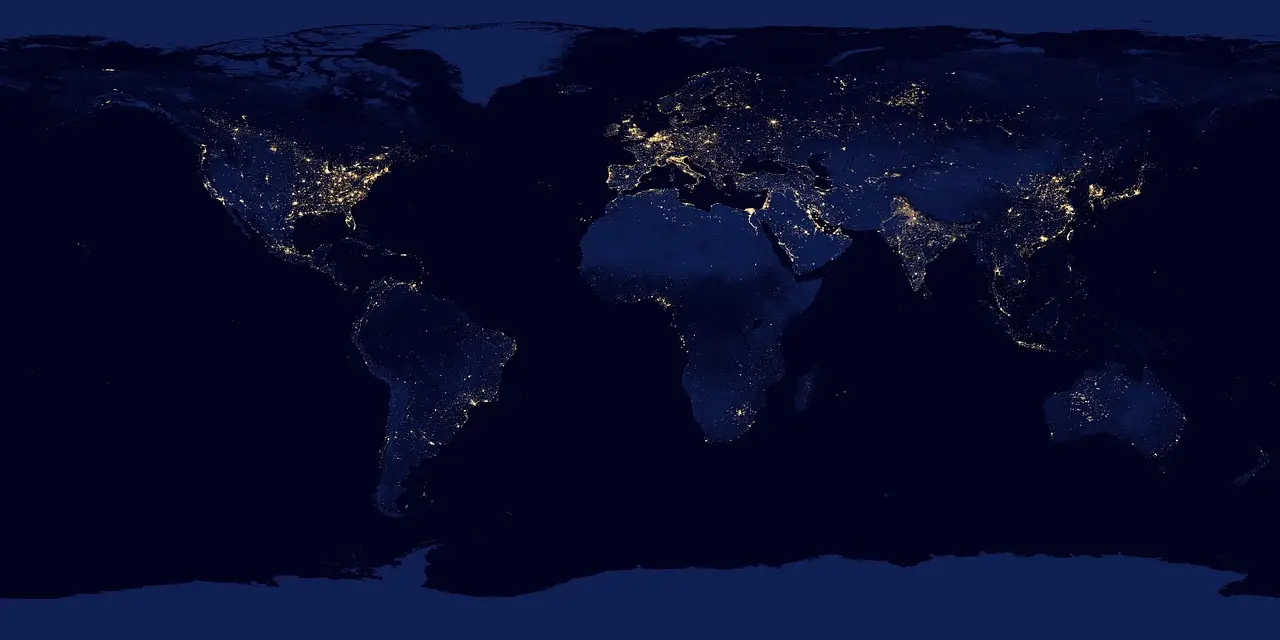
More than 16,000 satellites and over 1.2 million pieces of debris now circle Earth at enormous speeds — and King Charles III's Astra Carta, launched on June 28, 2023, wants the space industry to treat that environment as a shared, fragile resource before it becomes unusable.
Low-Earth orbit powers phones, banking, navigation, internet, weather forecasts and military coordination, yet it is filling up fast. Every launch leaves hardware behind — rocket bodies, interstage adapters, dead satellites — and each object raises the odds of collision. In the worst case, colliding spacecraft could spawn debris clouds that cascade uncontrollably, a scenario known as the Kessler syndrome, which could render orbit unusable and trap humanity on Earth.
Why did the old rules stop working?
Peter Martinez, executive director of the Secure World Foundation, describes the shift bluntly. "In the early days of the space age actors could more or less ignore the other actors," he told Space.com, invoking the old "big sky" paradigm — the assumption that space was so vast that anyone could act freely without affecting others.
That era ended in the mid-2010s with the arrival of satellite megaconstellations. "Nowadays, we really do have to worry about orbital congestion, and because space is out of sight for most people, we don't," Martinez said.
What is the Astra Carta?
The framework is the space-focused sibling of the Terra Carta, a voluntary sustainability charter launched in 2021. Both names echo the Magna Carta, the 1215 royal charter that helped found English law and modern democracies. The Sustainable Markets Initiative (SMI), King Charles's organization, drafted the Astra Carta with academics, heads of national space agencies and experts, including Canadian astronaut and former International Space Station commander Chris Hadfield.
The king flagged the issue years earlier. "I have long felt that protecting space that immediately surrounds our planet is one of those issues few recognize as important, but like so many of our present challenges, that were ignored for too long, if we do not address it quickly, it will come back to haunt us in a big way," the then-Prince of Wales told the 4th Summit for Space Sustainability in June 2022.
What does the framework actually cover?
The Astra Carta's "Zero Draft" runs 33 pages and contains 13 Articles, building on existing agreements such as the UN Committee on the Peaceful Uses of Outer Space framework and the U.S. Artemis Accords. Article 8 targets orbital debris: reusable launchers, responsible satellite disposal, investment in debris removal, and public education. The other twelve articles push for:
- Better coordination between satellite operators
- Novel propulsion and life support systems
- Ethical guidelines for AI use in space
- Sustainability performance indicators
- Legal frameworks for cybersecurity
- Treaties prohibiting automated weapons in space
Can a voluntary charter actually work?
The SMI has built machinery to push the principles forward. It created a Space Sustainability Task Force advised by European Space Agency director Josef Aschbacher, UK Space Agency Director Paul Bate, Martinez and Hadfield. It has presented at UN Committee meetings, worked with major players including SpaceX, and organized the Nov. 7 Artemis Celebration Gala at Florida's Kennedy Space Center, which honored Artemis II astronauts Reid Wiseman, Jeremy Hansen and Victor Glover and gathered 450 leaders from space, government and business. In July, the king opened the UK Space and Defence Gateway at the Harwell Science and Innovation Campus in Oxfordshire, partnering with the SMI and creating an investment council to advance the framework.
SMI CEO Jennifer Jordan-Saifi argues the fragmented space economy wants exactly this. "There isn't something that's sort of telling them what to do and how to behave in space," she said, adding that private sector players show "an appetite... for something to galvanise common purpose." Voluntary adoption, she argues, beats waiting on the UN system: "The voluntary framework is the fastest way to get everyone on the same page. And then we might move to more concrete and enforceable, binding options in the future."
What could slow it down?
Competition remains a real pressure. "Space has become a very congested and competitive domain, and I don't, frankly, see the big players taking their foot off the gas, both for commercial and for strategic reasons," Martinez said, though he expects major actors to "recognise this and to behave responsibly." He cites SpaceX's Starlink as a positive example — the company shares satellite trajectories and maneuver plans — pointing toward a globally coordinated space traffic system that does not yet exist.
The document itself is still a "Zero Draft," the label for unpolished work; Jordan-Saifi says it remains accurate, with a version 1.0 in consultation. Success metrics could include the number of adhering countries and companies, public awareness, and formal adoption by the UN.
Hadfield counsels patience: "If you're ready to declare anything after three years, you're making a mistake." Meanwhile, the SMI is taking Hadfield to the Commonwealth heads of government meeting in Antigua and Barbuda to address its 2.7 billion citizens. As Jordan-Saifi put it: "Once people are aware of it, they want the same sustainability standards for protecting our planet."
via space.com (Source)
More from Marcus Bennett
Show full bio
News editor covering regulation, policy and their impact on general science news at SciBeat.
449 articles
Nearby plates
- ESA's 2026 Report: 31,000 Objects Now Crowd Low-Earth Orbit
- Starlink Satellites Dodged 144,404 Collisions in Six Months
- Soviet-Era Satellite Breaks Apart, Adding Tens of Debris Fragments to Orbit
- Three Days to a Collision: Why Space Junk Is Nearing a Breaking Point
- Webb Telescope Spots Mars-Sized Worlds Smashing Together