Plate Nº 38 · recorded November 14, 2026
Space & AstronomyReported finding
Starlink Satellites Dodged 144,404 Collisions in Six Months
SpaceX's Starlink fleet performed 144,404 avoidance maneuvers in six months. A new NASA JPL paper says counting debris isn't enough — control and economics decide the outcome.
By Elena Vasquez4 min read724 words
In brief
- Starlink satellites performed 144,404 collision avoidance maneuvers between December 2024 and May 2025.
- About 96% of long-term collision risk comes from dead, uncontrollable objects, per ESA data cited in the study.
- Raising disposal reliability from 90% to 99% and cutting afterlife to 5 years cuts hazard by a factor of 50.
- The paper appears in Acta Astronautica (2026), DOI 10.1016/j.actaastro.2026.05.026.
- The FCC now requires satellites to deorbit within 5 years of retirement, down from 25.
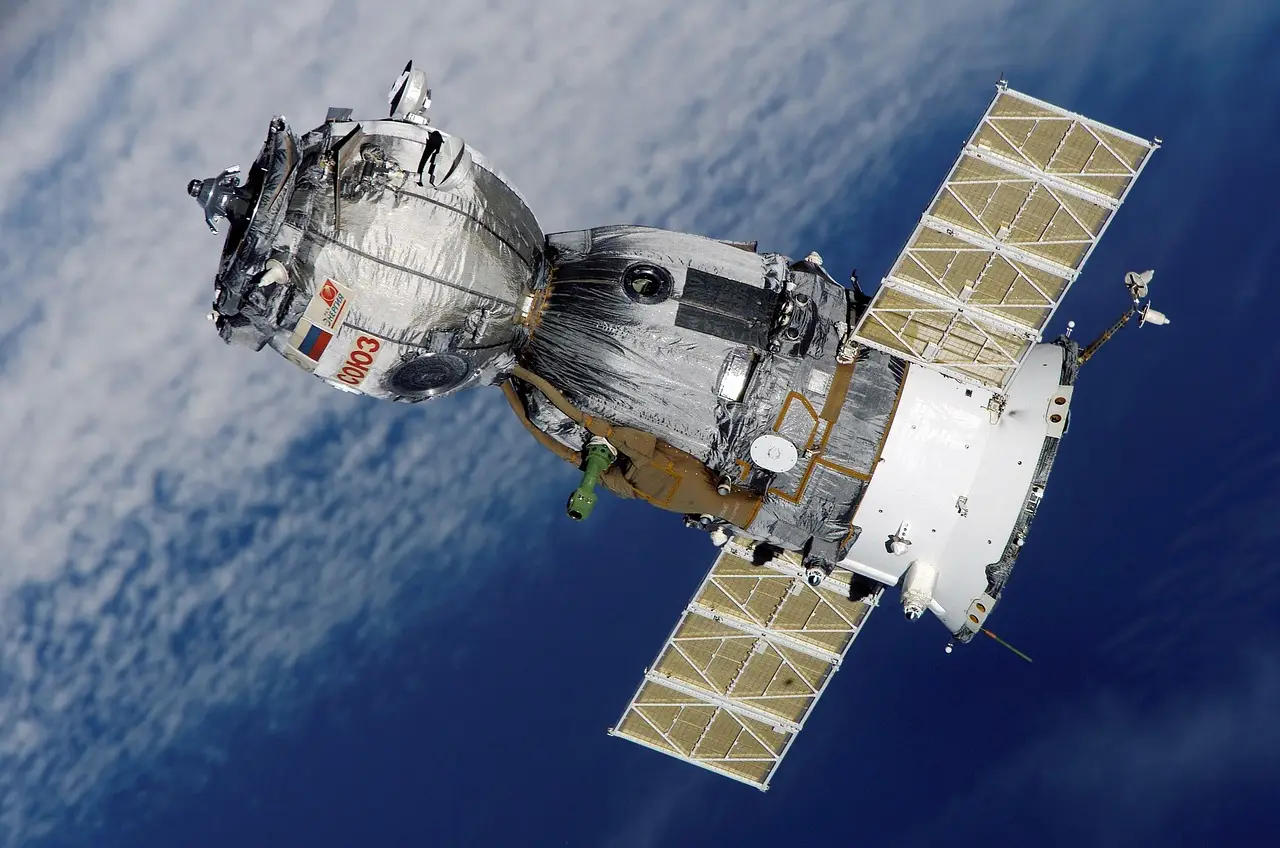
SpaceX's Starlink satellites performed 144,404 collision avoidance maneuvers in just six months, from December 2024 through May 2025. That figure, from filings made to the U.S. Federal Communications Commission, means each satellite in the world's largest megaconstellation dodges a potential crash roughly every week on average.
The number frames a new paper by Dr. Slava Turyshev of NASA's Jet Propulsion Laboratory, published in the journal Acta Astronautica and available as a preprint on arXiv. His argument: solving the space junk crisis isn't about counting trash or sending a garbage truck into the sky. It's about control and economics.
Why the danger sits higher up
Starlink satellites aren't in the worst spot. They and other megaconstellations, such as Amazon's Kuiper and China's Qianfan, typically orbit at 500–600 kilometers (311–373 miles). At that altitude, enough atmosphere remains to partly self-clean the region. Dead satellites and debris there burn up within a few years.
Higher up, the picture darkens. At roughly 850 kilometers (528 miles), uncontrolled rocket stages from past launches drift with almost no atmospheric drag to pull them down. They can stay in orbit for decades or centuries, and they can't maneuver. When they eventually collide, they spray debris into their own orbit and into higher and lower ones — threatening the communications megaconstellations below.
European Space Agency data cited in the paper attributes about 96% of long-term collision risk to these dead objects. Turyshev shows that even if launches stopped tomorrow, existing debris would collide and shatter faster than nature could clear it. That cascade is known as Kessler syndrome, a problem orbital dynamicists have wrestled with for decades. Controlling it comes down to three levers.
What are the three levers?
Regulation. Satellites must be designed to deorbit quickly once their missions end. The FCC recently cut the allowable post-mission lifetime from 25 years to five. According to the paper, raising disposal reliability from 90% to 99% while cutting the afterlife to five years reduces the environmental hazard by a factor of 50.
Better tracking. Space situational awareness systems track large objects well but miss bullet-sized ones. Even for big objects, analysts work with a fuzzy "box" of possible positions rather than an exact spot. Large boxes force operators to waste fuel dodging objects that never posed a real threat. Turyshev says the priority should be shrinking uncertainty around high-risk close calls, not tracking every bolt. That aligns with NOAA's Traffic Coordination System for Space (TraCSS), which is expanding its pilot program to more commercial operators this year.
Just-in-time collision avoidance. Rather than launching expensive missions to deorbit every piece of legacy debris, Turyshev proposes nudging dead objects only when trouble nears. Ground-based lasers or small swarms of "shepherd" satellites could move two rocket upper stages a few meters apart just before impact. It's not a permanent fix. But it costs far less than deorbiting everything.
Why is the market broken?
Economics may be the hardest part. Under the 1967 Outer Space Treaty, a private cleanup company can't simply grab an abandoned Soviet-era booster and haul it down. The launching government still owns it — even if that government no longer exists.
There's also a "tragedy of the commons": one firm removing a booster benefits every other operator in orbit, while bearing the cost alone.
Turyshev proposes contracts that pay for verifiable reductions in long-term risk. That would push companies like Astroscale, which intends to remove debris, to target the most dangerous pieces first. Governments would finance the contracts through "disposal bonds" that pay back if a satellite deorbits successfully without active intervention.
What happens next?
The framework is reasonable, but the obstacles are real. Even at a 99% deorbit success rate, with potentially millions of satellites in orbit, tens of thousands of derelicts would remain at any given time. And there is no clear path to a successor to the Outer Space Treaty.
Still, the longer spacefaring nations ignore the problem, the worse it gets. The paper, at minimum, aims to start a more comprehensive conversation about a formally adopted solution.
Publication details: Slava G. Turyshev, "Orbital debris in Earth orbit: Operations, stability, control, and market formation," Acta Astronautica (2026). DOI: 10.1016/j.actaastro.2026.05.026.
via phys.org/rss-feed/ (Source)
More from Elena Vasquez
Show full bio
Correspondent covering money, funding and market shifts around general science news at SciBeat.
428 articles
Nearby plates
- ESA's 2026 Report: 31,000 Objects Now Crowd Low-Earth Orbit
- Three Days to a Collision: Why Space Junk Is Nearing a Breaking Point
- Starship Reaches Orbit for First Time, Delivers 26 Starlink Satellites
- SpaceX Aims for First Starship Orbital Flight on 14th Test
- SpaceX Aims for First-Ever Orbiter Catch as Starship Flight 15 Launches