Plate Nº 69 · recorded November 14, 2026
Space & AstronomyReported finding
Mariner 9 Became the First Craft to Orbit Another Planet on Nov. 13, 1971
On Nov. 13, 1971, NASA's Mariner 9 became the first spacecraft to orbit another planet, mapping 85% of Mars after waiting out a global dust storm.
By Elena Vasquez3 min read506 words
In brief
- Mariner 9 entered orbit around Mars on Nov. 13, 1971, 167 days after its May 30 launch — the first spacecraft to orbit another planet.
- Partner spacecraft Mariner 8 failed five minutes after its May 9, 1971 launch and crashed into the Atlantic.
- Mariner 9 returned 7,329 photos and mapped 85% of the martian surface in about a year.
- It found shield volcanoes, dry river valleys, polar ice, and returned close-ups of Phobos and Deimos.
- A global dust storm at arrival forced the orbiter to wait out the weather; Soviet Mars 2 and Mars 3 fared worse.
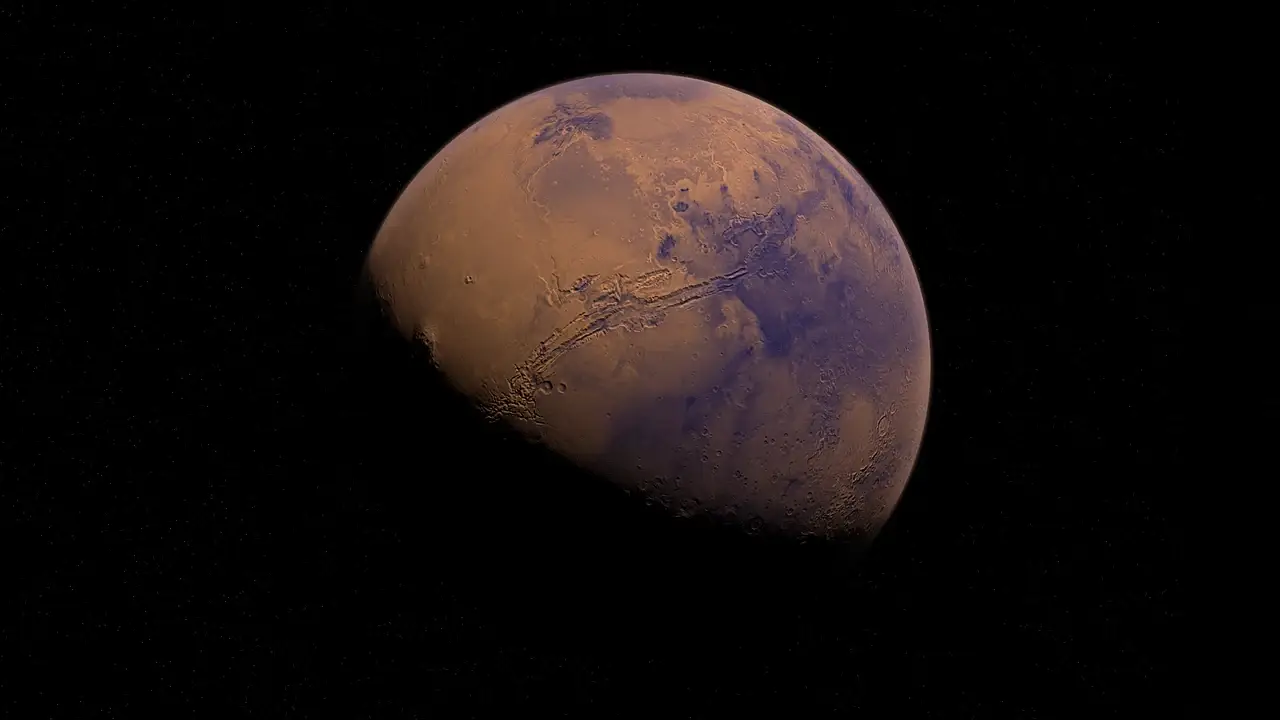
On Nov. 13, 1971, 167 days after leaving Earth, NASA's Mariner 9 swung into orbit around Mars and became the first spacecraft ever to circle another planet. The date still anchors one of the milestone entries in the history of astronomy, and for good reason. Nothing had orbited another world before it.
How did Mariner 9 get its job?
The probe launched on May 30, 1971, as one half of a two-spacecraft effort called the Mars 71 mission. Its partner, Mariner 8, launched first on May 9 of that year. That flight lasted five minutes. The booster failed to reach orbit, the spacecraft tumbled, and Mariner 8 crashed into the Atlantic Ocean.
The loss changed Mariner 9's assignment. It inherited every goal its twin had carried, stacking them on top of its own already busy to-do list. The combined mission called for:
- mapping the martian surface
- monitoring and analyzing the atmosphere
- collecting surface data
- returning roughly 3,000 photographs
That's a heavy workload for one orbiter. Mariner 9 carried it anyway.
What happened when it arrived?
Mars greeted the spacecraft with a global dust storm. The entire planet was shrouded, which threatened to blank every camera on board. But engineers had built Mariner 9 for longevity, and that design choice paid off. Instead of rushing its observations, the orbiter simply waited out the storm, then started its science campaign once the air cleared.
The Soviet Union's Mars 2 and Mars 3 spacecraft, which arrived around the same period, did not fare as well against the same conditions. The contrast made Mariner 9's patience look even better in hindsight. Waiting, in this case, won.
What did it actually find?
Over roughly a year of operations, Mariner 9 returned 7,329 photographs — well past its target of about 3,000 — and mapped 85% of the martian surface. The numbers alone were impressive. The pictures rewrote what researchers thought Mars was.
Before Mariner 9, many scientists pictured Mars as a static, moon-like ball of rock. The images said otherwise. The orbiter revealed a dynamic and active world, one that had clearly changed over time. Among its discoveries:
- shield volcanoes, the broad, gently sloping kind built by flowing lava
- dry river valleys, hinting that liquid water once moved across the surface
- ice at the martian poles
The probe also delivered close-up views of Phobos and Deimos, Mars's two small moons. Those images gave researchers their best look yet at the surfaces of both bodies.
Put simply: Mariner 9 turned Mars from a dot in a telescope into a place with a geological history. Dry riverbeds and polar ice raised questions about the planet's past climate that researchers still chase today. The mission's photo haul — 7,329 frames and 85% of the surface — set the baseline every later Mars orbiter built on.
One probe, launched as a backup for a failed twin, ended up defining how humanity first saw another planet. That's the legacy of Nov. 13, 1971.
via astronomy.com (Source)
More from Elena Vasquez
Show full bio
Correspondent covering money, funding and market shifts around general science news at SciBeat.
428 articles
Nearby plates
- Nov. 13, 1971: NASA's Mariner 9 Became First Craft to Orbit Mars
- MMX Launches: First Mission to Land on Mars's Moon Phobos
- SpaceX launches classified USSF-432 mission from California
- Nov. 9, 1967: The Day the Saturn V Shook Florida and Saved NASA's Moon Plan
- Starship Reaches Orbit for First Time, Delivers 26 Starlink Satellites