Plate Nº 91 · recorded November 9, 2026
Space & AstronomyReported finding
SpaceX launches classified USSF-432 mission from California
SpaceX launched the undisclosed USSF-432 mission on Nov. 6. Its Falcon 9 booster landed on a Pacific droneship, while observers weigh a low-orbit satellite theory.
By Elena Vasquez3 min read694 words
In brief
- USSF-432 launched at 4:48 p.m. local California time on Nov. 6, 2026.
- The flight was Falcon 9’s 119th launch and 14th national-security mission of 2026.
- Booster 1095 landed on the Pacific droneship “Of Course I Still Love You” during its eighth flight.
- SpaceX ended the webcast about 10 minutes after liftoff; the payload and orbit were not confirmed.
- More than 70% of 2026 Falcon 9 missions were devoted to building Starlink.
By Elena Vasquez
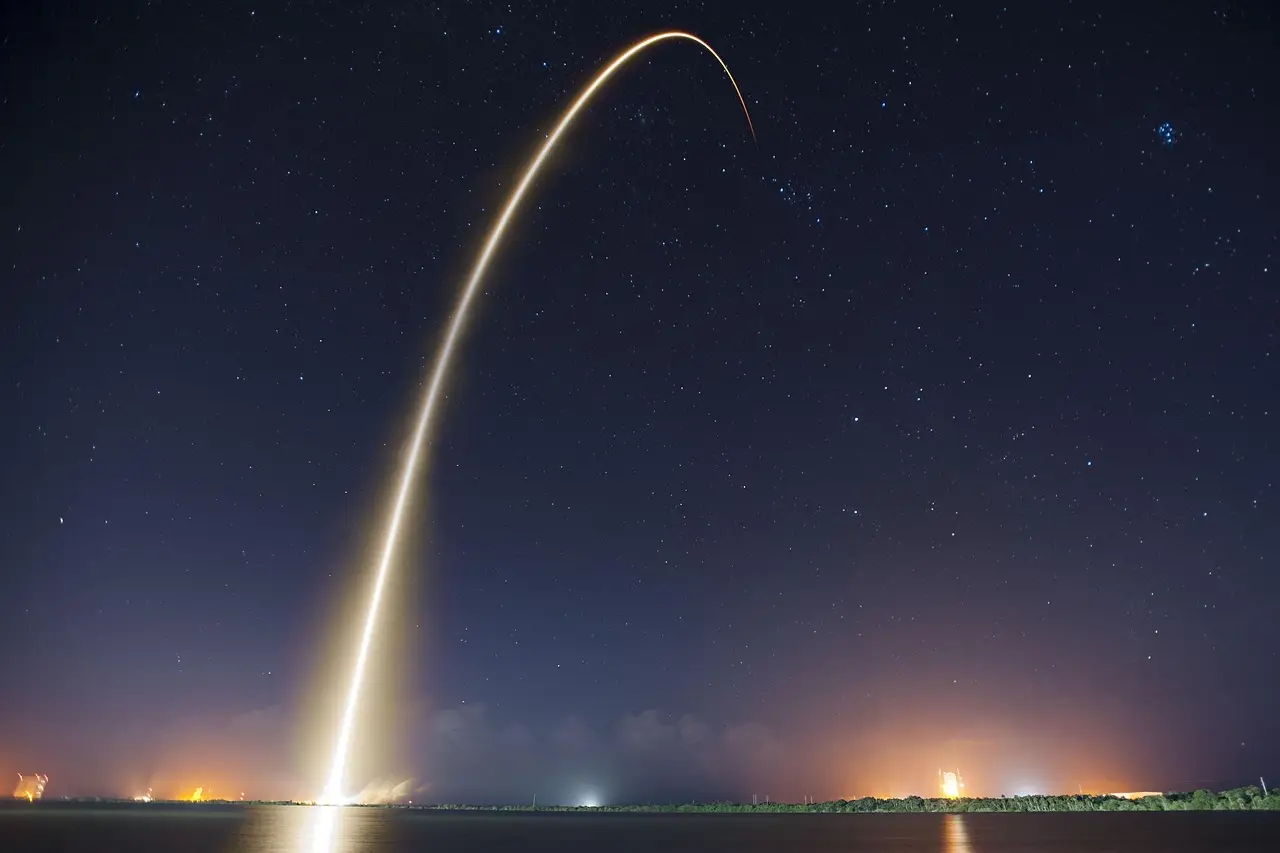
SpaceX launched the classified USSF-432 mission at 4:48 p.m. local California time on Nov. 6, 2026, from Vandenberg Space Force Base, the 119th Falcon 9 flight of the year and the rocket’s 14th national-security launch.
Neither SpaceX nor the U.S. Space Force publicly described the payload, leaving the mission designation as one of the few firm details.
What information was released at sunset?
A Falcon 9 lifted off from California’s Vandenberg Space Force Base at 7:48 p.m. EST, equivalent to 4:48 p.m. local time and 00:48 GMT on Nov. 7. The rocket rose as the sun sank toward the Pacific.
The mission, USSF-432, was a classified flight for the U.S. military. Ahead of launch, SpaceX and the Space Force disclosed little about the payload or its destination, and the webcast added few additional details.
SpaceX ended the webcast about 10 minutes into the flight, shortly after the Falcon 9’s first stage returned to Earth for a landing.
Takeaway: The launch was public, but the military payload remained tightly guarded.
What happened to the rocket’s two stages?
The rocket’s first stage, or booster, landed aboard the SpaceX droneship “Of Course I Still Love You.” The ship was stationed downrange, meaning away from the California launch site, in the Pacific Ocean.
The landing marked the eighth flight for that particular booster, which SpaceX designates as 1095. It continued the Falcon 9’s practice of recovering its first stage for later reuse.
The Falcon 9’s upper stage continued carrying the undisclosed payload farther into the sky. Outside observers speculated that it could be headed toward low Earth orbit, or LEO, an orbit close to Earth.
Takeaway: SpaceX recovered the booster, but it did not confirm the payload’s destination.
What could the undisclosed payload be?
NextSpaceflight.com offered the most specific explanation in its mission description, although it remains an outside assessment rather than an official confirmation.
“It is possibly a batch of classified LEO satellites for the USSF's Space Based Sensing and Targeting (SBST) portfolio based on SpaceX's Starshield satellite bus, based on locations of rocket stage drop zones being exact fits with previous Starlink Group 15 launches.”
The assessment cited planned stage-drop locations that matched those from previous Starlink Group 15 missions. It also proposed that the payload might use the Starshield satellite bus, a shared basic spacecraft design used to carry different communications and sensing equipment.
Starlink is SpaceX’s large broadband satellite network in low Earth orbit. It includes more than 11,000 active satellites, making it a megaconstellation, or a very large group of orbiting spacecraft.
Starshield is a similar system designed to provide services to the U.S. military and its allies. Its satellites are believed to rely heavily on the Starlink spacecraft bus, which would fit the proposed connection between USSF-432 and earlier Starlink missions.
Neither the Space Force nor SpaceX confirmed that USSF-432 carried Starshield-based satellites or disclosed the upper stage’s final orbit.
Takeaway: The satellite theory fits available flight clues, but official confirmation is still absent.
How does the launch fit SpaceX’s 2026 schedule?
USSF-432 counted as the 119th Falcon 9 launch of 2026 and the rocket’s 14th national-security flight that year. More than 70% of the Falcon 9 missions launched in 2026 had gone toward building the Starlink network.
Beyond Falcon 9 activity, SpaceX conducted six other missions in 2026. Three were operational flights of the company’s Falcon Heavy rocket, while the remaining three tested its next-generation Starship vehicle.
SpaceX plans to retire both Falcon 9 and Falcon Heavy shortly after Starship becomes fully reusable, meaning the vehicle can return from flight and be used again.
The report described Starship as the biggest and most powerful rocket ever built. That claim sits within the company’s broader plan to concentrate its launch work on a vehicle designed for rapid, repeated missions.
Takeaway: USSF-432 adds to a year dominated by Starlink, while Starship testing points toward a future change in SpaceX’s fleet.
via space.com (Source)
More from Elena Vasquez
Show full bio
Correspondent covering money, funding and market shifts around general science news at SciBeat.
384 articles
Nearby plates
- SpaceX's 2nd Classified Space Force Launch in 6 Days Lifts Off
- Starship Flight 15 targets Nov. 13, but dual catch needs FAA approval
- SpaceX Aims for First-Ever Double Starship Landing on Friday
- Starship Reaches Orbit for First Time, Delivers 26 Starlink Satellites
- Starship Reaches Orbit for the First Time and Deploys 26 Starlink Satellites