Plate Nº 54 · recorded October 10, 2026
Earth & ClimateReported finding
Arctic Melt Season Grew 40 Days Longer Since 1979—Then Stalled in 2010
The Arctic sea ice melt season is about 40 days longer than in 1979, but most of that gain came before 2010, a NASA-led study finds. Cloud shifts and thinner ice may now hold the trend.
By Priya Raman3 min read553 words
In brief
- The Arctic sea ice melt season is now about 40 days longer than it was in 1979
- Most of that lengthening occurred before 2010, when the average melt-season length flattened
- In some regions during the 2000s, the melt season grew by as much as 5 days per year
- The Arctic continues to warm nearly four times faster than the global average
- The study analyzed satellite data from 1979 through 2023 and was published September 23, 2026
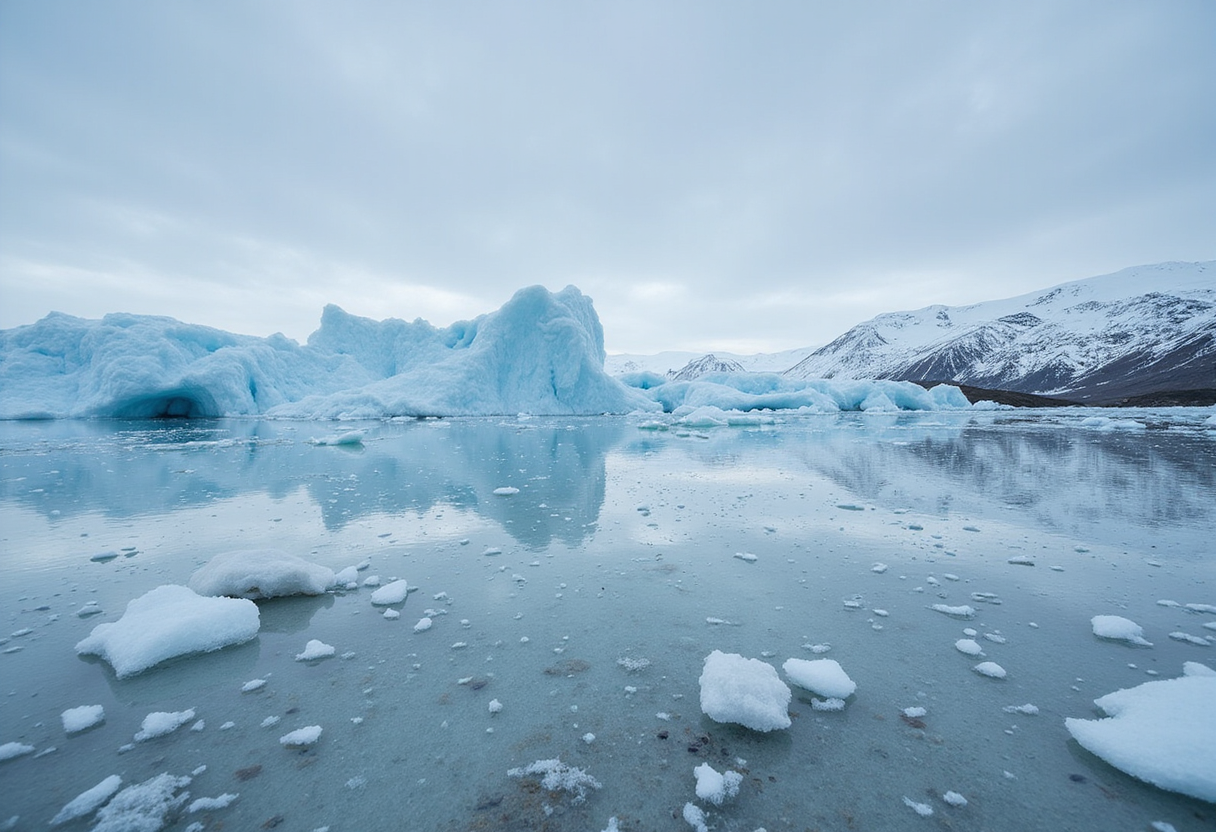
The Arctic sea ice melt season is about 40 days longer than it was in 1979, yet its rapid lengthening unexpectedly leveled off around 2010, a new NASA-led analysis finds.
For most of the satellite record, Arctic sea ice began melting earlier in spring and refreezing later in autumn. Those shifts extended the annual melt season and shrank overall ice extent across the Arctic Ocean.
A study published on September 23, 2026 in Communications Earth & Environment, analyzed satellite observations spanning 1979 through 2023. The team tracked when melting began each spring and when sea ice re-formed in fall.
The researchers, based at NASA's Goddard Space Flight Center, found that almost all of the lengthening happened before 2010. The lead authors are Linette Boisvert, Chelsea Parker, Elina Valkonen, and Rachel Tilling.
What changed after 2010?
Since 2010, the average melt-season length has barely budged, even though start and end dates still swing sharply from one year to the next. Most of the original gain came from later autumn freeze-up rather than from earlier spring thaw.
"Previously, there was more of this multiyear ice that didn't melt away each summer," Boisvert said. "Now that the ice is thinner and there's less of it, there's a lot more variability."
Why did the steep trend flatten?
To answer that, the team examined the Arctic's energy balance—the difference between sunlight and heat arriving from the Sun, atmosphere, and ocean, and infrared radiation escaping back to space.
During the 2000s, shrinking ice cover exposed more dark ocean water. Bright sea ice reflects most incoming sunlight, while darker water absorbs it. That trapped heat delayed autumn freeze-up, stretching the melt season in some regions by as much as 5 days per year.
That decade's decline in ice extent and thickness then appeared to stall. A different driver now seems to dominate.
Are clouds now controlling melt-season length?
Yes, the analysis suggests. Since 2010, shifts in cloud cover have reduced sunlight reaching parts of the Arctic Ocean. That change has helped hold the average melt-season length steady over long periods, even as individual years vary widely.
The remaining ice is also younger and thinner than the multiyear ice that once dominated the central Arctic. Thinner ice responds more violently to short-term weather—storms, winds, and cloud shifts.
"Melt season length is much more dependent on atmospheric effects," Boisvert said. "They seem to be playing a bigger role because the ice is generally thinner and more vulnerable to begin with."
Could the plateau end?
The researchers caution that it may. Thick old ice still clings to the waters north of Greenland and around the Canadian Arctic Archipelago. If that ice keeps thinning, the Arctic could enter another period of rapid decline, and the melt season could start lengthening again.
The Arctic continues to warm nearly four times faster than the global average. The sea ice that survives today is far thinner than what persisted in the late 1970s.
Scientists do not yet know whether the recent stabilization marks a durable shift in Arctic melt behavior or simply a pause before another spurt of change. Continued satellite monitoring of sea ice, and of the energy balance that governs its melt and refreeze, will be needed to find out.
via science.nasa.gov (Original)
More from Priya Raman
Show full bio
Senior reporter covering industry trends and analytics at SciBeat.
207 articles
Nearby plates
- Antarctica Gained 695 Billion Tons of Ice. The Trigger Was Thousands of Miles Away
- Arctic Ice Trapping a NOAA Ship Was Forecastable, Scientists Say
- 76 km² Ice Island Breaks Off Greenland's Petermann Glacier
- Slow waves deep inside Earth helped Antarctica freeze first
- A 76-Square-Kilometer Ice Island Breaks Free From Petermann Glacier