Plate Nº 47 · recorded October 10, 2026
Earth & ClimateReported finding
Dutch farmers harvest first rice crop on sinking peatlands
Farmer Sander Roeleveld harvested the Netherlands' first rice crop this autumn in a 0.6-hectare pilot between Amsterdam and The Hague — a test of keeping peat soils wet to curb carbon emissions.
By Nathan Brooks4 min read714 words
In brief
- 0.6-hectare (1.5-acre) pilot field between Amsterdam and The Hague produced the Netherlands' first-ever rice harvest
- Project tests around 30 rice cultivars from Russia, China, Japan and Uzbekistan
- About 10% of the Netherlands is peatland; these soils generate 2-3% of national greenhouse gas emissions
- Worst-affected peat areas subside up to several centimeters per year as they dry
- Pilot targets about 3 tonnes of short-grain rice suited for sushi or risotto
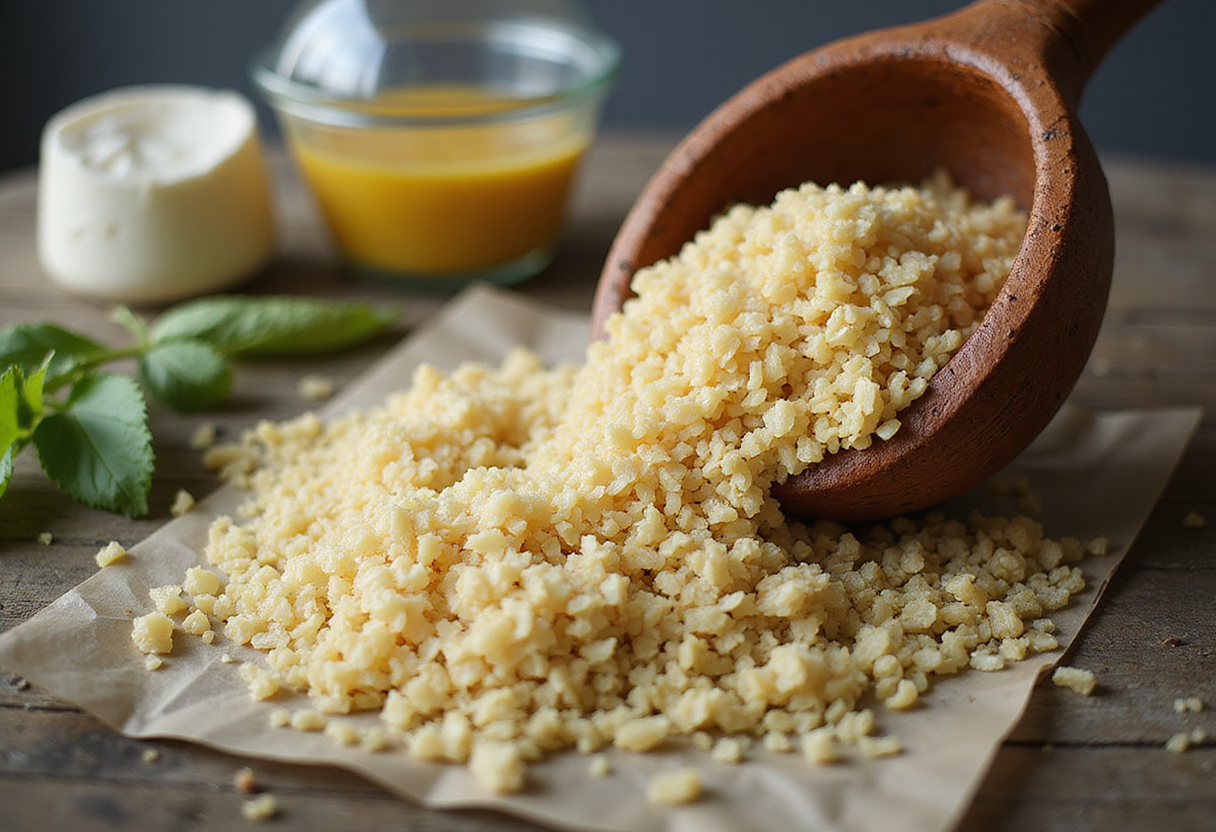
Farmer Sander Roeleveld harvested the Netherlands' first rice crop this autumn from a 0.6-hectare (1.5-acre) pilot field sitting 2 meters below sea level between Amsterdam and The Hague.
The polders — low-lying tracts of reclaimed land threaded with canals — host a windmill-spotted landscape that has produced grass for dairy cows for roughly 600 years. They have never grown rice.
Why grow rice where cows have grazed for centuries?
The warming climate made the experiment possible. Warmer summers now allow Dutch farmers to cultivate wine grapes and, for the first time, rice — a crop unthinkable in such a wet, temperate country a generation ago.
Philippe Terheggen, the 68-year-old chairman of the Land van Ons association, which provided the fields, called the sight of a combine harvester cutting rice in Dutch countryside "extraordinary."
"We would never have thought maybe 20 years ago that we would be able to grow rice in the Netherlands," he said.
He added a note of caution: "But it's also scary because it tells you what is possible ... now the climate has changed."
Roeleveld, 53, who calls himself a "pioneer," said he wants to convince other farmers that boggy ground can grow more than grass.
"My goal is to show that more things are possible on wetland than just grass," he said.
What problem does rice cultivation solve?
Roughly one-tenth of the Netherlands is peatland — wetland built from centuries of partially decayed plant matter that stores large amounts of carbon. Farmers have drained these bogs to grow grass, and the drying peat releases that stored carbon as CO2 while the ground itself sinks by up to several centimeters per year in the worst-affected areas.
Wageningen University calculates that greenhouse gas emissions from Dutch peat soils account for about 2% to 3% of the country's total emissions. The same peatlands affect large parts of northern Europe, including Germany, Belgium and the Baltic states.
The only way to break the cycle is to keep the fields wet. Wet fields, however, cannot sustain grass for cows — which is where rice enters.
How does keeping peat wet help the climate?
Wet peat does not oxidize and release carbon. Rice paddies, kept flooded throughout the growing season, preserve the underlying soil while producing grain.
Julian Helfenstein, a 36-year-old researcher at Wageningen University and Research, leads the pilot alongside colleagues at nearby Leiden University. He frames the project as both climate adaptation and mitigation.
"Rice is an opportunity for this part of the world to adapt to climate change, so to grow something that previously wasn't possible," Helfenstein said. "But also to mitigate climate change because it stops this peat from degrading and emitting all the CO2 because you can keep it wet."
The team tests around 30 rice cultivars from Russia, China, Japan and Uzbekistan. Early indications favor varieties from northern Japan. The current harvest targets roughly three tonnes of short-grain rice suitable for sushi or risotto.
Are there trade-offs to growing rice on peat?
Yes. Flooded rice paddies typically emit methane, a potent greenhouse gas, even as they preserve the peat. The researchers track CO2 and methane emissions from the rice plots against nearby grassland to verify that swapping one crop for the other actually reduces net warming.
"So far the results are promising," Helfenstein said, cautioning that the dataset remains small and the findings are preliminary.
He described the emotional pull of working on a solution rather than only diagnosing problems. "As an environmental scientist, you're always pointing to the problems," he said. "And then here's an opportunity for science to work also toward a solution. So I find that thrilling."
What happens next?
Guusje van der Vossen, 27, of the Wij Land association, which helps Dutch farmers transition to sustainable production, said local restaurants have already expressed interest in premium Dutch-grown rice.
She has eaten rice from a small experimental batch harvested last year. "It was a bit chewy, but also great," she said, with plans to make sushi and possibly sake from the new harvest.
The pilot remains tiny — 0.6 hectares — and scaling it up will require new harvesting equipment, milling infrastructure and, most importantly, longer-term evidence that the climate math holds.
via Phys.org Biology (Source)
More from Nathan Brooks
Nearby plates
- U.S. Irrigation Avoids 6.86 Gigatons of Emissions via Spared Land
- Beef Industry Knew of Livestock's Climate Role by 1989, Study Finds
- Abandoned for Over a Decade, Farm Field Blooms with Thousands of Orchids
- Small Crop Patches Draw 70% More Birds, Three-Year Study Finds
- Cambridge AI Maps Senegal's Smallholder Crops With 84% Accuracy