Plate Nº 21 · recorded November 13, 2026
PhysicsReported finding
Atoms Cooled to 10 Picokelvin Aboard China's Tiangong Space Station
Aboard China's Tiangong space station, scientists used a laser trap and microgravity to cool 20,000 rubidium atoms to 10 picokelvins, the coldest temperature ever recorded.
By Priya Raman3 min read645 words
In brief
- Scientists cooled atoms to 10 picokelvins aboard China's Tiangong space station, the coldest temperature ever recorded.
- The team trapped 20,000 rubidium atoms with an optical-dipole trap and reported the result Nov. 5 in the journal Science.
- The previous benchmarks were 52 picokelvins on the International Space Station and 38 picokelvins in a drop-tower experiment.
- Absolute zero is minus 459.67 degrees Fahrenheit (minus 273.15 degrees Celsius), and physicists say it is unachievable.
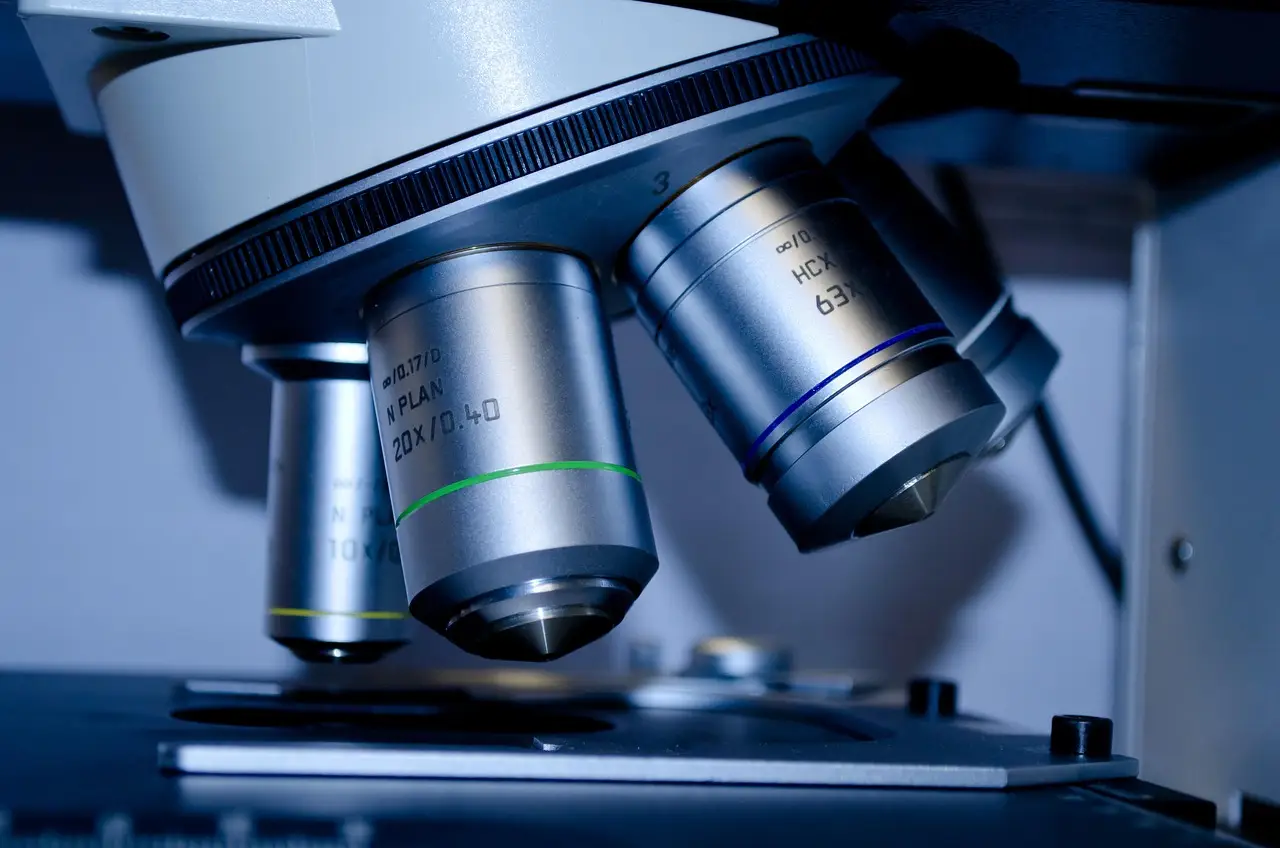
Scientists have cooled a cloud of atoms to 10 picokelvins — one hundred-billionth of a degree above absolute zero — the coldest temperature ever recorded for matter, using a laser trap aboard China's Tiangong space station. The team reported the result on Nov. 5 in the journal Science.
The achievement came from an experiment in orbit, where weightlessness gives physicists an advantage that no laboratory on Earth can match. The researchers used a technique informally called "optical tweezers," known formally as an optical-dipole trap (ODT), which suspends atoms inside the grip of a laser beam.
How did the team reach 10 picokelvins?
The researchers placed 20,000 rubidium atoms into the laser trap to restrict their motion. Temperature, at the atomic scale, is simply motion: the slower particles move, the colder they are. Restricting that motion cools the cloud.
The space station's low-gravity environment did the rest. In microgravity, atoms float rather than settle, which makes cooling far more efficient than it is on the ground. The combination of the trap and weightlessness pushed the atomic cloud to temperatures far below what terrestrial experiments can reach.
From this weightless collection of atoms, the team created a Bose-Einstein condensate — a quantum state of matter in which very cold atoms clump together and behave as if they were a single atom, sometimes described as a "fifth state" of matter beyond solids, liquids, gases and plasmas.
The researchers see the record as a starting point rather than a finish line. "This record-low temperature could stimulate a new generation of ODT-based experiments in quantum simulation and precision measurements in space," they wrote in their paper.
Such work could improve future space-based research, the team said, by giving scientists a colder, quieter platform for studying quantum behavior.
How does this compare with earlier records?
The Tiangong result breaks two previous benchmarks for extreme cold. A similar experiment aboard the International Space Station reached 52 picokelvins. A separate effort, in which atoms cooled during a weightless fall induced by a drop from a tall tower, achieved 38 picokelvins. The new record of 10 picokelvins sits well below both.
For scale: absolute zero, the coldest temperature theoretically possible in physics, is minus 459.67 degrees Fahrenheit, or minus 273.15 degrees Celsius. Physicists consider it the threshold at which all particles in an object stop moving. Ten picokelvins is a whisper above that limit.
Could anyone ever reach absolute zero?
Almost certainly not, according to physicists. One interpretation of the third law of thermodynamics — the branch of physics describing how systems behave as they approach absolute zero — holds that particles always retain some entropy, or disorder, which makes absolute zero unachievable in practice.
"One version of the third law states that it would require an infinite number of steps to reach absolute zero, which means you will never get there," Saibal Mitra, a professor of physics at Missouri State University, told Live Science in a 2024 interview.
There is also a deeper reason the limit must hold. The second law of thermodynamics states that entropy always increases; reaching absolute zero would violate it. "If you had a heat sink at absolute zero, then you could build a machine that was 100% efficient," Mitra said — a machine that physics forbids.
Space, at least, makes it easier to get close. Microgravity lets atoms float, as Science News reported, allowing them to shed motion and cool more efficiently than any Earth-based apparatus allows. That is precisely why the Tiangong team succeeded where ground laboratories could not.
The findings are preliminary in the sense that all record-setting physics is: a single experiment, awaiting replication and extension. But the direction is clear. Each orbit-based record pushes matter closer to a boundary that theory says no one will ever cross.
Ten picokelvins is the closest anyone has come.
via livescience.com/feeds/news (Source)
More from Priya Raman
Show full bio
Senior reporter covering people, launches and day-to-day practice in general science news at SciBeat.
353 articles
Nearby plates
- Tiangong cools atoms to a record-low temperature in space
- Tiangong team sets cold record with a seven-second atom cloud
- After 40 Years, Physicists Spot the 'Energy Ladder' at Quantum Tipping Points
- Caltech Team Directly Measures Quantum Energy Ladder Predicted for 40 Years
- MIT Calculations Show Why a Neutrino Laser May Be Impossible