Plate Nº 88 · recorded October 30, 2026
Health & Medicine ResearchReported finding
Blood antibodies may signal bowel disease up to a decade early
A study of 500 people found blood antibody patterns that distinguished people who later developed Crohn’s disease or ulcerative colitis up to 10 years before diagnosis, but validation is needed.
By Priya Raman5 min read934 words
In brief
- Researchers analyzed 2,000 serum samples from 500 people: 200 later developed Crohn’s disease, 200 later developed ulcerative colitis, and 100 were healthy comparisons of comparable age and sex.
- The team tested antibody responses to about 357,000 antigens and detected 123,980 unique antibodies; future IBD cases showed less antibody diversity.
- Models separated future Crohn’s disease from healthy comparisons with an AUC of 0.90 and ulcerative colitis with an AUC of 0.84, using data up to 10 years before diagnosis.
- The model separated complicated from less complicated Crohn’s disease about 10 years ahead with an AUC of 0.85.
- The report was dated October 24, 2026; the research was presented at UEG Week in Barcelona on October 19, 2026.
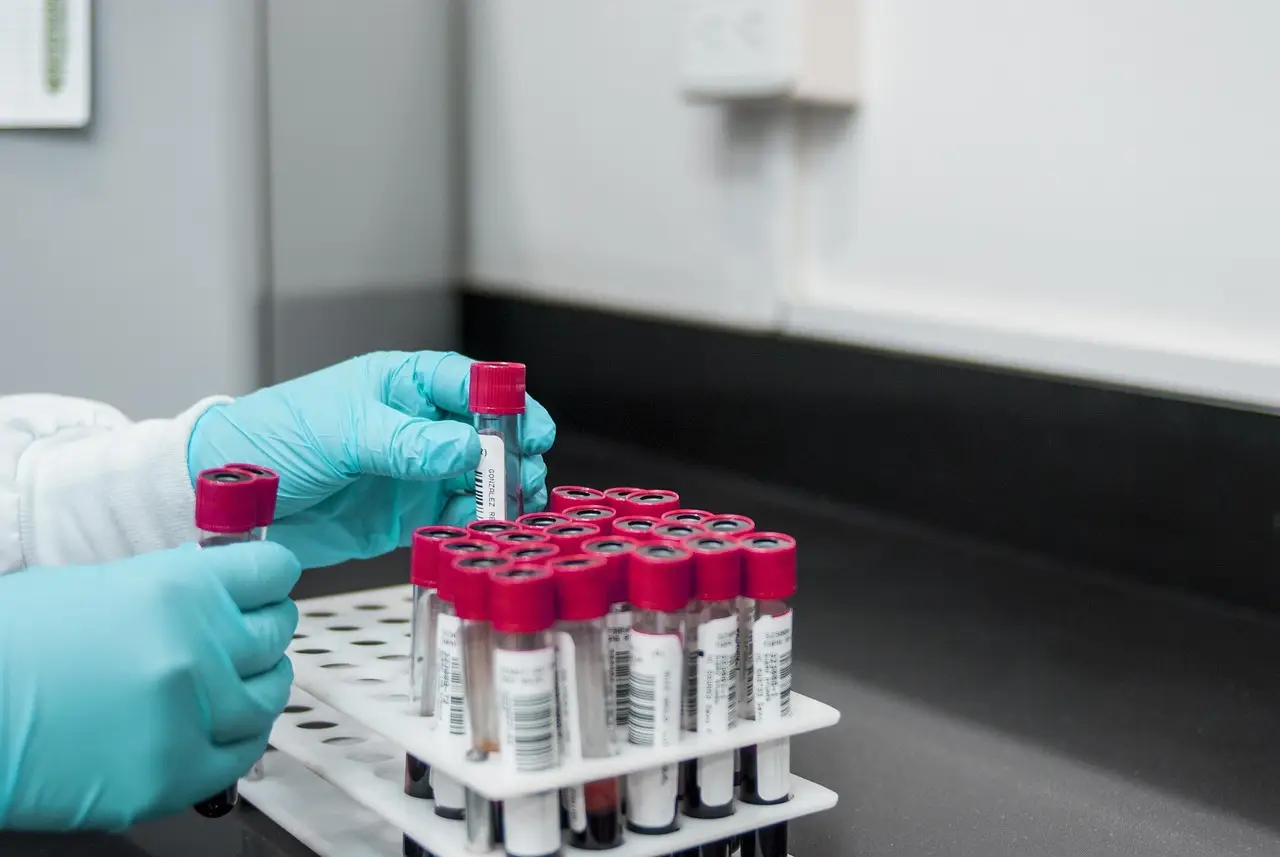
By Priya Raman
Ten years before a clinical diagnosis, a machine-learning model using blood antibody patterns distinguished future Crohn’s disease cases from healthy controls with an AUC of 0.90, according to a report published on October 24, 2026.
The research, presented at UEG Week 2026 in Barcelona, Spain, on October 19, points to a possible preclinical blood test, but it does not establish a routine screening tool.
At the center of the analysis are 500 people whose stored serum samples allowed researchers to look backward through as much as a decade of immune activity.
What did the study examine?
Inflammatory bowel disease (IBD) refers to long-term disorders, including Crohn’s disease (CD) and ulcerative colitis (UC), in which abnormal immune responses contribute to persistent inflammation and intestinal damage.
The study included 200 participants who later developed Crohn’s disease, 200 who developed ulcerative colitis and 100 healthy people of comparable age and sex.
The team had 2,000 serum samples from diagnosis and approximately two, four and 10 years earlier. Serum is the liquid component of blood after cells and clotting proteins are removed.
What changed in the blood?
Researchers measured antibody responses to approximately 357,000 antigens associated with bacteria, viruses, food and the immune system itself. Antigens are substances that the immune system can recognize.
Antibodies are proteins that help the immune system identify specific targets. Across the 2,000 samples, the researchers detected 123,980 unique antibodies.
People who later developed either disease had significantly less antibody diversity than the healthy group. Their immune systems showed a narrower range of responses.
Distinctive changes appeared as far as 10 years before the clinical diagnosis.
The conference study, titled Deciphering the prodrome of inflammatory bowel disease up to 10 years before disease onset, examined that preclinical phase, meaning the period before recognizable symptoms.
Which signals pointed to each disease?
Among future Crohn’s cases, antibody responses to herpesviruses, a family of viruses, and to bacterial flagellin increased. Flagellin is a protein that forms part of the tail-like structures some bacteria use to move.
Those elevated responses were most noticeable in people who later developed complicated Crohn’s disease or disease affecting the ileum, the final section of the small intestine.
Antibody responses to encapsulated bacteria gradually decreased as diagnosis approached. These bacteria carry protective outer coatings that can help them evade immune defenses.
Future ulcerative colitis cases showed a somewhat different combination. Responses to herpesviruses and autoantigens increased, while responses to encapsulated bacteria declined.
Autoantigens are components of the body’s own tissues that the immune system can mistakenly target.
Together, these patterns show that measurable immune differences can precede an IBD diagnosis, although the study does not establish whether the antibody responses cause the disease.
How accurately could the models identify future disease?
Researchers applied machine learning, a form of artificial intelligence that identifies patterns in complex data, to the antibody profiles.
They tested whether those profiles could distinguish people who would later develop IBD from healthy controls using samples collected up to 10 years before diagnosis.
The area under the curve (AUC) measures how well a model separates two groups. A score of 0.50 is no better than a coin flip, while 1.00 represents perfect discrimination.
- Future Crohn’s disease versus healthy controls: AUC 0.90.
- Future ulcerative colitis versus healthy controls: AUC 0.84.
- Complicated versus less complicated Crohn’s disease: AUC 0.85, approximately 10 years before diagnosis.
The models also separated people who later developed complicated Crohn’s disease from those whose disease would remain less complicated, roughly a decade before diagnosis.
Those scores describe group-level discrimination in the studied sample. They do not mean that an individual has a 90% or 84% probability of receiving a future diagnosis.
Lead author Dr. Arno Bourgonje emphasized the timing of the signal.
“It is fascinating to see that complicated CD at diagnosis is associated with a distinct antibody profile years before the first clinical symptoms and is not simply the consequence of disease progression after diagnosis.”
He said the early profile could support earlier risk detection, distinguish disease subtypes and help identify patients who may benefit from more intensive therapy.
Those findings could therefore guide research into earlier risk detection and more intensive care, but they do not show that acting on a risk signal improves outcomes.
Could antibody profiling become a routine screening test?
Not yet. The researchers described the study as a proof of principle, meaning preliminary evidence that antibody profiling contains useful information about future IBD risk.
The team must test the signatures in independent, more diverse populations that researchers follow prospectively, meaning they observe participants over time rather than only reviewing stored samples.
They must also determine whether the test adds meaningful information beyond genetic information, clinical assessments and existing blood-based measurements.
An eventual laboratory test would need to be accurate, affordable and reproducible, and trials would need to show that using it improves patient outcomes.
Dr. Bourgonje named validation as the next priority.
“The next priority is to validate these signatures in independent, more diverse and prospectively followed populations.”
He said the team must “determine their added value alongside genetic, clinical and other blood-based markers.”
Researchers also need to “translate the findings into a reproducible and affordable targeted assay” and ultimately “demonstrate that using such a test actually leads to better clinical outcomes.”
For now, the signals remain research findings. If later studies confirm them, immune profiling could give clinicians years of advance notice and help distinguish disease subtypes, but its clinical value remains unproven.
via dx.doi.org (Original)
More from Priya Raman
Show full bio
Senior reporter covering people, launches and day-to-day practice in general science news at SciBeat.
280 articles
Nearby plates
- Antibodies illuminate a 30-year inflammatory bowel disease mystery
- Hidden Cell Death Signal Linked to IBD Relapses, Study Finds
- Stiff Gut Tissue, Not Inflammation, May Drive IBD Pain
- IBD food reactions may stem from gut bacteria loss, study finds
- Gut Inflammation Can Damage the Heart — Through Microbes and Immune Cells