Recorded November 20, 2026
Neuroscience & MindReported finding
Blood Test for CTE Detects Severe Cases in 21-Player Study
Researchers identified blood biomarkers that flagged severe CTE in a study of 21 deceased football players, a first step toward diagnosing the disease in living people. FDA approval remains distant.
By James Calloway4 min read723 words
In brief
- Study of 21 football players published Thursday in JAMA found blood biomarkers identifying severe CTE cases; 18 had CTE.
- CTE has only ever been diagnosable by autopsy after death.
- Biomarker eMTBR-tau is elevated in both CTE and Alzheimer's; p-tau217 tracks Alzheimer's only, enabling a possible two-part test.
- The test is not FDA-approved and needs validation in large studies.
- A separate JAMA paper using mass spectrometry also found elevated eMTBR-tau in severe tau-related diseases.
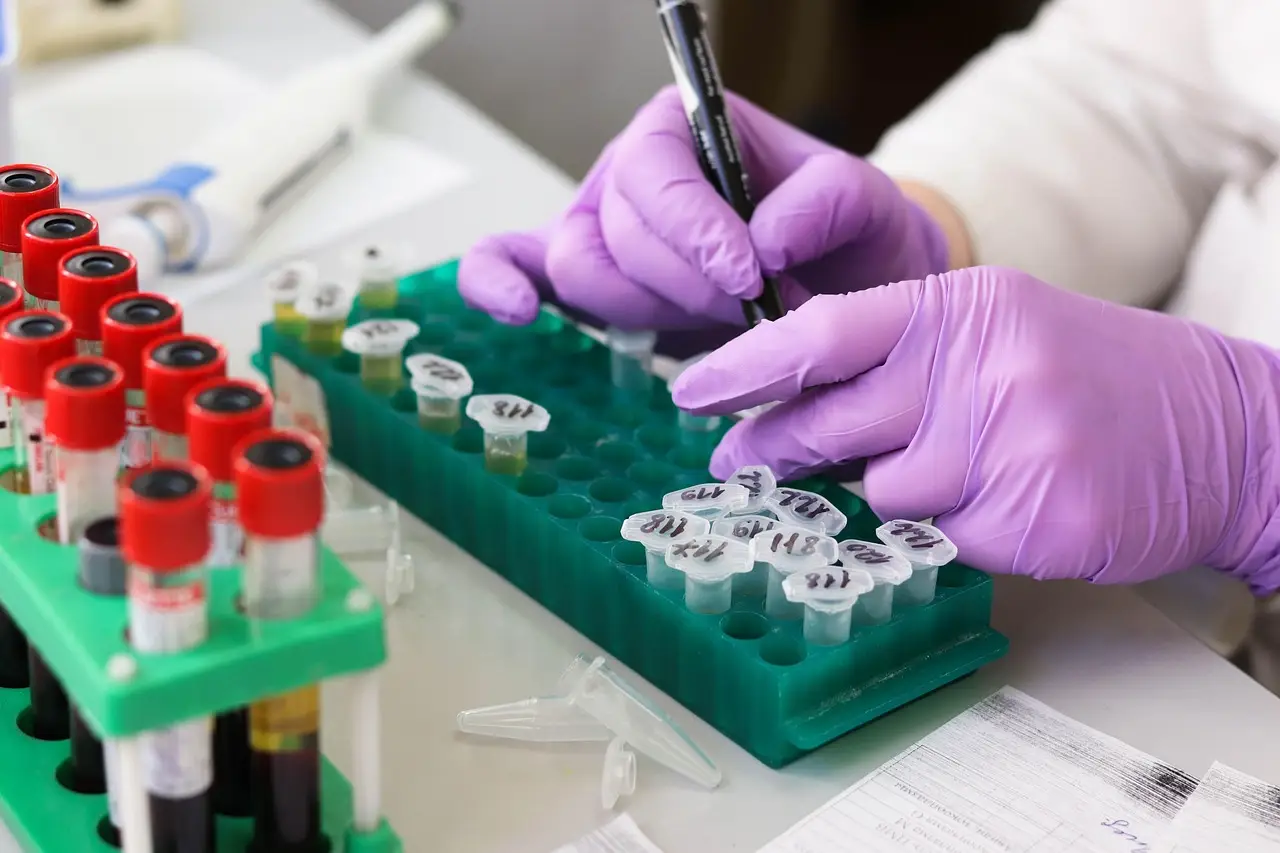
A blood test spotted the most severe cases of chronic traumatic encephalopathy in a study of 21 deceased football players — the first time researchers have shown a fluid marker can flag CTE in a way that could one day work in living patients. The study was published Thursday in the Journal of the American Medical Association. And the caveats start immediately.
The test is not approved by the U.S. Food and Drug Administration. The sample was tiny. Validation in large studies has not happened yet. Michael Alosco, the study's senior author and co-director of clinical research at the CTE Center at Boston University, says all of that plainly.
"If this finding holds up with future research, it opens up a lot of doors," Alosco says. "We still have more work to do before you can bring it back to patients. But it's an exciting first step."
What did the researchers actually test?
The team analyzed blood samples from 21 football players who donated their brains to science. After death, 18 of them were found to have CTE at varying stages. The researchers then identified specific biomarkers — measurable biological signatures in the blood — that could pick out the most severe cases of the disease.
That's a real result. It's also a result built on 21 people, most of them already diagnosed post-mortem. We don't yet know how the markers behave in a random living patient who walks into a clinic. Alosco doesn't claim otherwise.
Why has CTE been so hard to diagnose?
CTE is a devastating neurodegenerative disease linked to repeated head trauma, including collisions in sports such as American football. It can cause mood swings, behavior changes, and memory problems. Here's the catch that has stalled the field for decades: CTE has only ever been diagnosed by autopsy, after a person dies.
That single limitation cascades. Researchers don't know how common CTE is in the general population, because you can't screen living people. They can't run proper clinical trials for treatments, because they can't confirm who actually has the disease. A blood test, if it works, would chip away at both problems.
How does the test work?
Like Alzheimer's disease, CTE involves an abnormality in a protein called tau. The protein "misfolds," Alosco explains — it tangles and accumulates inside brain cells. The new test detects a biomarker called endogenously cleaved microtubule-binding region tau, or eMTBR-tau, which tracks those tangles.
One problem: eMTBR-tau is elevated in people with both CTE and Alzheimer's. On its own, it can't tell the two diseases apart. So the researchers propose a second step. Another biomarker, called p-tau217, is known to "track closely" with Alzheimer's — but not with CTE. In theory, a two-part blood test measuring both markers could distinguish CTE patients from Alzheimer's patients. In theory. That combined test hasn't been proven in a clinical setting.
Is this standing on other evidence?
Yes. Days earlier, a separate paper — also in JAMA — reported that researchers using mass spectrometry, a technique that precisely measures molecules, found eMTBR-tau was elevated in patients with severe cases of tau-related diseases, including Alzheimer's and CTE. Two independent papers pointing the same direction is stronger than one. Neither paper is a validation study.
Michael Buckland, a clinical associate professor of pathology at the University of Sydney who was not involved in either study, called it "a watershed moment for the field, demonstrating that fluid biomarkers can work in assisting diagnosis of CTE in the living." A confident diagnosis in living patients, he says, "opens the door for clinical trials to start finding treatments for the disease."
Buckland also said what needs saying: "While there is still a long way to go before the test can be validated for clinical use, it is remarkable to see how fast the field is moving."
What does this change for patients right now?
Nothing yet. You cannot ask your doctor for a CTE blood test this year. What changes is the research pipeline: if larger studies confirm the markers, scientists could finally measure how widespread CTE is, and drug trials in living patients become possible. That's the door Alosco says is opening — slowly, and only if the finding holds up.
via scientificamerican.com (Source)
More from James Calloway
Show full bio
Staff writer covering regulation, policy and their impact on general science news at SciBeat.
570 articles