Plate Nº 10 · recorded November 14, 2026
Health & Medicine ResearchReported finding
Blood Test Spots Ovarian Cancer Precursors Before Tumors Form
A Nature Medicine study found an RNA blood marker detected 92% of hidden pre-cancerous fallopian tube changes, but it is years from screening use.
By James Calloway3 min read668 words
In brief
- Published November 2026 in Nature Medicine by the Hoag Family Cancer Institute.
- Test detected about 92% of STIC cases and cleared about 98% of healthy people in a validation group.
- Study analyzed stored blood samples from 506 people, including 43 with STIC.
- Tu-Stroma outperformed the standard CA125 marker in distinguishing STIC from healthy tissue.
- The design cannot yet show the test detects future cancer in symptom-free people.
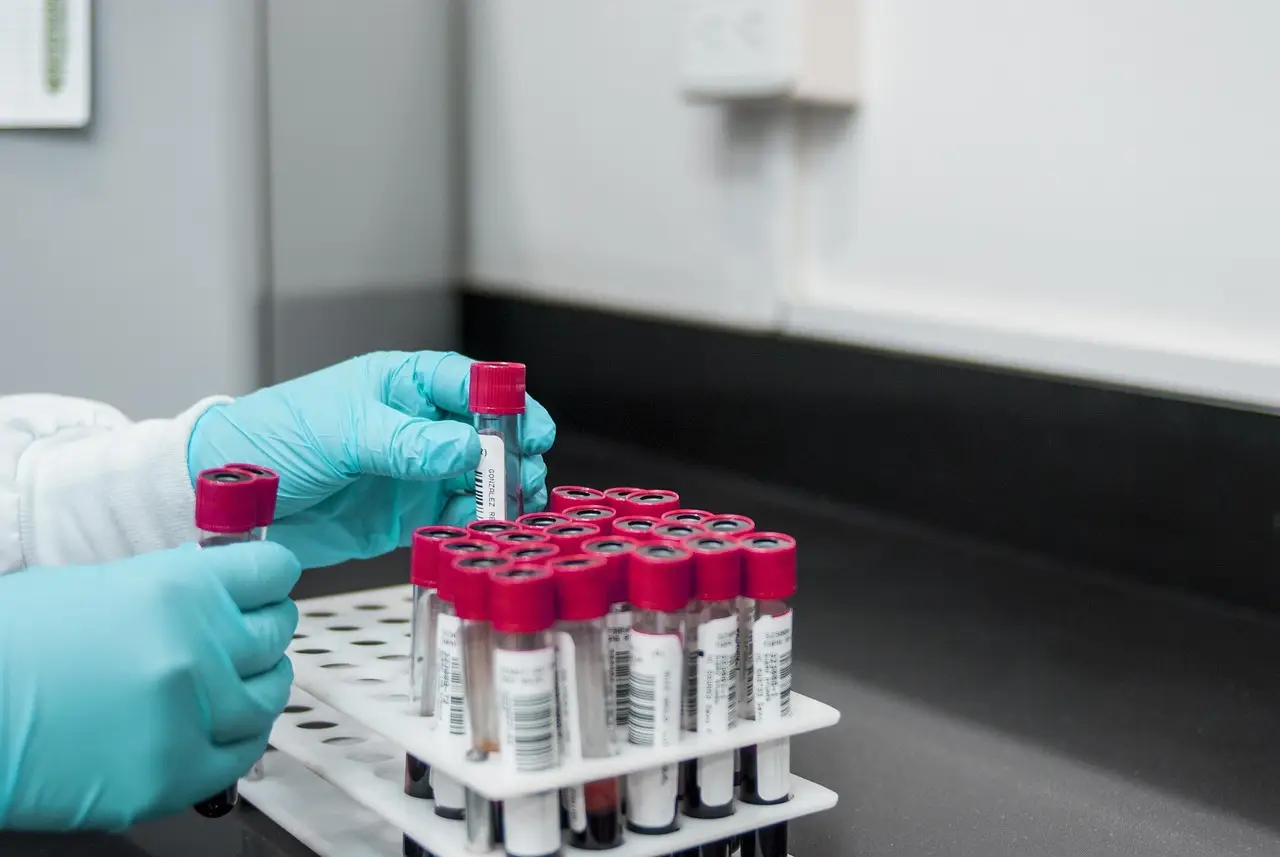
An experimental blood test identified about 92% of people carrying pre-cancerous changes in their fallopian tubes — changes that today's scans cannot see at all. That is the headline number from a study published in November 2026 in Nature Medicine, led by the Hoag Family Cancer Institute in California.
The findings sound like a screening breakthrough. They are not one yet. Here's what the test actually found, and where the evidence runs out.
What did the researchers find?
The team studied a molecule called Tu-Stroma, a member of the RNA family — molecules that help cells carry out genetic instructions. Cells can package such molecules into tiny parcels and release them into the bloodstream, which means a standard blood draw could, in principle, pick them up.
The researchers examined stored blood samples from 506 people, including 43 who had a condition doctors call STIC: a small cluster of abnormal cells inside a fallopian tube, the passage connecting the ovaries to the uterus. STIC is thought to be an early origin of a fast-growing form of ovarian cancer. It is usually too small to appear on imaging and is often found only when surgeons examine removed tissue under a microscope.
The results were consistent. Tu-Stroma levels ran higher in people with STIC and in those with outright ovarian cancer than in comparison groups. In a separate validation set, the test caught about 92% of STIC cases and correctly cleared about 98% of healthy people. It also outperformed CA125, the blood marker doctors commonly use today, at telling STIC apart from healthy tissue and non-cancerous growths.
Why does early detection matter?
Ovarian cancer is notoriously quiet in its early stages. Persistent bloating, pelvic discomfort, feeling full quickly and needing to urinate more often — none of these symptoms are specific, and all of them can have harmless causes. But repeated symptoms deserve medical attention, and a test that flags risk before a tumor is visible would change the calculus considerably.
The stakes are sharpest for people who carry inherited mutations in the BRCA1 or BRCA2 genes. These mutations raise ovarian cancer risk, and some carriers are advised to consider preventive surgery to remove their ovaries and fallopian tubes. A reliable blood signal could, someday, inform the timing of such decisions. That day has not arrived.
What does this change for patients right now?
Nothing, frankly. There is no approved test, and no one should ask for one based on this study. The researchers tested samples from people whose diagnoses were already known — a retrospective design that cannot prove the test would work in people who feel perfectly well.
Two big questions remain open. Would the blood signal reliably detect future cancer in symptom-free people? And would acting on a positive result actually save lives? The study answers neither.
There is also a familiar statistical trap. A test that looks highly accurate in a lab study can generate large numbers of false alarms when deployed across a population where the condition is rare. Each false positive carries its own risks: anxiety, invasive follow-up, possibly unnecessary surgery. Larger studies following people over time are needed before this approach can guide screening or preventive-surgery decisions, and those trials take years.
The bigger picture
Strip away the caveats, and the work still points somewhere genuinely interesting: hunting for biological changes before a visible tumor exists, rather than after. That is a different philosophy of detection, and Tu-Stroma is one early candidate for making it real.
Its value will hinge on future trials showing that earlier detection translates into safer care and better outcomes — not just earlier labels. Until then, treat this as a promising direction, not a promise.
If you have a family history of ovarian or breast cancer, or know you carry a BRCA mutation, the practical move today is unchanged: talk to a genetic counselor or specialist about your options. A blood test may join that conversation someday. Today it belongs to the laboratory.
via knowridge.com (Source)
More from James Calloway
Show full bio
Staff writer covering regulation, policy and their impact on general science news at SciBeat.
388 articles
Nearby plates
- Blood Test Spots Small Breast Tumors With 95% Accuracy in Early Study
- MIT researchers build microfluidic tool to collect living cancer cells
- 31 Blood Markers May Flag Lung Cancer Risk a Decade Early
- Urine RNA test detects bladder cancer with 95% accuracy in 683-sample study
- Blood Test Finds Cancer Targets in 46% of Metastatic Patients